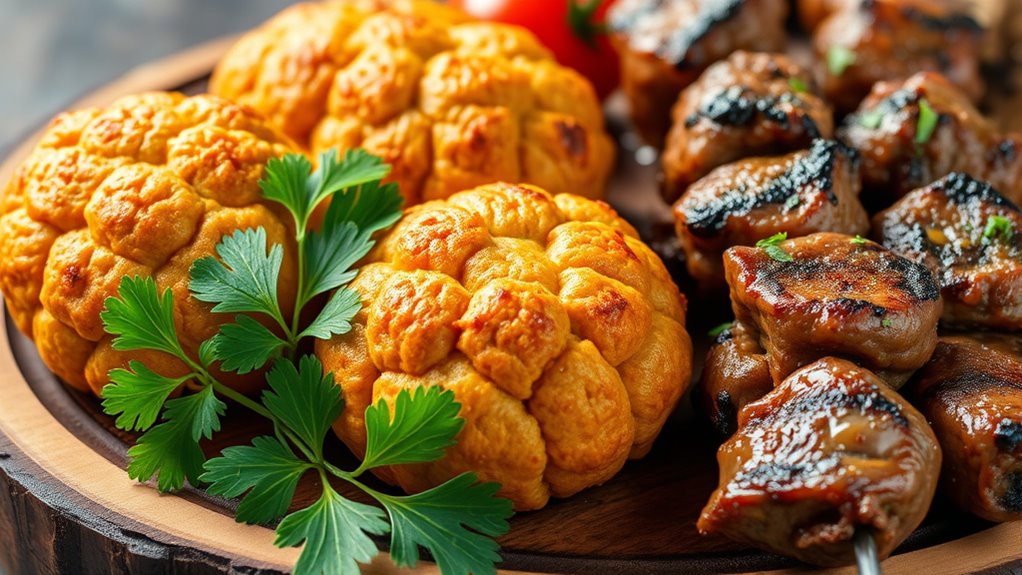

Lebanese kibbeh and kafta are flavorful ground meat dishes that highlight the perfect use of spice blends like cinnamon, allspice, and cumin. To get authentic taste, focus on mixing and evenly distributing spices into the meat, then choose the right cooking method—frying, baking, or grilling—to achieve crispiness and tenderness. Mastering these techniques enhances flavor and presentation. Keep exploring, and you’ll discover how to elevate these classics even further.
Key Takeaways
- Spice blends like cinnamon, allspice, and cumin define the signature flavors of Lebanese Kibbeh and Kafta.
- Proper preparation of ingredients, including soaking bulgur and evenly mixing spices, ensures authentic taste and texture.
- Frying, baking, and grilling each uniquely influence the dishes’ crispiness, tenderness, and smoky flavors.
- Shaping techniques, such as forming patties or skewers, are essential for proper cooking and presentation.
- Mastering spice balance and cooking methods enhances the aroma, flavor, and authenticity of Lebanese ground meat specialties.
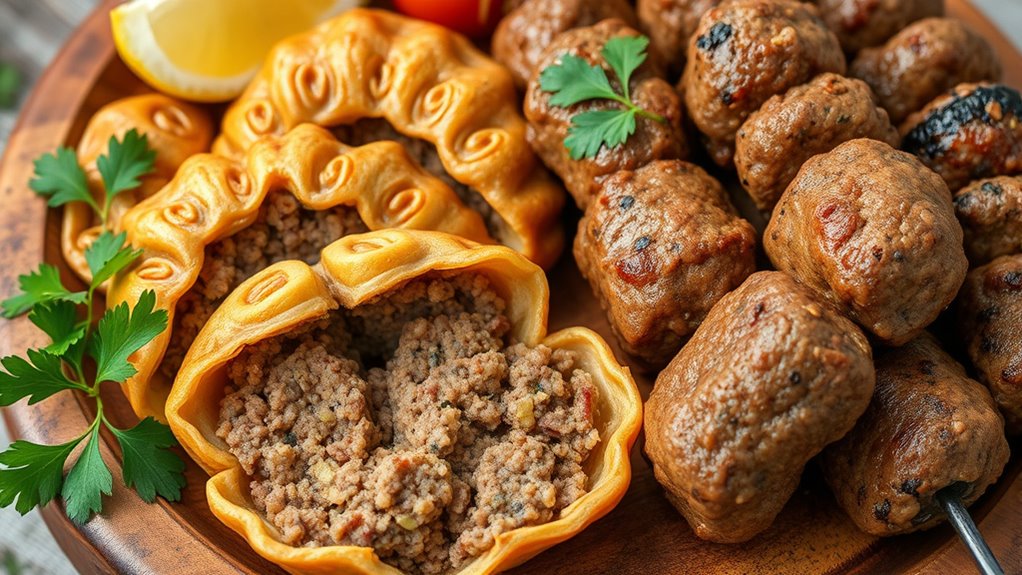
Have you ever wondered what makes ground meat such a versatile ingredient in the kitchen? It’s the way it absorbs flavors, adapts to different cooking styles, and can be transformed into numerous dishes. When preparing Lebanese specialties like Kibbeh and Kafta, understanding how to use spice blends and cooking techniques elevates your dishes from simple to spectacular. These dishes rely heavily on spice blends to create their signature flavors, and your choice of techniques determines their texture and presentation.
Kibbeh, often called the national dish of Lebanon, is a perfect example of how spice blends can define a dish. The filling and shell both require a careful balance of ingredients—ground meat, bulgur, spices, and herbs—that come together through specific cooking techniques. You start by soaking bulgur, then mixing it with ground meat, onions, and a blend of spices such as cinnamon, allspice, and nutmeg. These spice blends not only add warmth and depth but also help to elevate the natural flavor of the meat. When shaping Kibbeh, you can choose to bake, fry, or even serve it raw as Kibbeh Nayyeh, each method demanding different techniques. Frying, for example, requires heating oil to the right temperature to achieve a crispy exterior while keeping the interior tender. Baking, on the other hand, is a healthier alternative that ensures even cooking and a delicate crust.
Kafta, another beloved Lebanese dish, showcases the importance of skillful cooking techniques combined with flavorful spice blends. You typically blend ground meat—often beef or lamb—with onions, parsley, and a mix of spices like cumin, paprika, and sometimes cinnamon. These spice blends give Kafta its characteristic aroma and taste. Once mixed, the meat is shaped onto skewers or formed into patties. Grilling is the most popular technique, giving the meat a smoky flavor and appealing char. To achieve perfect grill marks, you need to preheat your grill properly and oil the grates to prevent sticking. Alternatively, you can pan-fry or bake Kafta, but each method requires adjusting cooking times and temperatures to avoid overcooking or drying out the meat. The key is to keep the meat moist and tender while ensuring the spices are evenly distributed.
Mastering these Lebanese ground meat specialties involves understanding how spice blends influence flavor and how different cooking techniques impact texture and presentation. Whether you’re frying, baking, or grilling, combining the right spices with precise techniques transforms simple ground meat into authentic, flavorful dishes. By paying attention to these details, you’ll bring a taste of Lebanon into your home kitchen and impress everyone with your culinary skills.
Frequently Asked Questions
What Are the Regional Variations of Lebanese Kibbeh and Kafta?
You’ll notice regional variations in Lebanese kibbeh and kafta, shaped by local spice blends and cooking techniques. In the Beqaa Valley, you’ll find spicier kibbeh with cinnamon and allspice, while coastal areas favor lemon and herbs. Kafta recipes differ too; some regions grill it on skewers, others bake or fry. These variations reflect local tastes, ingredients, and traditional methods that make each dish unique.
How Do I Store Leftover Kibbeh and Kafta Safely?
To store leftover kibbeh and kafta safely, you should refrigerate them within two hours of cooking. Place them in airtight containers or wrap tightly with plastic wrap to prevent contamination. Food safety is key, so consume leftovers within 3-4 days. Follow proper refrigeration tips by setting your fridge to 40°F (4°C) or below, and reheat thoroughly before eating to make certain of safety and quality.
Are There Vegetarian or Vegan Alternatives to These Dishes?
You won’t believe how delicious vegan recipes can be! For vegetarian or vegan alternatives, try plant-based substitutes like lentils, mushrooms, or walnuts to mimic the texture of meat. You can make vegan kibbeh or kafta using these ingredients mixed with spices and herbs. These options are not only healthier but also perfect for those avoiding animal products, letting you enjoy hearty, flavorful dishes without compromise.
What Are Traditional Side Dishes Served With Kibbeh and Kafta?
You typically serve kibbeh and kafta with pickled vegetables and fresh herb salads. These sides complement the rich, savory flavors perfectly. The pickled vegetables add a tangy crunch, while the herb salads bring freshness and brightness to each bite. You might also enjoy serving them with pita bread or a side of hummus. These traditional accompaniments enhance the overall meal, making it balanced and delicious.
How Can I Make Gluten-Free Versions of These Recipes?
Sure, you can swap out gluten-free grains like quinoa, buckwheat, or rice for traditional bulgur, giving your kibbeh and kafta a fresh twist. For a plant-based protein boost, try lentils or chopped mushrooms to mimic ground meat’s texture. It’s ironic how these substitutions turn your recipes into allergy-friendly, wholesome dishes, proving that even classic favorites can be reinvented with a little creativity and the right ingredients.
Conclusion
Now that you’ve discovered the magic behind Lebanese kibbeh and kafta, you’ll never see ground meat the same way again. These dishes aren’t just meals—they’re culinary masterpieces that can transform any ordinary day into a celebration of flavor and tradition. With every bite, you’re tasting centuries of heritage and passion, making your kitchen feel like the heart of Lebanon itself. So go ahead, create these wonders and let your taste buds travel to a whole new world of deliciousness!