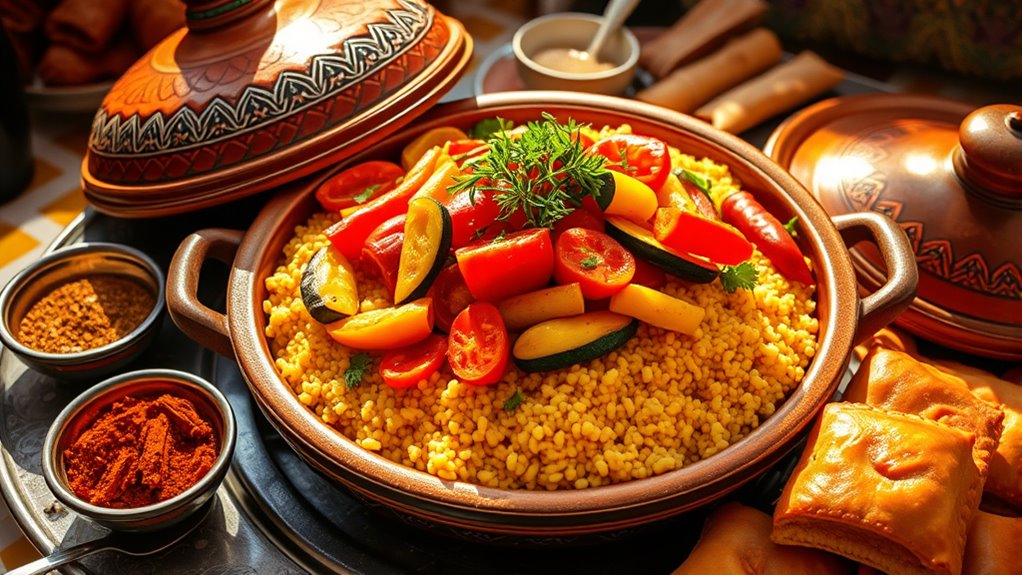

Moroccan couscous feasts are a vibrant celebration of community, where you gather around a large dish shared with family and friends. You’ll enjoy a colorful mix of vegetables and tender meats, flavored with aromatic spices like cumin, cinnamon, turmeric, and saffron. The spices are often roasted or ground fresh to create deep, harmonious flavors, elevating the simple ingredients into a memorable, tradition-rich experience. If you continue exploring, you’ll discover how to turn these elements into a flavorful masterpiece.

Get kitchen staples and gadgets delivered free with Prime
- Fast, free delivery on millions of items
- Prime Video, Amazon Music and more included
- Member-only deals all year
Key Takeaways
- Use a blend of cumin, coriander, cinnamon, turmeric, and ginger to create authentic Moroccan spice profiles.
- Incorporate spices early in cooking to develop deep, layered flavors in vegetables and meats.
- Arrange vegetables and meats atop fluffy couscous for vibrant presentation and visual appeal.
- Emphasize communal serving by presenting couscous in a large dish for sharing and cultural tradition.
- Enhance flavor with saffron or preserved lemon for brightness and complex aroma.
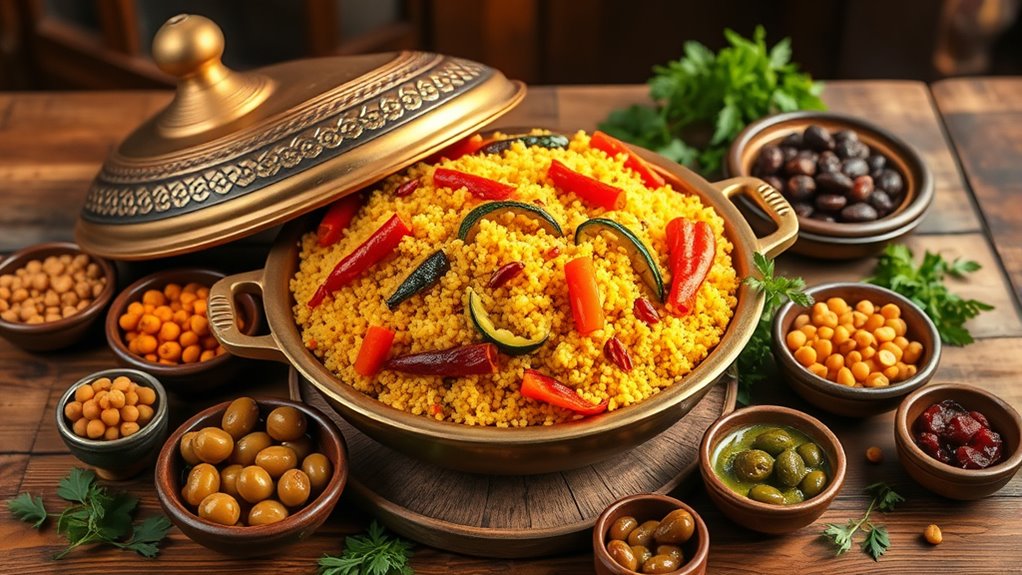
Have you ever wondered why couscous feasts are such a cherished tradition in many cultures? It’s more than just a meal; it’s a celebration that brings people together to share food, stories, and warmth. When you sit down to enjoy a Moroccan couscous feast, you’re participating in a centuries-old custom rooted in hospitality and community. Traditional serving customs play an essential role here. Typically, the host presents the couscous in a large communal dish, allowing everyone to gather around and serve themselves. This practice emphasizes sharing and equality, reinforcing bonds among family and friends. You’ll often see vegetables, meats, and legumes arranged beautifully atop the fluffy grains, inviting diners to take a bit of everything. Handing out the couscous with your hands, sometimes using a piece of bread as a scoop, underscores the intimacy and tactile nature of the experience. It’s a ritual that connects you directly to the tradition, making each bite more meaningful. Incorporating authentic spice blending techniques is crucial for capturing the true essence of Moroccan cuisine. Spices such as cumin, coriander, cinnamon, turmeric, and ginger are often roasted or ground fresh to unlock their full aromatic potential, creating a vibrant flavor profile.
Spice blending techniques are equally indispensable to crafting authentic Moroccan couscous. Moroccan cuisine is renowned for its bold, aromatic flavors, achieved through meticulous spice blending. As you prepare your spices, you’ll combine ingredients like cumin, coriander, cinnamon, turmeric, and ginger, often roasting or grinding them fresh to reveal their full potential. The key is balancing these spices to create a harmonious flavor profile that enhances the vegetables and meats without overpowering them. When cooking the vegetables and meats, you typically add your spice blend early, allowing the flavors to meld and intensify during simmering. This step infuses the entire dish with depth and warmth, creating the signature Moroccan taste. If you want to elevate your feast, consider adding a hint of saffron or preserved lemon, which adds a lively brightness and complexity. The art of spice blending isn’t just about quantity—it’s about understanding how each spice interacts and complements the others, transforming simple ingredients into a flavorful masterpiece.
In essence, these traditional serving customs and spice blending techniques are what make Moroccan couscous feasts so special. They turn a humble dish into a communal celebration, emphasizing connection and shared experience through food. By respecting these traditions, you honor a rich cultural heritage that values generosity, flavor, and togetherness. When you serve couscous, pay attention to how you present it, how you balance your spices, and how everyone shares in the enjoyment. This mindful approach will help you recreate the authentic spirit of Moroccan feasts, making every meal a memorable occasion full of flavor and tradition.
Products Worth Considering
Vitamix Ascent X3 Professional-Grade Blender, 3 Programs, Shadow Black

Ninja PossibleCooker Pro Plus 8.5 qt Bone & Champagne

Breville Bambino Espresso Machine, Brushed Stainless Steel
As an affiliate, we earn on qualifying purchases.
Frequently Asked Questions
What Are Traditional Moroccan Spices Used in Couscous Dishes?
You’ll want to use traditional Moroccan spices like cumin, coriander, cinnamon, ginger, and turmeric to create authentic flavor profiles in couscous dishes. Spice blends such as Ras El Hanout and harissa add depth and complexity, enhancing the dish’s aroma and taste. These spices bring warmth, earthiness, and a subtle sweetness, making your couscous vibrant and flavorful. Don’t forget to taste and adjust spices to suit your palate for the perfect Moroccan-inspired meal.
How Can I Adapt Moroccan Couscous Recipes for Vegetarian Diets?
You can easily adapt Moroccan couscous recipes for vegetarians by swapping traditional meat with hearty vegetarian protein sources like chickpeas, lentils, or tofu. Rely on vegan broth options to maintain rich flavors without animal products. Experiment with spices like cumin, cinnamon, and turmeric to enhance the dish’s depth. This way, you enjoy authentic Moroccan flavors while keeping the meal plant-based and nutritious.
What Are Common Side Dishes Served With Moroccan Couscous?
You typically serve Moroccan couscous with grain salads and roasted vegetables. These sides complement the flavorful spices and fluffy grains, adding texture and freshness. You might include a bright tomato and cucumber salad or a tangy lemon-infused grain salad. Roasted vegetables like carrots, zucchini, and eggplant bring warmth and depth. These sides create a balanced, colorful meal that highlights the vibrant flavors of Moroccan cuisine.
How Do I Properly Store Leftover Couscous and Vegetables?
To store leftover couscous and vegetables, use airtight containers and keep them in the refrigerator within two hours of cooking. For leftover storage tips, divide them into smaller portions for quicker cooling. When reheating, use a microwave or stovetop with a splash of water or broth to maintain moisture. Proper reheating techniques guarantee your leftovers stay flavorful and safe to eat, making your next meal just as delicious.
Are There Regional Variations of Couscous Across Morocco?
Think of Morocco’s couscous as a tapestry, woven with regional flavor profiles that vary from north to south. In the Atlas Mountains, you’ll find hearty, spice-forward versions, while coastal areas favor lighter, seafood-infused styles. Each region’s couscous preparation techniques reflect local ingredients and traditions, giving you a rich variety to explore. So, yes, Morocco’s couscous showcases diverse regional flavors that make each dish uniquely memorable.
Conclusion
Now that you’ve explored the vibrant world of Moroccan couscous feasts, you’re ready to bring these flavors to life in your own kitchen. With a handful of spices and fresh vegetables, you can create a dish that’s truly a feast for the senses. Remember, the magic lies in the details—so don’t be afraid to get your hands dirty. After all, a little effort goes a long way toward turning a simple meal into a memorable celebration.
![[I ate] Duck fat poutine](https://1000worldrecipes.com/wp-content/uploads/2026/05/i-ate-duck-fat-poutine-featured-560x300.jpg)