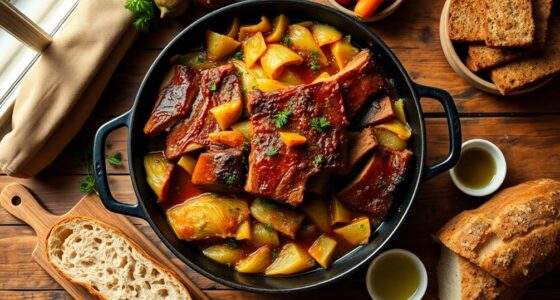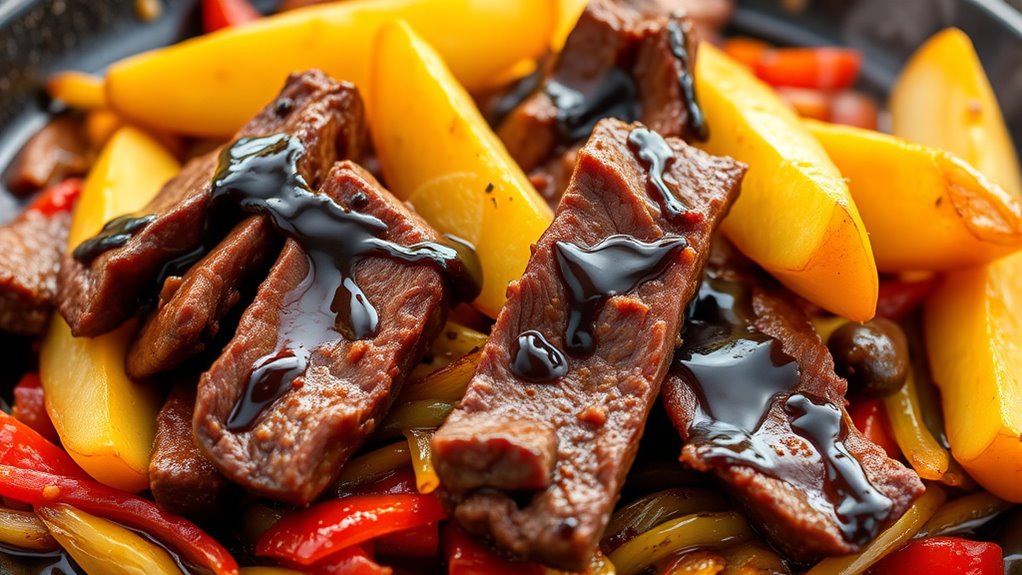

Peruvian Lomo Saltado is a vibrant, savory stir-fry that blends tender beef, crispy potatoes, and tangy sauce, showcasing Peru’s rich cultural mix of indigenous, Spanish, and Asian influences. You’ll find vegetables like onions and tomatoes, all cooked quickly over high heat to keep their flavor and texture. The dish’s crispy potatoes add a satisfying crunch, while the flavorful sauce provides a unique fusion experience. Continue exploring to uncover how this colorful dish represents Peru’s diverse culinary heritage.
Key Takeaways
- Lomo Saltado is a traditional Peruvian dish combining stir-fried beef, potatoes, and vegetables with a tangy soy-vinegar sauce.
- It showcases Peru’s fusion cuisine, blending indigenous, Spanish, and Asian culinary influences.
- The dish features crispy fried potatoes, tender beef strips, and crunchy vegetables, garnished with cilantro or scallions.
- Cooking techniques include quick stir-frying over high heat to lock in flavor and texture.
- It symbolizes Peru’s rich cultural heritage and modern culinary innovation on a flavorful plate.
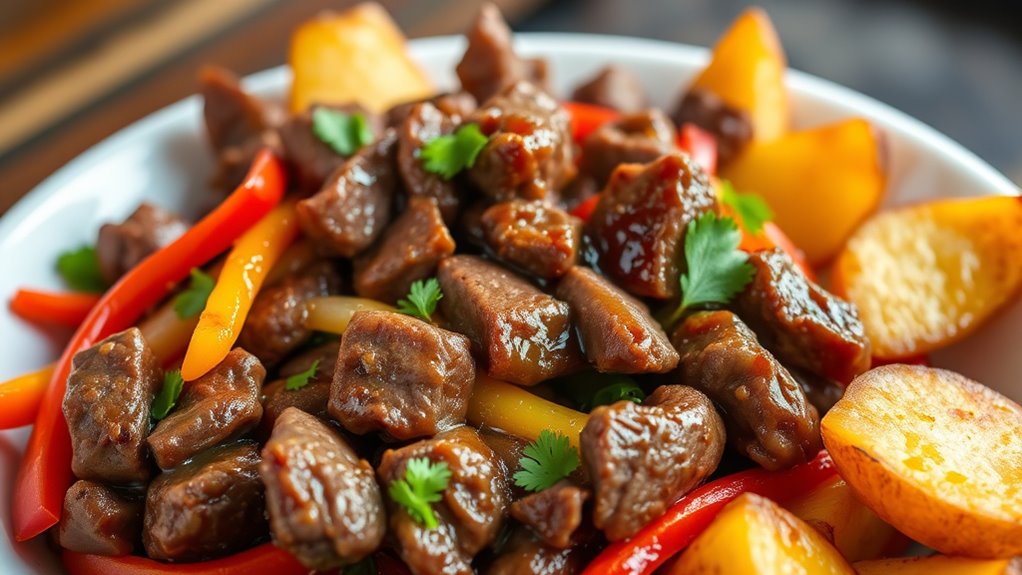
Have you ever wondered how Peru’s vibrant culinary traditions come together in a single dish? That’s exactly what makes Lomo Saltado so captivating. It’s a perfect example of fusion cuisine, blending Chinese stir-fry techniques with local Peruvian ingredients and flavors. This dish reflects Peru’s history of cultural mixing, where indigenous, Spanish, and Asian influences meet on your plate. As you prepare and enjoy Lomo Saltado, you’re experiencing a culinary dialogue that has evolved over generations, rooted in traditional techniques but reimagined through a modern lens.
The beauty of Lomo Saltado lies in its ability to combine seemingly contrasting elements—beef, potatoes, and a tangy sauce—into a harmonious whole. To do this, you follow traditional techniques that have been passed down, yet adapt them to create something uniquely Peruvian. First, you start by slicing the beef into strips, a simple step that’s essential for quick, even cooking. Using high heat, you stir-fry the beef until it’s just browned, locking in its juices and flavor. This method is a hallmark of traditional Chinese cooking, but here, it’s seamlessly integrated with local ingredients.
Next, you add vegetables—typically onions, tomatoes, and sometimes peppers—stir-fried briefly to preserve their crunch and flavor. The key is to keep the vegetables slightly crisp, which adds texture to the dish. You then incorporate soy sauce and vinegar, creating a savory, tangy sauce that ties everything together. This sauce is fundamental; it’s what gives Lomo Saltado its distinctive flavor profile, blending umami with a hint of acidity. Additionally, many chefs are now incorporating authentic ingredients to enhance the dish’s cultural authenticity and flavor depth.
While the beef and vegetables cook, you prepare crispy French fries or thick-cut potatoes, which are an integral part of the dish. The potatoes are fried until golden and crispy, then added at the end, giving the dish a satisfying crunch. The combination of tender beef, fresh vegetables, and crispy potatoes creates a complex mouthfeel that keeps you coming back for more. The entire process relies on traditional techniques like stir-frying and precise timing, ensuring each element remains vibrant and flavorful.
As a final touch, you sprinkle chopped cilantro or scallions for freshness, balancing the richness of the beef and potatoes. Every bite offers a taste of Peru’s rich cultural tapestry, where culinary traditions blend seamlessly to produce something truly unique. Lomo Saltado isn’t just a dish; it’s a celebration of Peru’s history—an edible testament to its diverse cultural heritage and mastery of traditional techniques, all brought together with a modern twist.

COMFEE' Rice Cooker, Slow Cooker, Steamer, Stewpot, Sauté All in One (12 Digital Cooking Programs) Multi Cooker (5.2Qt ) Large Capacity. 24 Hours Preset & Instant Keep Warm, Black/Silver (MB-M25)
Multifunctional Use -12 digital cooking programs that could suit different eating habits, including rice, pasta, soup, stew, saute,...
As an affiliate, we earn on qualifying purchases.
Frequently Asked Questions
What Are the Origins of Lomo Saltado?
You might be surprised to learn that lomo saltado’s origins stem from a blend of cultural influences, mainly Chinese and Peruvian cuisines. As part of the culinary evolution in Peru, it reflects Chinese wok cooking merged with local ingredients. This fusion created a unique dish that showcases Peru’s diverse heritage, combining flavors and techniques from different cultures into a beloved, iconic meal.
Can Lomo Saltado Be Made Vegetarian?
Yes, you can make lomo saltado vegetarian by using substitutes like tofu, tempeh, or seitan instead of beef. To keep the authentic flavor, adjust seasonings with soy sauce, vinegar, and spices. Add colorful vegetables such as bell peppers, onions, and tomatoes for texture and taste. Stir-fry everything quickly to preserve freshness, and serve over rice or potatoes for a satisfying vegetarian twist on this classic Peruvian dish.
How Do You Best Store Leftover Lomo Saltado?
You should store leftover lomo saltado in an airtight container in the refrigerator within two hours of cooking. For best results, follow refrigeration tips like dividing it into smaller portions for quicker cooling. When reheating, use a skillet over medium heat or a microwave, stirring occasionally to guarantee even warmth. Avoid overheating to preserve the flavors and texture of the beef and potatoes. Consume within 2-3 days for ideal freshness.
What Wine Pairs Well With Lomo Saltado?
Imagine a dance where flavors sway in harmony—your best wine pairing for lomo saltado is a robust red like Cabernet Sauvignon or Malbec. These wines enhance the savory beef and earthy potatoes, adding depth and a touch of elegance. Their boldness complements the stir-fry’s rich flavors, creating a symphony on your palate. Choose one to elevate your meal and truly enjoy the flavor enhancement each sip provides.
Are There Regional Variations of Lomo Saltado in Peru?
Yes, you’ll find regional variations of lomo saltado across Peru. In coastal areas, you might see the dish with fresh seafood or regional ingredients like aji amarillo for added spice, reflecting local culinary influences. In the highlands, traditional ingredients and cultural influences lead to variations with different vegetables or meats. These regional tweaks showcase Peru’s diverse culinary landscape and adapt the classic stir-fry to local tastes and ingredients.

Instant Pot 4QT RIO Mini 7-in-1 Multi-Cooker, Pressure Cooker, Slow cook, Sauté, Steam, Rice Maker, Yogurt, & Warmer, Sea Salt, 4 Quarts
7 Cooking Functions: Pressure cook, slow cook, sauté, steam, cook rice, make yogurt, or keep your meals warm,...
As an affiliate, we earn on qualifying purchases.
Conclusion
So, don’t worry if you think lomo saltado sounds complicated—it’s actually quick and simple to make. With just a few fresh ingredients and a hot pan, you’ll have a flavorful, authentic Peruvian dish in no time. Plus, it’s perfect for any meal, whether lunch or dinner. Give it a try—you’ll love how the tender beef, vibrant vegetables, and crispy potatoes come together. Once you taste it, you’ll be hooked on this delicious stir-fry!

Instant Pot Duo Plus 9-in-1 Multicooker, Pressure Cooker, Slow Cook, Rice Maker, Steamer, Sauté, Yogurt, Warmer & Sterilizer, Includes App with Over 800 Recipes, Stainless Steel, 6 Quarts
9 Cooking Functions: Pressure cook, slow cook, sauté, sous vide, steam, sterilize, keep warm, make rice and yogurt—all...
As an affiliate, we earn on qualifying purchases.

NEWBULIG 6.3 Quart Electric Pressure Cooker, Stainless Steel Multi Cooker Pressure, 24-in-1 Slow Cooker for Rice, Meat Stew, Porridge, Multigrain, Soup, Bean, Bake, Steam, Yogurt Maker
【All-in-One Multi-Cooker Versatility】 This all-in-one stainless steel pressure cooker is your trusted kitchen companion, thoughtfully designed to simplify...
As an affiliate, we earn on qualifying purchases.