To stay safe when pressure cooking, always check that your vent and safety valves are clear and functioning before starting. Make sure the lid is securely locked and aligned properly. Follow the manufacturer’s instructions for venting, releasing pressure, and opening the lid only after all pressure has been safely released. Regularly inspect gaskets and safety mechanisms to prevent leaks or malfunctions. Keep these rules in mind; if you continue exploring, you’ll learn how to master pressure cooker safety every time.
Key Takeaways
- Always ensure the vent is clear and functioning properly to prevent dangerous pressure buildup.
- Confirm the lid is securely locked and properly aligned before starting cooking.
- Follow manufacturer instructions for pressure release methods and never force open the lid under pressure.
- Regularly inspect and maintain gaskets, safety valves, and vents to ensure safe operation.
- Never open the pressure cooker before all pressure has been fully released and the lock indicator shows it’s safe.
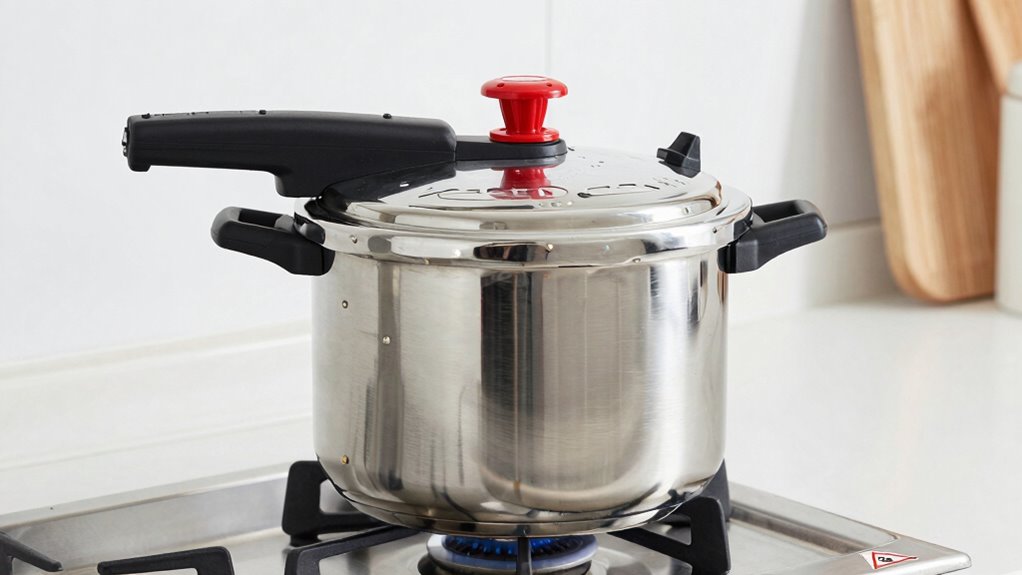
Pressure cooking can save you time and preserve nutrients, but it also requires careful attention to safety. When using a pressure cooker, understanding vent safety is essential. The vent is responsible for releasing excess steam, preventing pressure from building beyond safe limits. Always make sure the vent is clear of any blockages before starting to cook. If the vent becomes clogged or obstructed, pressure can build up dangerously, risking a potential explosion. Regularly inspect the vent and clean it according to the manufacturer’s instructions. It’s also wise to familiarize yourself with the venting process, so you know what proper operation looks like and can recognize any issues early. Proper vent maintenance is crucial for ensuring safe operation and avoiding accidents. Lid locking is another vital safety feature you shouldn’t overlook. Most modern pressure cookers come with a lid that locks securely when the cooker is pressurized. This mechanism prevents you from opening the lid prematurely, which could cause hot steam or liquid to spray out and cause burns. Before starting your cooking process, make sure the lid is properly aligned and locked into place. Many models feature indicators that show when the lid is securely locked, giving you peace of mind that it’s safe to operate. Never attempt to force the lid open while the cooker is under pressure; always wait until the pressure has been fully released and the locking mechanism is disengaged. In addition to vent safety and lid locking, always follow the manufacturer’s guidelines for your specific pressure cooker model. Each device may have unique safety features or procedures, and ignoring these can lead to accidents. When cooking is complete, allow the pressure to release naturally or use the quick-release method if your recipe calls for it. Never open the lid immediately after cooking without ensuring the pressure has dropped. Rushing this step can cause hot steam or contents to explode out unexpectedly, leading to burns or other injuries. Furthermore, keep your pressure cooker well-maintained. Regularly check the gasket for cracks or wear, as a damaged gasket can compromise the seal, making vent safety less reliable. Ensure all safety valves are functioning properly and that the lid locking mechanism operates smoothly without sticking. By paying close attention to these safety features—vent safety, lid locking, and overall maintenance—you greatly reduce the risks associated with pressure cooking. With care and vigilance, you can enjoy the benefits of quick, nutrient-preserving meals without compromising safety.
Frequently Asked Questions
Can Pressure Cookers Be Used on Induction Stoves Safely?
Yes, you can safely use pressure cookers on induction stoves if they are induction compatible. Check your pressure cooker’s bottom for an induction-compatible symbol or material, like magnetic stainless steel or cast iron. Using an induction-compatible pressure cooker guarantees safe usage, as it heats efficiently and evenly. Always follow your pressure cooker’s manufacturer guidelines for safe operation on induction stoves, and avoid using non-compatible cookware to prevent accidents.
How Often Should I Replace Pressure Cooker Seals?
Wondering how often you should replace pressure cooker seals? It’s best to do so every 12 to 18 months or sooner if you notice cracks, warping, or stiffness. Regular safety inspections are vital—check the seal for signs of wear before each use. Replacing the seal when needed guarantees your cooker stays safe and functions properly, preventing potential accidents and maintaining ideal pressure during cooking.
Is It Safe to Leave a Pressure Cooker Unattended?
It’s not safe to leave a pressure cooker unattended while it’s in use. During pressure cooker maintenance, always stay nearby to monitor the cooking process and guarantee safety precautions are followed. If you need to step away, turn off the heat and release pressure carefully. This helps prevent accidents from over-pressurization or malfunction. Always prioritize safety to avoid potential injuries or damage to your cookware.
What Is the Maximum Fill Line for Pressure Cooking?
Think of your pressure cooker as a volcano ready to erupt—overfilling can cause a dangerous eruption. The maximum fill line marks the safe boundary, usually halfway or two-thirds full. Always follow safety precautions and never surpass this line. Doing so ensures your cooker operates correctly, preventing overpressure and spills. Stick to the max fill line, and you keep your kitchen safe, avoiding potential accidents or damage.
Can Pressure Cookers Be Used for Canning Safely?
Yes, you can use pressure cookers for canning safely if they’re designed for pressure canning and meet safety regulations. Always follow the manufacturer’s instructions for pressure canning, guaranteeing the pressure settings, jar placement, and timing are correct. Using a regular pressure cooker without proper canning features can be unsafe. Stick to recommended guidelines to prevent accidents and ensure your preserved foods are safe to eat.
Conclusion
By following these pressure cooking safety rules, you keep yourself and your loved ones safe—don’t let shortcuts be your downfall. Always double-check the equipment, listen for those telltale hisses, and never ignore the warnings. Remember, safety isn’t something you can afford to overlook; it’s the key to a smooth cooking experience. When it comes to pressure cooking, it’s better to be safe than sorry—so stay vigilant and cook with confidence.