To sear steak indoors without excessive smoke, start by preheating a heavy pan with high-smoke point oil until it shimmers, then add your steak for a loud sizzle. Immediately open windows and switch on your exhaust fan or range hood to ventilate fumes. Adjust the heat if smoke thickens, and lift the pan if needed to control smoke levels. Once your steak is seared perfectly, remove it and guarantee proper ventilation continues—keep going for more helpful tips.
Key Takeaways
- Preheat the pan until oil shimmers and achieve a loud sizzle before adding the steak.
- Use high smoke point oil and keep the heat high enough for searing but monitor smoke levels closely.
- Maximize ventilation with range hoods, open windows, and fans to quickly clear smoke during cooking.
- Lift the pan or lower heat if smoke becomes thick, and avoid flipping the steak too early for proper crust.
- Remove the steak promptly at desired doneness and maintain ventilation until smoke dissipates.
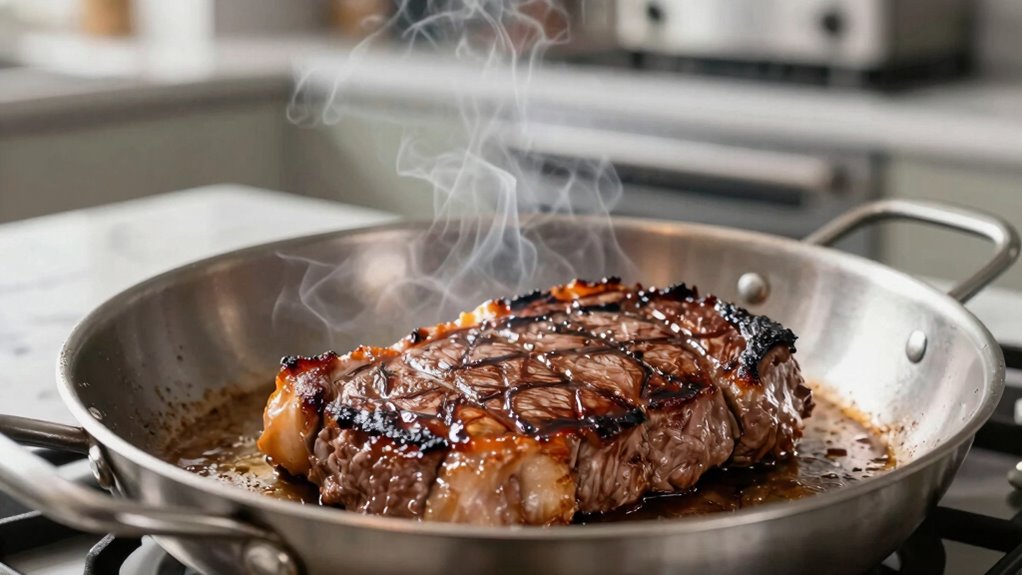
Searing steak indoors can often produce overwhelming smoke, but with the right techniques, you can achieve a perfect crust without the fumes. The key is understanding how to balance heat, timing, and proper kitchen ventilation to guarantee cooking safety and a smoke-free environment. When you’re working with high temperatures, it’s essential to prioritize safety by keeping a fire extinguisher nearby and ensuring your smoke detectors are functioning properly. Good kitchen ventilation plays a critical role here, helping to clear out smoke and odors quickly, so you don’t end up with lingering smells or compromised air quality.
Start by preheating your pan thoroughly—preferably cast iron or stainless steel—to a high temperature. This allows you to create that desirable sear without prolonged cooking times that produce excess smoke. Before adding any oil, make sure your kitchen is well-ventilated; open windows, turn on exhaust fans, or use an overhead range hood if available. When it’s time to cook, add a high smoke point oil like canola or avocado oil, and wait for it to shimmer. This step minimizes the chances of oil smoking excessively, which is a common cause of unwanted fumes.
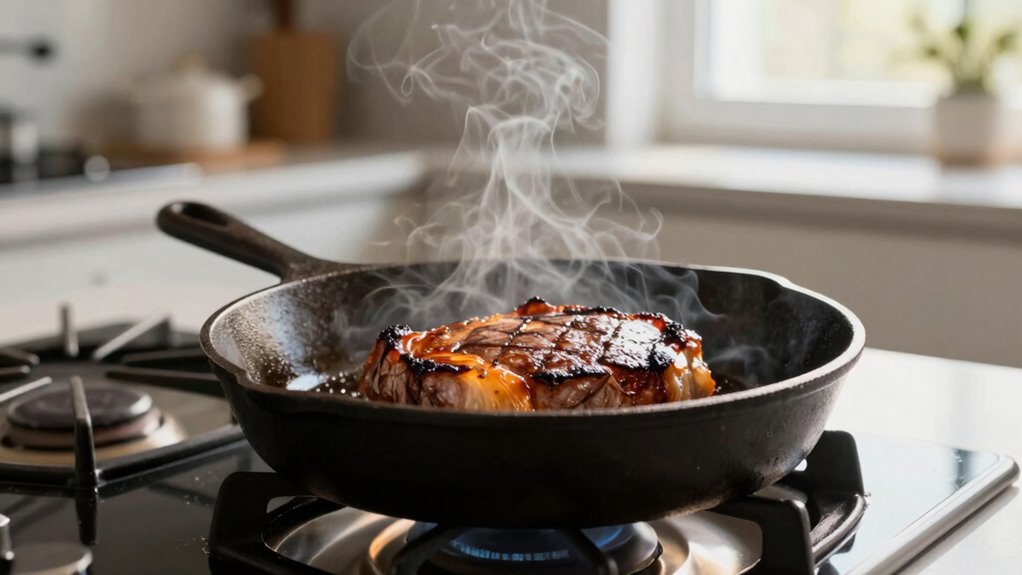
Once your pan is hot and the oil is shimmering, carefully place the steak in the pan. You should hear a loud sizzle—that’s a sign you’re on the right track. Resist the temptation to move the steak immediately; let it develop a crust for about 2-3 minutes before flipping. This initial sear helps lock in juices and forms a flavorful crust without overcooking the meat. During this process, keep an eye on the smoke levels. If you notice smoke becoming thick, lower the heat slightly or lift the pan from the stove for a moment to control fumes.
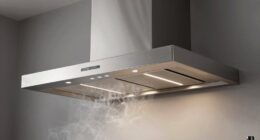
Throughout the searing process, your kitchen ventilation system is your best friend. A powerful range hood or an open window can drastically reduce smoke buildup, improving your cooking safety. If you’re using a portable fan or air purifier, position it near the cooking area to help circulate air and pull fumes away. Once the steak reaches your desired doneness, remove it from the pan and let it rest. This step ensures maximum juiciness without extra smoke.
Frequently Asked Questions
Can I Use a Non-Stick Pan for Indoor Searing?
You can use a non-stick pan for indoor searing, but keep in mind its limitations. Non-stick coatings can’t handle the high heat needed for perfect searing, as excessive heat can damage the pan and release fumes. Use a pan material like stainless steel or cast iron for better heat retention and searing. Non-stick pans are best for gentle cooking; for a true sear, opt for the right pan material and keep the heat moderate.
How Does Temperature Affect Smoke Production During Searing?
Think of temperature as the brushstroke that paints your steak’s story. When you hit high cooking temperatures near the smoke point, smoke erupts like a storm, signaling danger to your pan’s stability. To avoid this, keep your heat controlled, staying below the smoke point, so you can sear beautifully without smoke filling your space. Lower temperatures reduce smoke, letting you focus on flavor rather than fumes.
Is It Safe to Sear Steak Indoors Regularly?
Yes, it’s safe to sear steak indoors regularly if you follow proper cooking safety measures. Using good ventilation helps prevent smoke inhalation, reducing health risks. Make sure your kitchen has a range hood or open windows, and avoid overcrowding the pan to minimize smoke. Keep a fire extinguisher nearby, and never leave the stove unattended. These precautions guarantee you enjoy delicious seared steak without compromising safety.
What Type of Ventilation Is Most Effective?
Think of your kitchen ventilation as the lungs of your cooking space. An exhaust fan is most effective because it actively pulls smoke and fumes away, preventing them from settling. Pair it with good air filtration systems to trap airborne particles, ensuring cleaner air. Together, these create a powerful duo, making your indoor searing safer and more enjoyable. Prioritize a strong, well-maintained exhaust fan for the best results.
Can I Sear Frozen Steak Indoors Without Smoke?
You can sear frozen steak indoors, but it’s tricky because the cooking oil’s smoke point may be attained quickly, causing smoke and potential burning. To minimize this, choose an oil with a high smoke point like avocado or refined olive oil, and use a well-ventilated area. Sear the steak carefully, and guarantee your pan is hot enough but not too smoky, to prevent excess smoke and achieve a good sear.
Conclusion
Now that you’ve mastered the art of searing steak indoors without smoke, you can enjoy perfectly cooked, juicy steaks anytime. Think of this method as your culinary secret, turning your kitchen into a gourmet steakhouse. With a little ventilation and a hot pan, you hold the power to create culinary magic—no smoke, no fuss. So go ahead, embrace this technique, and let your kitchen be the stage for your delicious, smoke-free masterpiece.