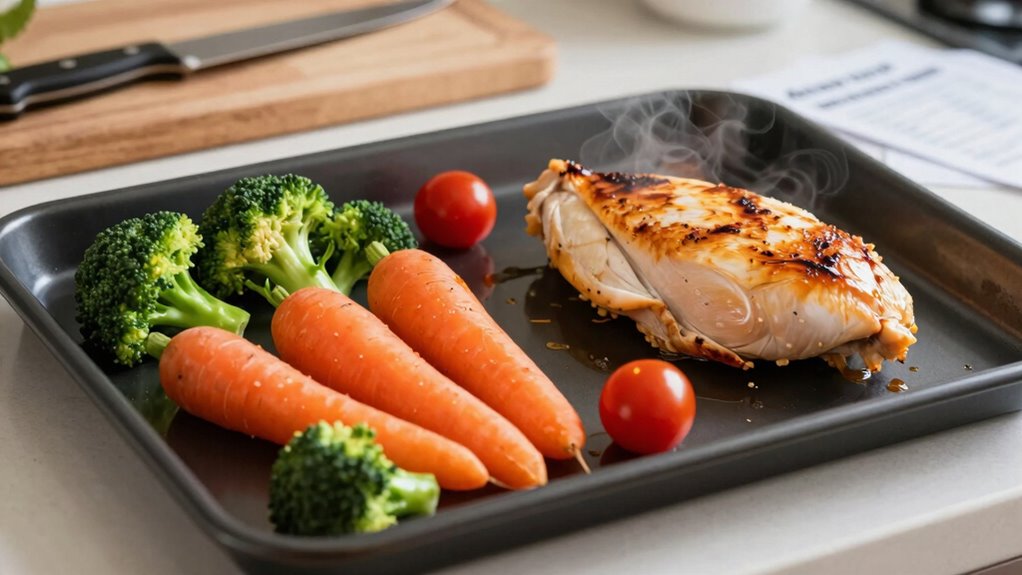

You need a solid timing strategy for sheet pan dinners because ingredients cook at different rates, and recipes often don’t account for that. Adjusting when you add or remove ingredients guarantees everything finishes perfectly—no overdone, soggy, or undercooked parts. Proper placement and portion size also matter. Keep in mind that substitutions or changes in quantities can affect cook times. Stick with these tips, and you’ll discover more ways to make your meals turn out just right.

Get kitchen staples and gadgets delivered free with Prime
- Fast, free delivery on millions of items
- Prime Video, Amazon Music and more included
- Member-only deals all year
Key Takeaways
- Different ingredients have varying cooking times, requiring careful timing adjustments for even doneness.
- Ingredient substitutions can significantly alter cooking durations, necessitating flexible timing strategies.
- Proper placement and size of ingredients affect cooking speed and need thoughtful planning.
- Staggering addition of ingredients ensures delicate items don’t overcook while others finish.
- Achieving a balanced, perfectly cooked sheet pan dinner depends on precise timing beyond standard recipes.
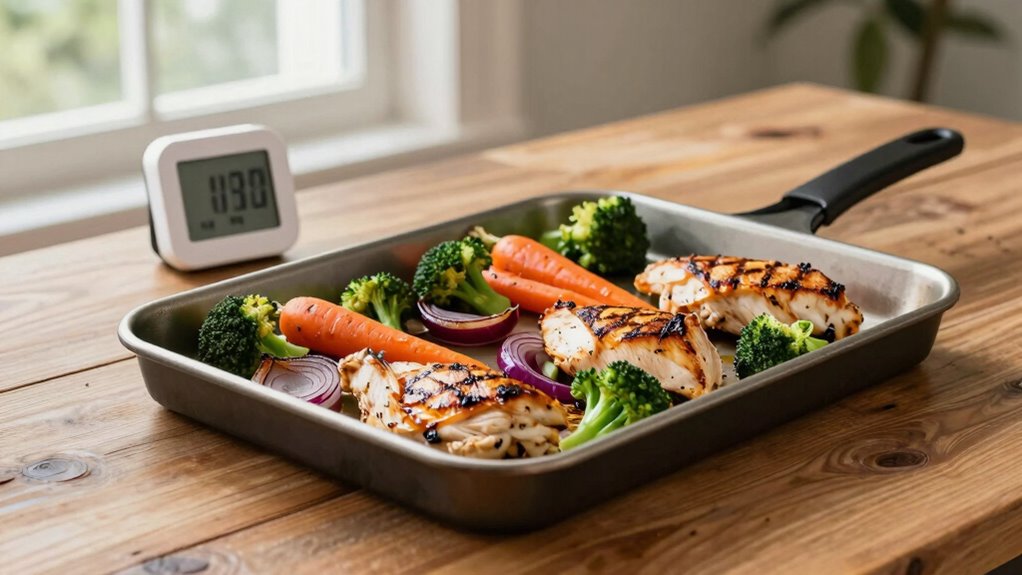
Cooking a perfect sheet pan dinner requires more than just tossing ingredients together; it’s all about timing. When you’re dealing with multiple components—protein, vegetables, and even grains—each element has its own ideal cooking time. If you don’t plan carefully, some ingredients might be overcooked and mushy, while others remain underdone. That’s why understanding the nuances of timing is essential, even more so than following a straightforward recipe. Recipes often list cook times as if every ingredient shares the same cooking pace, but in reality, you need to adjust your approach based on the specific ingredients you’re using.
Mastering sheet pan dinners hinges on timing—adjust for ingredients’ unique cooking needs for perfect results.
Ingredient substitutions can complicate this further. For example, if you swap out sweet potatoes for regular potatoes, you’ll need to reconsider the cooking time since they differ in texture and cooking speed. Similarly, using chicken thighs instead of breasts might require a longer cook time because of their thicker, fattier nature. Portion adjustments also impact timing; doubling the amount of ingredients on your sheet pan means some pieces might need more time to cook through evenly. Smaller or thinner pieces tend to cook faster, so chunkier cuts or larger portions should be added later or given extra time. This way, everything finishes simultaneously, ensuring you don’t end up with burnt edges or raw centers.
Timing isn’t just about the ingredients’ internal cooking times but also about their placement on the pan. Heavier, denser items like root vegetables should go in first or need to be cut into smaller pieces to cook evenly. Lighter, more delicate items like leafy greens or thinly sliced zucchini should be added later to prevent overcooking. Preheating your oven correctly and knowing how to stagger ingredient addition can make a huge difference. You might need to start roasting certain ingredients at different times or adjust the oven temperature slightly to accommodate various cooking needs. Additionally, understanding ingredient timing helps you tailor your approach to different recipes and substitutions. Knowing how to manage cooking times effectively can also help you stay flexible when experimenting with new ingredient combinations. Incorporating timing strategies into your planning can also help you manage multiple dishes or meal prep sessions more efficiently. Being aware of how different ingredients cook allows you to better coordinate your cooking process, saving time and avoiding frustration. Furthermore, considering the size and shape of ingredients can significantly influence their cooking duration, helping you achieve more consistent results. Ultimately, mastering sheet pan dinners demands a strategic approach to timing—more than what any recipe might suggest. You need to think critically about ingredient substitutions, portion adjustments, and how different components will cook together. Paying attention to these details helps you avoid common pitfalls like uneven cooking or soggy, overdone food. When you plan your steps carefully, you’ll find that your sheet pan dinners come out perfectly cooked, flavorful, and with minimal fuss. It’s this thoughtful timing that turns a simple tray of ingredients into a well-balanced, delicious meal.
As an affiliate, we earn on qualifying purchases.
Frequently Asked Questions
How Can I Prevent Ingredients From Overcooking or Burning?
To prevent ingredients from overcooking or burning, keep an eye on cooking temperature and adjust it if needed. Use a moderate heat to avoid charring. Also, layer ingredients thoughtfully: place denser or longer-cooking items on the bottom and more delicate ones on top. Stir or flip ingredients halfway through cooking when possible. This approach guarantees everything cooks evenly and prevents burning or overcooking.
What’s the Best Way to Adjust Timing for Different Oven Types?
Ever feel like your oven’s playing tricks? To adjust timing for different oven types, start by checking your oven calibration—many ovens aren’t as accurate as they seem. Pay attention to heat distribution; uneven heating can cause uneven cooking. Use an oven thermometer, and rotate your sheet pan during cooking. Small tweaks based on your oven’s quirks guarantee your sheet pan dinners come out perfectly cooked every time.
How Do I Handle Uneven Cooking of Ingredients?
You handle uneven cooking by layering ingredients carefully, placing denser items like root vegetables on the bottom and more delicate ones like greens on top. Stir or flip ingredients halfway through cooking to promote even browning. Seasoning suggestions include tossing vegetables in olive oil, salt, pepper, and herbs before layering. Keep an eye on your oven and adjust cooking times if some ingredients cook faster, ensuring everything is perfectly done.
Can I Prepare Sheet Pan Dinners in Advance for Later?
Yes, you can prep sheet pan dinners in advance, turning your kitchen into a well-orchestrated symphony. Wrap your ingredients tightly and store them in the fridge, ready to go. When you’re ready, just pop everything in the oven. For flavor enhancement, consider marinating proteins beforehand. Preparing in advance saves time, reduces stress, and guarantees you enjoy a fresh, delicious meal without sacrificing the perfect timing.
How Do I Modify Timing for Smaller or Larger Portions?
To modify timing for different portion sizes, start by adjusting the amount of ingredients on your sheet pan. Smaller portions typically cook faster, so check for doneness earlier, about 75% of the original time. Larger portions need extra time, so increase cooking duration gradually. Keep an eye on your ingredients and use a food thermometer if needed. Proper cooking adjustments guarantee everything cooks evenly and safely, regardless of portion size.
Conclusion
So, next time you toss everything on a sheet pan and hope for the best, remember that timing is your secret ingredient. Ironically, the simplest-looking dinners often demand the most planning, like orchestrating a symphony of ingredients that refuse to cook at the same pace. If you want a perfectly cooked sheet pan dinner, embrace the timing dance—otherwise, you’ll end up with a culinary chaos more memorable than the meal itself.
NFL season / tailgating Picks
team gear
As an affiliate, we earn on qualifying purchases.