Spanish paella comes in various delicious versions to suit different tastes. You can enjoy seafood paella with shellfish like mussels and shrimp, highlighting regional ingredients and fresh flavors. Chicken paella features seared thighs or drumsticks, adding a hearty touch, while vegetarian options incorporate vegetables like peppers and green beans for vibrant color. Each variation reflects tradition and regional produce. If you keep exploring, you’ll discover even more about these flavorful Spanish classics.
Key Takeaways
- Seafood paella features shellfish like mussels, clams, and shrimp, emphasizing fresh regional ingredients.
- Chicken paella uses thighs or drumsticks, often browned for added flavor, and is a hearty variation.
- Vegetarian paella includes vegetables such as bell peppers, tomatoes, and green beans, highlighting vibrant regional produce.
- Proper cooking techniques—like sautéing, even heat, and avoiding stirring—are essential for authentic textures.
- Regional ingredients and seasonings, especially saffron, define the unique flavors of each paella variation.
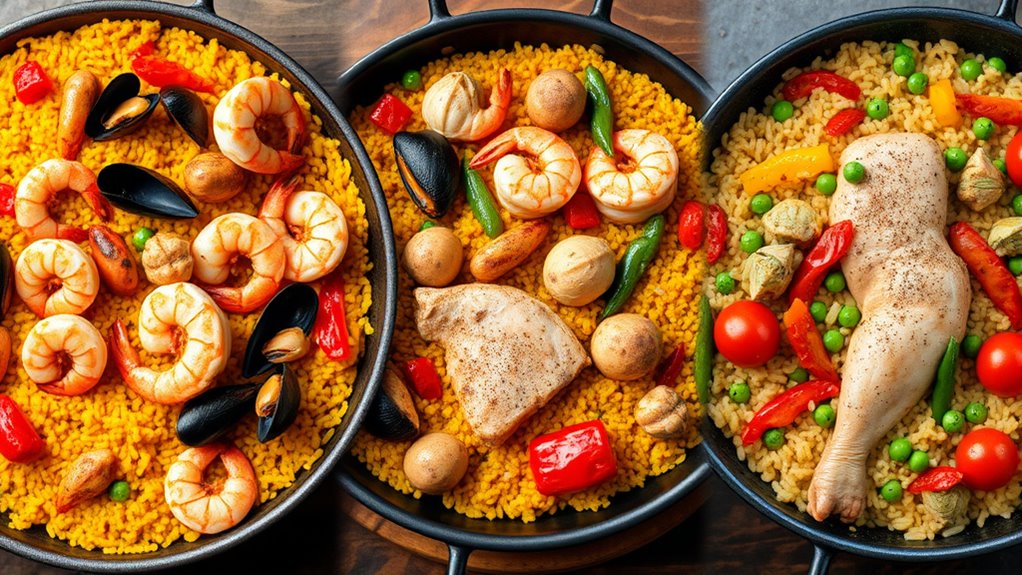
Spanish paella is a versatile dish that comes in many delicious variations, each showcasing different regional ingredients and flavors. When preparing paella, you’ll find that mastering specific cooking techniques is essential to achieving authentic results. The way you cook the rice, for example, influences the texture and flavor of your dish. Traditional methods involve sautéing ingredients in a wide, shallow pan called a paella pan, which allows for even heat distribution. You’ll want to start by heating good quality olive oil, then adding your regional ingredients—whether they’re fresh seafood, tender chicken, or colorful vegetables. These ingredients are cooked with care to extract maximum flavor before adding the rice and broth. The key is not to stir the rice once it’s added, enabling a desirable socarrat—the crispy crust at the bottom—that’s prized in authentic paella.
The regional ingredients vary widely depending on the type of paella you’re making. For seafood paella, you’ll likely incorporate fresh shellfish like mussels, clams, and shrimp, along with firm white fish. These ingredients are often sourced locally, adding a vibrant taste of the coast. Cooking techniques for seafood paella emphasize gentle simmering to prevent overcooking delicate seafood, which can become rubbery if exposed to high heat too long. You add seafood towards the end of cooking, so it remains tender and flavorful. For chicken paella, you’ll use cuts like thighs or drumsticks, which benefit from browning to develop a rich flavor. Searing the chicken before adding rice and broth helps lock in juices and creates a deeper taste profile. Vegetables like bell peppers, tomatoes, and green beans are common in vegetarian paella, adding color and texture. Here, you focus on building layers of flavor through careful sautéing and seasoning, ensuring each ingredient complements the others.
No matter which variation you choose, the secret lies in respecting regional ingredients and applying proper cooking techniques. Use a good-quality saffron to infuse your dish with authentic aroma and color. Adjust your heat carefully—too high, and you risk burning the socarrat; too low, and the rice won’t cook evenly. You’ll find that patience and attention to detail are your best tools for creating a flavorful, well-textured paella. Each regional variation offers a unique experience, but they all share the importance of technique and ingredient quality. Whether seafood, chicken, or vegetarian, you’re crafting a dish that celebrates Spain’s rich culinary heritage through careful preparation and love for regional ingredients.
Frequently Asked Questions
What Is the Origin History of Paella in Spain?
You discover that paella originated in Valencia, Spain, where farmers combined rice with local ingredients. Saffron sourcing became essential, giving the dish its distinctive golden color and flavor. You learn that rice selection, especially bomba or Calasparra rice, guarantees the perfect texture. Over time, paella evolved from a humble farm dish to a celebrated symbol of Spanish cuisine, enjoyed across regions with various ingredients and regional twists.
How Do Regional Ingredients Influence Paella Variations?
Regional ingredients shape paella like a painter’s palette, creating vibrant, unique flavors. You’ll find local spice blends and ingredient substitutions that reflect the land’s bounty—seafood along the coast, chorizo in inland areas, or fresh vegetables in the countryside. These regional touches transform classic recipes, making each paella a delicious mirror of local culture and climate, inviting you to taste the soul of Spain in every bite.
Are There Traditional Methods for Cooking Paella Authentically?
Yes, there are traditional methods for cooking paella authentically. You should use authentic cooking techniques like cooking over an open flame or a wide, shallow pan called a paella pan to guarantee even heat distribution. Apply traditional seasoning methods, such as using saffron and smoked paprika, to develop the authentic flavor. Avoid stirred during cooking, allowing the rice to form a crispy socarrat at the bottom for true authenticity.
Can Paella Be Made Vegan or Gluten-Free?
Yes, you can make paella vegan or gluten-free. You can use vegan substitutions like tofu, tempeh, or plant-based proteins for the meat and seafood. For a gluten-free option, choose gluten-free rice and broth, avoiding traditional ingredients like wheat-based seasonings. Adjust seasonings and vegetables to suit your taste, ensuring the dish remains flavorful and authentic while accommodating your dietary needs.
What Wine Pairs Best With Different Paella Types?
Imagine your palate as a vibrant dance floor, waiting for the perfect partner. For seafood paella, opt for a crisp, mineral-driven white wine like Albariño to enhance the oceanic flavors. With chicken, a light red like a Tempranillo complements the savory richness. Vegetarian paella pairs beautifully with a dry rosé, offering a invigorating flavor complement. Choose your wine to match the dish’s personality, elevating each bite to a harmonious celebration.
Conclusion
No matter which variation you choose—seafood, chicken, or vegetarian—paella is like a vibrant tapestry of flavors waiting to be explored. I once cooked a seafood paella with my family, and the aroma brought everyone to the table like bees to honey. Just as each thread adds color to a woven masterpiece, each ingredient brings its own magic. So, embrace your favorite variation and create your own delicious story in every bite.