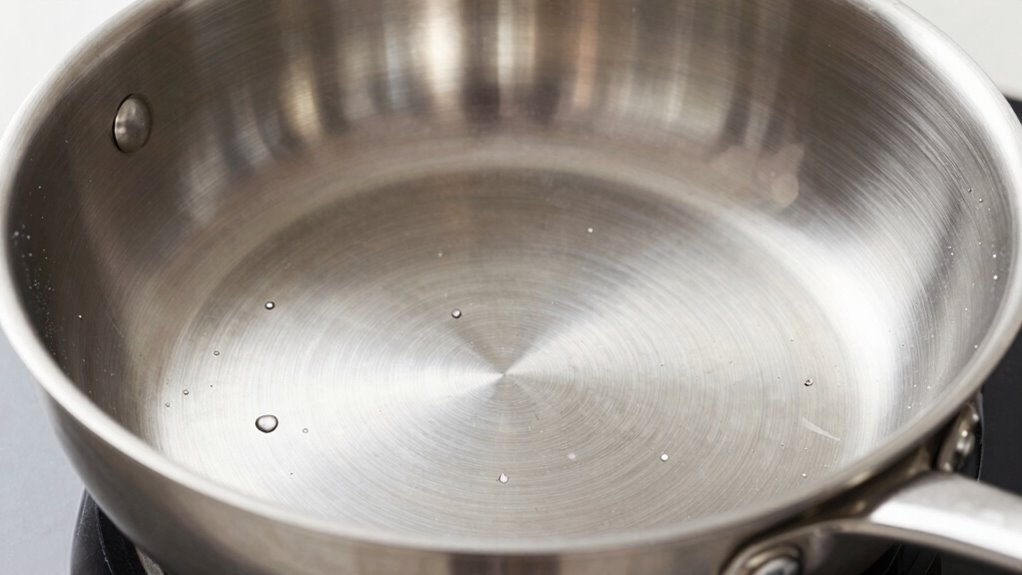

To prevent sticking on your stainless steel pan without adding more oil, start by properly seasoning it with multiple heats of a high smoke point oil, warming the pan until the oil just smokes, then wiping away excess. Building a seasoned layer improves food release over time. Clean the pan with warm water and gentle scrubbing, avoiding harsh abrasives, to preserve the coating. Continuing with these techniques will reveal more tips to maintain a non-stick surface effortlessly.

Get kitchen staples and gadgets delivered free — and shop member deals
- Fast, free delivery on millions of items
- Access to Prime Big Deal Days deals on October 6–7
- Prime Video, Amazon Music and more included
Key Takeaways
- Properly heat the pan and oil until just smoking before adding food to create a natural non-stick surface.
- Build and maintain a seasoned layer through repeated low-oil seasoning sessions for better food release.
- Use high smoke point oils and ensure even coating to enhance non-stick properties without additional oil.
- Allow the pan to cool slightly before cleaning to preserve the seasoning and prevent sticking.
- Regularly clean with gentle methods like warm water and baking soda to maintain the seasoned surface.

Stainless steel pans are a versatile and durable choice for your kitchen, but mastering their secrets can considerably improve your cooking results. One of the biggest challenges with these pans is preventing food from sticking without continually adding more oil. The key lies in understanding proper seasoning techniques and cleaning methods that optimize the non-stick qualities of your pan. When you season your stainless steel pan correctly, you create a natural, semi-nonstick surface that helps food glide smoothly, reducing the need for excess oil. To do this, heat your pan over medium heat until it’s hot, then add a thin layer of oil—something with a high smoke point like vegetable or canola oil. Swirl the oil around, ensuring the entire surface is coated. Let it heat until it just starts to smoke, then turn off the heat and let the pan cool. Wipe out any excess oil with a paper towel. Repeat this process a few times to build up a non-stick-like coating over time. Proper seasoning is a one-time effort that pays off by making your pan more forgiving and easier to clean.
Cleaning your stainless steel pan correctly is equally important in maintaining its non-stick surface and overall performance. After cooking, avoid using harsh abrasives or steel wool, which can scratch the surface and ruin your seasoning efforts. Instead, let the pan cool slightly, then fill it with warm water and a few drops of dish soap. Use a soft sponge or non-abrasive scrubber to loosen stuck-on food. For stubborn residues, sprinkle baking soda over the surface and scrub gently with a damp sponge. This method helps lift stuck-on bits without damaging the pan. Rinse thoroughly with warm water and dry immediately with a soft cloth to prevent water spots. Regularly cleaning your pan this way not only preserves its appearance but also helps maintain its seasoning layer, ensuring that food continues to slide off more easily over time. If you notice food sticking more than usual, revisit your seasoning techniques—sometimes a quick re-seasoning can restore the pan’s non-stick prowess.
stainless steel pan seasoning kit
As an affiliate, we earn on qualifying purchases.
As an affiliate, we earn on qualifying purchases.
Frequently Asked Questions
Can I Use Stainless Steel Pans on Induction Cooktops?
Yes, you can use stainless steel pans on induction cooktops. Just verify your pan has induction compatibility, which means it possesses magnetic properties. To test, see if a magnet sticks to the bottom—if it does, your pan is suitable. Using induction-compatible stainless steel pans allows for efficient heat transfer and easy cooking without sticking issues, especially if you follow proper heating techniques and use the right amount of oil.
How Do I Clean Stubborn Stains From Stainless Steel Pans?
To clean stubborn stains from stainless steel pans, soak them in warm, soapy water for a few hours to loosen residue. Use a non-abrasive scrubber or baking soda paste to gently scrub away tough stains. For tough pan stain removal, boil a mixture of vinegar and water in the pan, then scrub lightly. Regular cookware maintenance, like immediate cleaning after use, helps prevent stubborn stains and keeps your pans looking new.
Are Stainless Steel Pans Safe for Dishwasher Cleaning?
Yes, stainless steel pans are generally dishwasher safe, but you should check your manufacturer’s cleaning precautions first. To keep them in top shape, use a gentle cycle and avoid harsh detergents that could cause discoloration. While dishwasher cleaning is convenient, hand washing with warm water and mild soap often helps maintain the pan’s finish longer. Be mindful of any specific instructions for your cookware to ensure long-lasting performance.
What Types of Foods Are Best Cooked in Stainless Steel Pans?
You should cook foods like seared meats, sautéed vegetables, and delicate fish in stainless steel pans. These pans are ideal for browning and creating flavorful dishes, offering a non-stick alternative when properly heated. Avoid sticking by preheating the pan and using just enough oil. Stainless steel pans excel with high-heat cooking and are perfect for achieving a perfect sear, making them versatile for many of your favorite recipes.
How Long Do Stainless Steel Pans Typically Last?
Stainless steel pans typically last 10 to 15 years with proper maintenance. To maximize pan longevity, you should regularly clean and dry them thoroughly, avoid using metal utensils that can scratch the surface, and season your pan occasionally. Follow these maintenance tips, and you’ll keep your stainless steel cookware in great shape for years, ensuring even cooking and preventing sticking without needing extra oil.
Conclusion
Think of your stainless steel pan as a trusty steed—when you treat it with patience and respect, it becomes your loyal companion. By mastering the art of proper heating and seasoning, you’re guiding your pan to perform like a well-trained horse, effortlessly gliding through your cooking adventures without sticking or needing extra oil. With each use, you’re building a bond, turning everyday cooking into a smooth, enjoyable ride. Keep practicing, and your pan will always deliver a winning performance.
NFL season / tailgating Picks
team gear
As an affiliate, we earn on qualifying purchases.