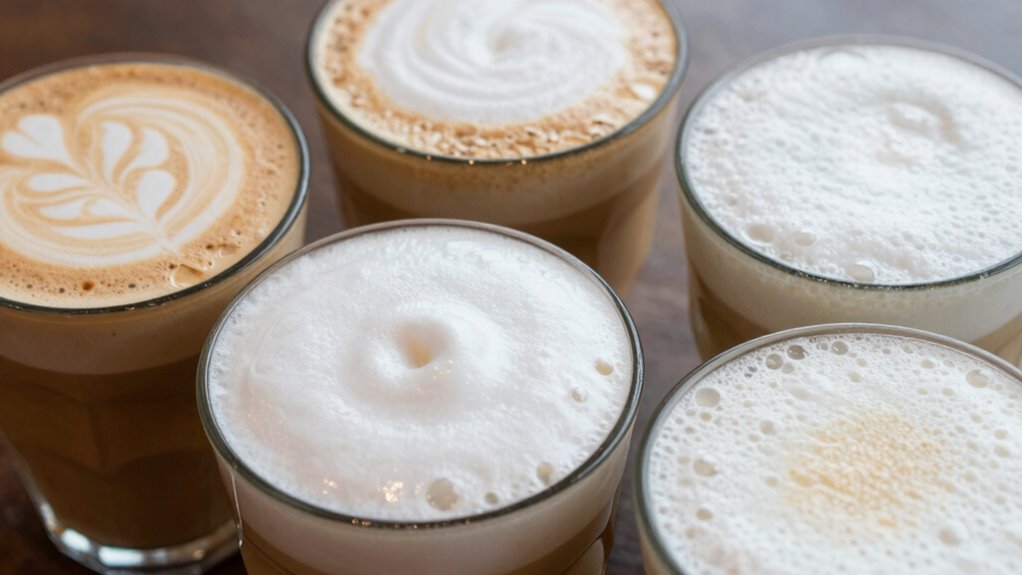

If you want milk alternatives that froth like dairy, try soy or oat milk, as their higher protein content helps create a rich microfoam. Barista blends of these milks are designed specifically for frothing, offering better stability and creaminess. Almond milk can work, but you’ll get better results with the right type or by following proper frothing techniques. Keep experimenting to find what works best for you, and there’s more tips to help you master the perfect froth.
Key Takeaways
- Soy milk is the most reliable plant-based milk for frothing due to its high protein content.
- Oat milk produces creamy, stable microfoam, making it ideal for barista-style lattes.
- Barista-specific blends of oat and soy milk enhance froth stability and texture.
- Almond milk can froth well with barista versions, but regular almond milk often produces thinner foam.
- Proper frothing techniques and temperature control are essential to achieve dairy-like foam with plant-based milks.

If you’re looking to enjoy a latte without dairy, there are now plenty of milk alternatives that can deliver rich flavor and creamy texture. Many people turn to plant-based options because they provide a satisfying experience similar to traditional milk. But one common concern is whether these alternatives can froth well, especially if you’re used to the thick, velvety foam of cow’s milk. The good news is that with the right frothing techniques, several plant-based milks can produce impressive froth, making your dairy-free lattes just as delightful.
Many plant-based milks can froth well with proper techniques for delicious dairy-free lattes.
First, it’s essential to understand that not all plant-based options froth equally. Soy milk tends to be the most reliable, thanks to its higher protein content, which helps create stable, creamy foam. When frothing soy milk, aim for a temperature around 140-150°F, and use a steaming wand with steady, gentle pressure. The result is a dense, glossy foam that holds up well in your latte. Oat milk has gained popularity for its naturally creamy texture and good frothing ability. It’s particularly well-suited for barista-style drinks because its natural sweetness and smooth consistency lend themselves to excellent microfoam. To achieve the best froth with oat milk, use a barista blend, and follow similar frothing techniques—starting with cold milk and gradually increasing temperature while steaming.
Almond milk, on the other hand, can be hit or miss. It’s lighter and less protein-rich, which means it often produces thinner foam that may not last as long. To improve your chances, choose almond milk labeled “barista” or “barista blend,” which usually contains added stabilizers and emulsifiers to enhance frothing. When frothing almond milk, be gentle and avoid over-heating, as it can become thin and lose its foam stability quickly.
Coconut milk is another option, but it generally produces a thinner, less stable foam. It’s best used for specialty drinks where a hint of coconut flavor is desired, rather than for traditional lattes. To maximize froth quality, opt for canned coconut milk with higher fat content, and follow similar frothing techniques—using a steam wand and monitoring temperature carefully.
Ultimately, mastering frothing techniques is key to making plant-based options work for your latte. Use fresh, cold milk, incorporate steady steam pressure, and focus on creating a fine microfoam. With practice, you’ll find that many plant-based milks can produce a luscious, velvety froth, rivaling dairy milk and allowing you to enjoy delicious, dairy-free lattes every day.
Frequently Asked Questions
Do All Plant-Based Milks Contain Added Sugars?
Not all plant-based milks contain added sugars. Many options, like unsweetened almond or oat milk, have no added sugars and rely on their natural sweetness. Always check labels to see if added sugars are present, as some brands add them for flavor. Choosing unsweetened varieties allows you to enjoy the natural sweetness without extra calories or artificial ingredients, making your latte healthier and more flavorful.
Which Milk Alternative Is Best for a Vegan Diet?
Looking for the best vegan milk alternative? Consider soy milk, packed with soy protein, offering a creamy texture perfect for lattes. It’s a great choice if you’re not allergic to nuts or soy. If you have nut allergies, avoid nut-based milks like almond or cashew. Isn’t it satisfying to find a plant-based option that froths well and aligns with your dietary needs? Soy milk might just be your go-to.
How Long Can Homemade Milk Froth Be Stored?
You should use homemade milk froth within 30 minutes for the best freshness and froth stability. After that, the storage duration decreases, and the froth can start to lose its texture and foam quality. To maintain ideal froth, store it in an airtight container in the fridge, but keep in mind that froth is best enjoyed right away for the perfect latte experience.
Are There Allergen-Free Milk Alternatives Suitable for Lattes?
Yes, there are allergen-free milk alternatives suitable for lattes. If you’re avoiding nuts, try oat or rice milk—they’re naturally nut-free and froth well. For soy-free options, coconut milk is a good choice, offering a rich texture suitable for lattes. Always check labels to confirm allergen information, and experiment with different brands to find the frothiest, most satisfying option that fits your dietary needs.
Do Flavored Milk Options Froth as Well as Plain Varieties?
Flavored milk options often don’t froth as well as plain varieties, and it’s like trying to whip a storm into a gentle breeze. The added sugars and flavors can weigh down the milk, killing its frothing performance. If you want that perfect, creamy foam, stick with plain or unsweetened milk alternatives. Flavored milk might taste great, but when it comes to frothing, it’s a total letdown, falling flat every time.
Conclusion
Choosing the right milk alternative is like selecting the perfect brush for a masterpiece; each one brings its own unique touch. Some froth like a gentle wave, others like a roaring tide, shaping your latte’s personality. Trust your palate as an artist trusts their tools. With patience and experimentation, you’ll find the ideal partner to craft a latte that sings—one that’s as harmonious and vibrant as a symphony in every frothy sip.