

Cold brew and iced coffee differ mainly in brewing methods and flavors. Cold brew involves steeping coarsely ground beans in cold water for 12-24 hours, producing a smooth, less acidic, and often sweeter drink with nuanced flavors. Iced coffee uses hot water to quickly extract bright, lively notes, then cools over ice, resulting in a sharper, more vibrant taste. If you’re curious about how these differences shape your favorite drinks, there’s more to discover below.

Get kitchen staples and gadgets delivered free — and shop member deals
- Fast, free delivery on millions of items
- Access to Prime Big Deal Days deals on October 6–7
- Prime Video, Amazon Music and more included
Key Takeaways
- Cold brew uses cold water and long steeping, resulting in a smooth, less acidic, and naturally sweeter coffee.
- Iced coffee is hot brewed, then cooled, highlighting brighter, more vibrant flavors and aromatic complexity.
- Cold brew often features beans with richer, deeper flavor profiles, while iced coffee emphasizes clarity and brightness.
- Cold brew’s slow extraction produces layered, nuanced notes with a fuller body; iced coffee offers lively, crisp flavors.
- Brewing temperature and method directly influence acidity, flavor depth, and overall taste experience.
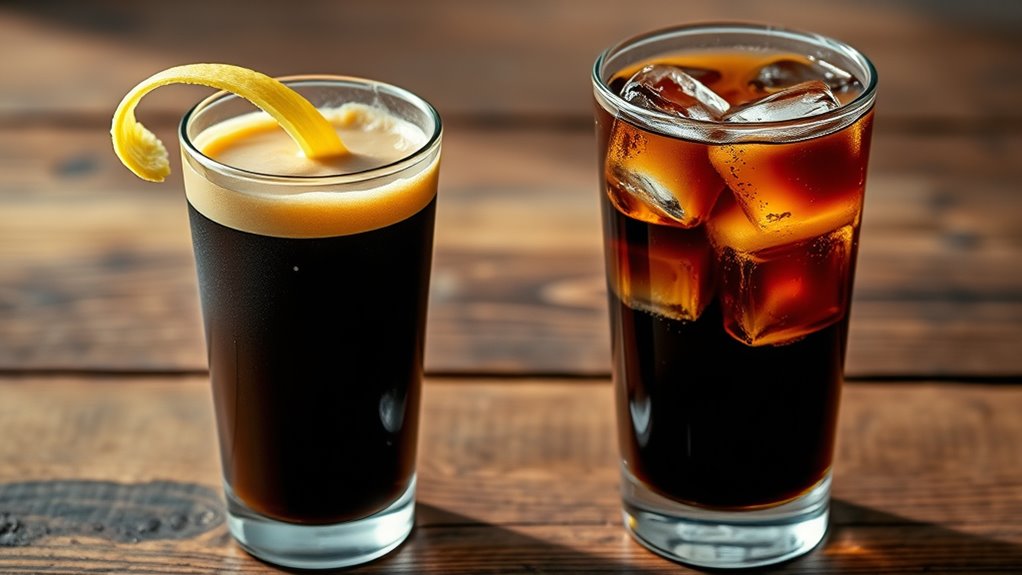
When choosing between cold brew coffee and iced coffee, understanding their differences can help you pick the best option for your taste and lifestyle. One key distinction lies in their coffee bean origin and how these beans influence flavor. Cold brew often uses a wider variety of beans, including those with richer, deeper flavors, because the brewing process extracts different notes at lower temperatures. Some beans from specific regions, like Ethiopia or Colombia, lend fruity or bright qualities that can shine through in cold brew, especially since the extended steeping time amplifies their unique characteristics. In contrast, iced coffee typically uses beans roasted to highlight clarity and brightness, often emphasizing beans from Central America. The origin matters because it impacts the flavor profile—cold brew might carry more complex, chocolatey, or nutty undertones, whereas iced coffee tends to be sharper and more vibrant.
Another important factor is brewing temperature, which directly affects flavor extraction and overall profile. Cold brew is made by steeping coarsely ground coffee in cold or room temperature water for 12 to 24 hours. This slow, low-temperature process results in a smooth, mellow beverage with less acidity and bitterness. The low temperature prevents the extraction of certain bitter compounds, leaving you with a naturally sweeter and fuller-bodied drink. Iced coffee, on the other hand, starts with hot brewed coffee—often prepared with drip or pour-over methods at temperatures around 195°F to 205°F—and then cooled down quickly over ice. Because hot water pulls out more soluble compounds rapidly, iced coffee tends to have a brighter, more pronounced acidity and a more vibrant flavor profile. The brewing temperature is essential here: higher temperatures extract a broader spectrum of flavors and aromatics, giving iced coffee its characteristic freshness.
The brewing method also influences the final flavor, with cold brew often having a more concentrated and less acidic taste, which can be diluted or served over ice as desired. In terms of taste, the differences in brewing temperature and bean origin create distinct experiences. Cold brew’s slow extraction brings out nuanced flavors that are often more subdued but richer, with a natural sweetness that requires little or no added sugar. Iced coffee’s hot brewing process captures the brightness and complexity of the beans, resulting in a sharper, more refreshing drink. If you prefer a smoother, less acidic coffee with deep, layered notes, cold brew might suit you best. Conversely, if you enjoy lively, crisp flavors that highlight the beans’ brightness, iced coffee could be more your style. Ultimately, understanding the influence of coffee bean origin and brewing temperature helps you choose the method that aligns with your taste preferences and lifestyle needs.
As an affiliate, we earn on qualifying purchases.
Frequently Asked Questions
Can Cold Brew Coffee Be Heated Without Losing Flavor?
Yes, you can heat cold brew coffee without losing flavor by using gentle warming techniques. To preserve its flavor, avoid boiling; instead, warm it slowly over low heat or use a double boiler. This gentle heating prevents bitterness and maintains the coffee’s smooth profile. Stir occasionally, and taste as you go to guarantee you don’t overheat. Proper warming techniques help you enjoy your cold brew warm without sacrificing its rich flavor.
What Are the Best Coffee Beans for Cold Brew Versus Iced Coffee?
For cold brew, you’ll want to choose beans with a bold, smooth profile, like dark roast or single origin beans from regions like Ethiopia or Sumatra, which develop rich flavors. Iced coffee works well with medium roast beans, offering balance and brightness. Both types benefit from freshly ground beans, but cold brew’s slow extraction highlights the depth of darker, single origin beans, while iced coffee’s versatility suits a wider bean roast range.
How Does Brewing Time Affect the Flavor in Each Method?
Imagine you’re making cold brew and decide to extend the brewing duration. Longer brewing time enhances flavor extraction, resulting in a richer, smoother profile. Conversely, with iced coffee, shorter brewing duration keeps the coffee bright and less bitter. Over-brewing either method can lead to overly strong or bitter flavors. So, adjusting brewing time carefully helps you control flavor extraction, ensuring your coffee’s taste matches your preference perfectly.
Are There Health Benefits Associated With Cold Brew or Iced Coffee?
You might notice that cold brew has higher antioxidant levels and caffeine concentration, which can boost your energy and provide health benefits. Cold brew’s lower acidity is gentler on your stomach, and its antioxidants support your immune system. Iced coffee, while also invigorating, may have slightly fewer antioxidants but offers a caffeine kick. Both drinks can be part of a healthy diet when consumed in moderation.
What Equipment Is Essential for Making Professional-Quality Cold Brew?
You’ll want some essential equipment to craft professional-quality cold brew, ensuring flavor preservation and smooth results. Start with a large, airtight container or cold brew maker to steep the coffee grounds evenly. A fine mesh strainer or cheesecloth helps filter out grounds effortlessly. Using a coffee grinder for fresh beans enhances flavor. Don’t forget a measuring scale for consistency. With these tools, you’ll enjoy rich, flavorful cold brew every time.
Conclusion
Ultimately, whether you prefer cold brew or iced coffee depends on your taste and lifestyle. For example, imagine Sarah, who favors cold brew for its smooth, bold flavor and convenient make-ahead prep, fitting perfectly into her busy mornings. On the other hand, John loves iced coffee’s quick, invigorating chill after a hot workout. Try both to see which suits your mood and taste buds best—each offers a unique coffee experience you’re bound to enjoy.
Halloween Picks
halloween
As an affiliate, we earn on qualifying purchases.