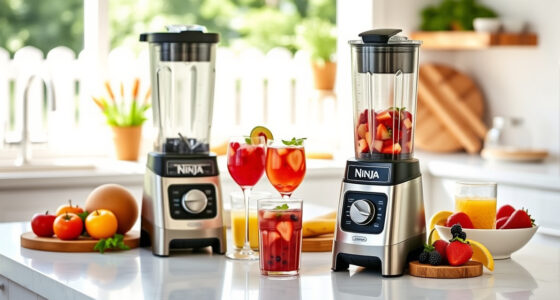
Most home blenders reveal smoothie texture problems like lumps, separation, or a too-thin consistency. These issues often happen because ingredients aren’t loaded correctly, with heavy or frozen items at the bottom or uneven distribution. Loud noises and grinding sounds signal blending struggles. To improve your results, pay attention to how you load ingredients and try techniques like layering and pausing. Keep exploring to discover solutions that can help you achieve smoother, creamier smoothies every time.

Get kitchen staples and gadgets delivered free with Prime
- Fast, free delivery on millions of items
- Prime Video, Amazon Music and more included
- Member-only deals all year
Key Takeaways
- Inconsistent blending and ingredient settling cause smoothies to be overly chunky or watery.
- Loud grinding noises indicate struggling ingredients or insufficient blender power.
- Overloading or improper layering leads to uneven textures and ingredient separation.
- Using techniques like layering liquids and pausing improves smoothness and consistency.
- Upgrading to a higher-capacity blender can better handle tough ingredients and reduce blending issues.
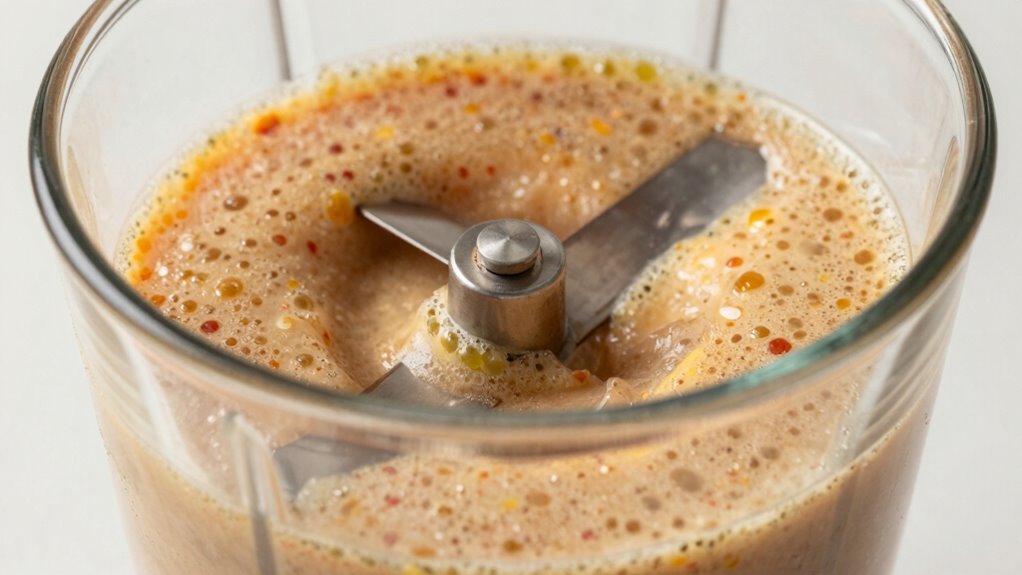
If your smoothie turns out lumpy or too thin, it can be frustrating, especially when you’re craving that perfect, creamy texture. One common issue home blenders face is inconsistent blending, often caused by the blender noise you hear during operation. A loud, grinding sound might signal that your blender is struggling, either because of ingredients settling at the bottom or because it’s simply not powerful enough to break down tougher items. You might notice that after a few seconds of blending, the noise diminishes or changes tone, indicating that the blades have hit a hard chunk or that the mixture has become uneven. This inconsistency can lead to ingredients settling or separating, which affects the final texture of your smoothie. When ingredients settle, the upper layers can become overly liquid while dense chunks sink, resulting in a smoothie that’s either too watery or too chunky.
Loud blender noises often signal struggling ingredients or uneven blending, leading to lumpy or watery smoothies.
You might also find that your smoothie isn’t as smooth as you’d like because of how your ingredients are layered or how well you load your blender. Overloading it with too many ingredients or placing dense items at the bottom can cause uneven blending, leading to ingredient settling during the process. This often results in a lumpy or uneven consistency, with some parts overly thick and others overly thin, which can be disappointing when you’re aiming for that silky finish. If the ingredients aren’t evenly distributed, your blender might work harder, creating more noise and increasing the chances of uneven blending. Recognizing how your blender handles different ingredients and understanding its capabilities can help you optimize your blending process for better results. Additionally, knowing the power of your blender can help you select suitable ingredients and avoid overloading. Being aware of your blender’s motor strength can guide you in choosing the right setting for various textures and ingredients. Also, paying attention to the design of your blender, such as blade shape and container shape, can influence how well ingredients are circulated during blending. Furthermore, understanding the impact of blending techniques can help you improve consistency and texture.
To fix this, you should start by adding liquids first, followed by softer ingredients, and then the heavier or frozen items on top. This helps ingredients circulate better around the blades, reducing the noise and preventing the settling effect. Pausing and scraping down the sides periodically during blending can also help distribute ingredients evenly and prevent chunks from sticking to the sides or settling at the bottom. If your blender is particularly noisy or struggles despite these adjustments, it might be time to consider a more powerful model designed to handle tougher ingredients smoothly without excessive noise or ingredient settling.
Ultimately, understanding how your ingredients behave and how your blender operates can help you troubleshoot these texture issues. By paying attention to blender noise and ensuring an even load, you can achieve a consistently smooth, creamy smoothie every time.
high power blender for smoothies
As an affiliate, we earn on qualifying purchases.
As an affiliate, we earn on qualifying purchases.
Frequently Asked Questions
Can Adding Liquid Improve the Smoothie Texture?
Adding liquid can notably improve your smoothie texture, making it smoother and easier to blend. You should consider fruit pairing that naturally releases more juice, like berries or melons, to enhance consistency. Regular blender maintenance, such as cleaning blades and jars, also helps prevent clogs and guarantees smooth blending. By adjusting the amount and type of liquid and keeping your blender in good shape, you’ll achieve a consistently creamy, well-blended smoothie every time.
Do Different Fruits Affect Blending Consistency?
Think of blending fruits like a dance—some move smoothly together, while others cause a stumble. Different fruits do affect blending consistency, creating texture variation. For example, bananas blend into a creamy base, but berries can add a chunkier feel. Fruit pairing matters; combining soft and firm fruits helps achieve a smoother texture. Experimenting with your combinations allows you to find the perfect balance, making your smoothies consistently delicious.
How Does Ice Impact Smoothie Smoothness?
Ice can make your smoothie less smooth because it doesn’t blend as easily, creating chunks and uneven textures. As ice melts, it turns into water, which can help improve consistency but may also make the smoothie too watery if overused. You’ll notice increased blender noise as it struggles to crush the ice, so using smaller pieces or pre-crushing ice can help achieve a creamier texture and reduce noise during blending.
Are There Specific Blender Settings for Better Texture?
To achieve a smoother texture, you should experiment with your blender’s settings, starting on a low speed then gradually increasing. This gentle approach helps protect your blender’s durability while reducing noise levels. Use the pulse function for better control over blending tough ingredients, and consider choosing settings labeled for smoothies or ice crushing. These adjustments can make your smoothies creamier without stressing your appliance or creating unnecessary noise.
Can Overloading the Blender Cause Texture Issues?
Overloading your blender can cause texture issues because it strains the motor and can damage the blades. When you pack it too full, the motor struggles to blend ingredients smoothly, resulting in uneven textures. Plus, excessive load increases the risk of blade damage over time. To avoid this, blend in smaller batches or add liquids gradually, helping your blender work efficiently and produce better smoothie textures.
Conclusion
So, next time your blender’s smoothie turns out chunky or grainy, remember it’s a common problem, even for the most seasoned home chefs. Just like the great chefs of old, you can troubleshoot by adjusting ingredients or blending techniques. Don’t let a texture mishap turn you into a modern-day culinary caveman. With a little patience and some trial and error, you’ll be sipping silky smoothies faster than you can say “Eureka!”
NFL season / tailgating Picks
team gear
As an affiliate, we earn on qualifying purchases.