
You can make sparkling water at home by controlling CO2 levels with a soda maker or CO2 tank, ensuring you get the perfect fizz without risking bottle bursts. Add natural flavors like lemon, berries, or herbs to create custom, healthy drinks without waste or artificial ingredients. Reusing bottles helps reduce plastic waste and eliminate single-use packaging. If you keep exploring, you’ll discover how to fine-tune your carbonation and flavor combinations even further.
Key Takeaways
- Use a soda maker or CO2 tank to control carbonation levels and prevent over-carbonation for safe, personalized bubbly drinks.
- Adjust CO2 input during carbonation to achieve desired fizziness without risking bottle bursting.
- Add natural flavorings like fruit slices or herbs after carbonation to create customizable, waste-free flavored sparkling water.
- Reuse bottles and avoid single-use cans or plastic bottles to reduce environmental waste.
- Experiment with different flavor combinations and carbonation levels to develop a variety of homemade sparkling water options.

Sparkling water at home has become an easy and cost-effective way to enjoy fizzy drinks without relying on store-bought options. With a simple soda maker or CO2 tank, you can create your own sparkling water anytime, customizing the carbonation level to suit your taste. DIY carbonation allows you to control the amount of fizz, ensuring your drink is just how you like it—whether lightly bubbly or intensely sparkling. This approach not only saves money but also reduces plastic waste since you’re reusing bottles and avoiding single-use cans and bottles. Plus, it gives you the freedom to experiment with flavors and find unique combinations that match your preferences.
Create your own sparkling water at home, customize carbonation, and experiment with flavors—all while saving money and reducing waste.
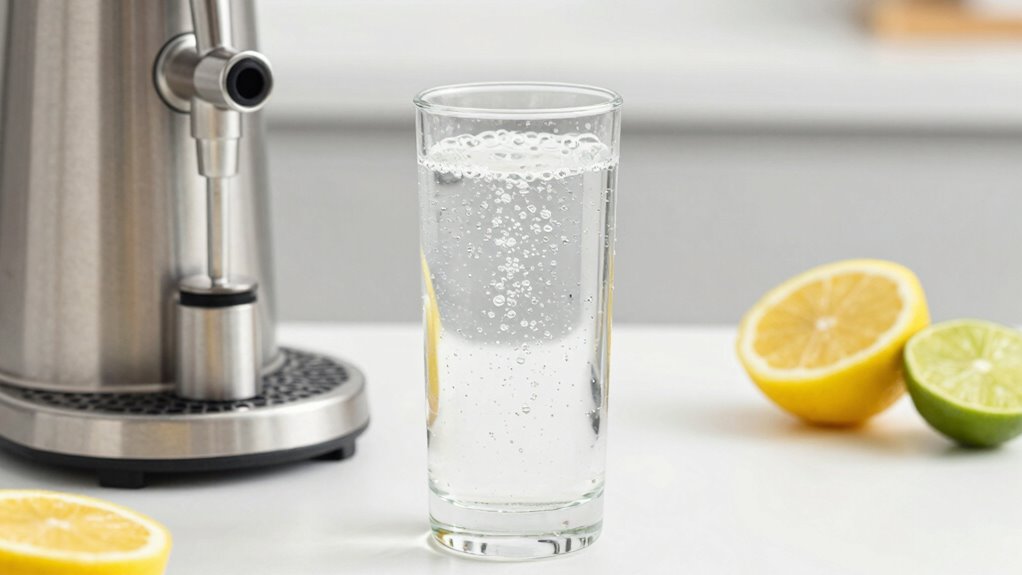
Once you’ve mastered the basics of CO2 infusion, you can elevate your sparkling water experience through flavor infusion. Instead of buying flavored sodas that come with added sugars and artificial ingredients, you can infuse your homemade sparkling water with fresh herbs, fruits, or even spices. Simply add slices of lemon, lime, berries, or cucumber to your bottle before adding the carbonation, or steep herbs like mint or basil for a more aromatic twist. The key is to experiment with different combinations to discover what you enjoy most. Flavor infusion not only enhances the taste but also adds an invigorating, natural element to your drink, making it more satisfying and personalized.
When doing DIY carbonation, it’s important to monitor the CO2 levels to prevent over-carbonation, which can cause bottles to burst. Most soda makers come with guidelines on how much gas to add for different levels of fizziness. By adjusting the CO2 input, you can achieve a perfect balance—light enough to feel smooth on your palate but still effervescent enough to tickle your senses. This control means you can tailor your sparkling water for different occasions, whether it’s a casual refreshment or a more festive drink with added flavors. Understanding CO2 levels and how they affect carbonation is essential for safe and effective DIY soda making.
Incorporating flavor infusion into your homemade sparkling water is straightforward and rewarding. It allows you to skip the artificial additives found in many commercial options while still enjoying a bubbly, flavorful beverage. Plus, since you’re making it at home, you can create a variety of combinations without waste or extra packaging. Over time, you’ll develop a repertoire of favorite mixes, turning your kitchen into a personalized soda fountain. With DIY carbonation and flavor infusion, you hold the power to craft sparkling water that’s fresh, flavorful, and perfectly suited to your taste.
Frequently Asked Questions
How Long Can Homemade Sparkling Water Stay Fizzy?
You can typically keep homemade sparkling water fizzy for about 24 to 48 hours if you store it properly. To maximize carbon retention, make certain you use a compatible, airtight bottle that seals well. Avoid opening it frequently, as this releases CO2 and reduces fizziness. For longer-lasting bubbles, use a high-quality bottle designed for carbonation, and keep it refrigerated to slow down CO2 escape.
Are There Health Risks With DIY CO2 Infusion?
DIY CO2 infusion can pose health risks if you don’t follow proper safety measures. You might accidentally over-pressurize your container, leading to leaks or explosions, which can cause injuries. Additionally, improper handling of CO2 or contaminated equipment can introduce bacteria or other contaminants, impacting health. Always prioritize DIY safety by using quality equipment, venting carefully, and following instructions closely to avoid any health implications.
Can Flavoring Affect CO2 Retention in Sparkling Water?
Yes, flavoring can affect CO2 retention in your sparkling water. Certain flavor additives may impact flavor stability and cause the CO2 to escape more quickly, altering fizz quality. Additive effects vary; some ingredients might weaken carbonation, while others help maintain it. To keep your sparkling water bubbly longer, choose flavorings carefully and add them after carbonation, ensuring they don’t interfere with CO2 retention.
What Types of Bottles Are Best for Carbonation?
You should choose bottles made of thick glass or sturdy, high-quality plastic for ideal carbonation efficiency. These materials withstand pressure better, keeping CO2 in longer. Glass bottles, especially with a proper seal, often provide the best carbonation retention, while certain plastic bottles are lightweight and convenient. Avoid thin or cheap bottles, as they risk leaks or bursting. Your choice impacts how well your sparkling water stays fizzy at home.
How Do I Measure CO2 Levels Accurately at Home?
To measure CO2 levels accurately at home, you should use a CO2 sensor designed for home carbonation. Place the sensor near your sparkling water container, ensuring it’s calibrated correctly for precise readings. These sensors detect CO2 concentration in parts per million (ppm), helping you monitor carbonation levels effectively. Regularly check and calibrate your sensor for consistent results, so you can enjoy perfectly carbonated water without waste or guesswork.
Conclusion
Now that you know how to craft sparkling water at home, you’re in the driver’s seat. Controlling CO2 levels and flavoring means you get exactly what you want without wasting a drop. It’s a win-win situation—you’re truly killing two birds with one stone by enjoying fresh, personalized fizz while reducing waste. So go ahead, experiment and savor every sip, because when you’re in charge, the sky’s the limit for your sparkling creations.