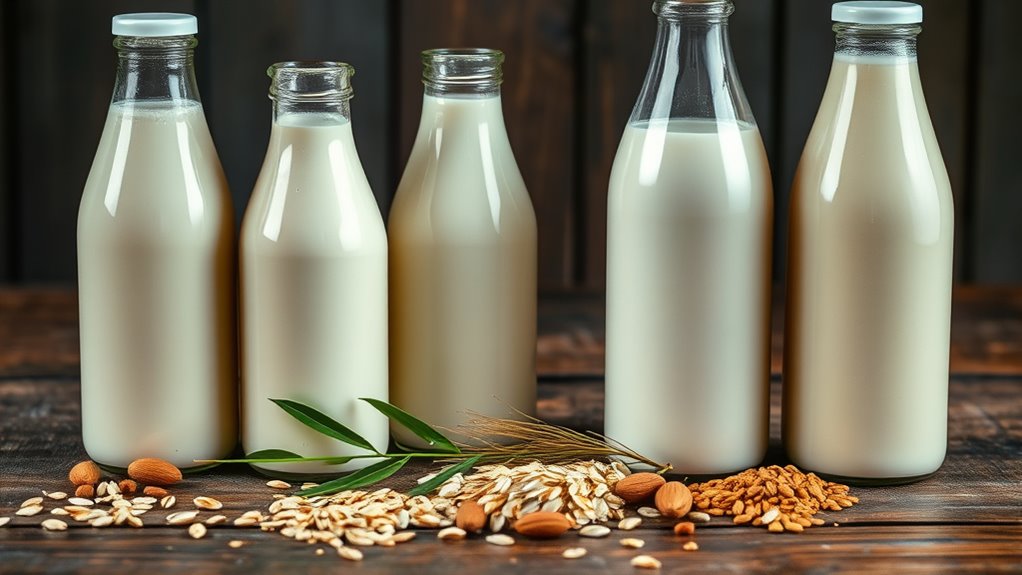

Plant-based milks like oat, almond, soy, and emerging options offer you versatile, nutritious, and eco-friendly alternatives to dairy. Oat milk is creamy and naturally sweet, perfect for coffee and cereals. Almond milk is low in calories with a nutty flavor, while soy milk provides complete protein and is good for your overall health. Emerging choices like pea and rice milk add variety to your diet. Keep exploring to discover how each can fit into your lifestyle.
Key Takeaways
- Oat, almond, soy, and emerging plant milks offer diverse flavors, textures, and nutritional profiles suitable for various dietary needs.
- Oat milk is creamy and naturally sweet, while almond milk is low-calorie with a nutty taste; soy and emerging options like pea milk are high in protein.
- Many plant milks are fortified with calcium, vitamin D, and B12, supporting bone health and overall wellness.
- Choosing plant-based milks reduces environmental impact and caters to lactose intolerance, vegan diets, and allergy considerations.
- The variety of plant milks allows for dietary customization, enhancing nutrition and taste in beverages and recipes.

Plant-based milks have become a popular alternative to dairy, offering a variety of options for those seeking plant-derived beverages. Whether you’re lactose intolerant, vegan, or just looking to diversify your diet, dairy alternatives like oat, almond, soy, and emerging plant milks give you plenty of choices. These options not only cater to dietary restrictions but also provide unique flavors and nutritional profiles, fitting into your plant-based nutrition goals.
Plant-based milks offer diverse, nutritious options for a healthier, eco-friendly diet.
When you choose plant-based milks, you’re making a conscious decision to incorporate more plant-derived beverages into your diet. Oat milk, for instance, has gained popularity for its creamy texture and naturally sweet flavor. It’s rich in fiber and often fortified with vitamins and minerals, making it a wholesome addition to cereal, coffee, or smoothies. Almond milk, on the other hand, is lower in calories and fat, with a subtle nutty taste that works well in coffee or baking. Its popularity stems from its lightness and versatility, although it’s worth noting that almond milk contains less protein compared to dairy or soy options.
Soy milk remains one of the most nutritionally complete dairy alternatives. It boasts a high protein content comparable to cow’s milk, making it an excellent choice if you’re looking to maintain adequate protein intake on a plant-based diet. Soy is also rich in isoflavones, which have been linked to potential health benefits. The emerging plant milks, like pea protein or rice milk, are expanding the options available to consumers. Pea milk, for example, offers high protein levels and a neutral flavor, making it suitable for various culinary uses. Rice milk is naturally sweet and hypoallergenic, ideal for those with nut or soy allergies.
Choosing plant-based nutrition through these dairy alternatives allows you to diversify your nutrient sources and reduce your environmental impact. Each type of plant milk has its own set of benefits, so you can select based on your taste preferences and nutritional needs. Many of these milks are fortified with calcium, vitamin D, and B12, making them comparable to dairy in supporting bone health and overall wellness. As you explore these options, you’ll find that incorporating a variety of plant milks can enhance your diet without sacrificing flavor or nutrition. Additionally, the nutritional content of plant milks, such as their vitamin and mineral fortification, is an important factor to consider when making your choice. With the growing variety of plant-derived beverages on the market, it’s easier than ever to enjoy the benefits of plant-based nutrition while aligning with your values and dietary needs.
As an affiliate, we earn on qualifying purchases.
Frequently Asked Questions
How Sustainable Are Plant-Based Milks Compared to Dairy?
You’re more sustainable choosing plant-based milks over dairy because they typically have a lower carbon footprint and use less water. For example, oat and soy milk generally require considerably less water and produce fewer greenhouse gases. Almond milk, however, uses more water, but still remains more eco-friendly overall. By opting for plant-based options, you help reduce environmental impact and conserve essential resources.
Are Plant-Based Milks Suitable for People With Nut Allergies?
If you have nut allergies, plant-based milks like almond milk aren’t appropriate due to nut allergy concerns. You might also face cross reactivity issues with other tree nuts, so it’s best to avoid them entirely. Instead, opt for nut-free options like oat or soy milk, which don’t carry the same allergy risks. Always check labels carefully to make sure the product is free from cross-contamination or nut-derived ingredients.
Can Plant-Based Milks Be Fortified for Better Nutrition?
You can absolutely fortify plant-based milks for better nutrition. Did you know that fortified versions often contain added calcium, vitamin D, and B12, supporting bone health and immune function? The fortification benefits include boosting nutrient levels, but it’s crucial to take into account nutrient absorption. Fortified plant-based milks enhance your nutrient intake, making them a nutritious alternative, especially if you’re looking to fill gaps in your diet without sacrificing flavor or variety.
What Are the Environmental Impacts of Oat Versus Almond Milk?
You’ll find oat milk has a lower environmental impact than almond milk, especially regarding water consumption and land use. Oats require less water and land to grow, making them more sustainable. Almond milk, on the other hand, demands significant water, often from drought-prone areas, and extensive land for almond orchards. Choosing oat milk helps reduce your environmental footprint, while almond milk’s impacts are more resource-intensive.
How Do Plant-Based Milks Affect Gut Health?
Plant-based milks can boost your gut health by supporting a diverse gut microbiome, improving your digestion, and reducing inflammation. Oat milk is rich in fiber, fostering beneficial bacteria, while almond milk is gentle on sensitive stomachs. Soy milk provides plant proteins that aid digestion. By choosing the right milk, you enhance your digestive health and nurture your gut microbiome, making every sip a step toward better well-being.
Conclusion
Think of plant-based milks as a vibrant garden, each variety a unique flower offering different flavors and benefits. As you explore oat, almond, soy, and emerging options, you’re like a gardener choosing which blooms to nurture. Embrace the diversity, knowing you’re cultivating a more sustainable, healthful future with every sip. Just as a garden thrives with variety, so does your diet—rich, colorful, and full of life.