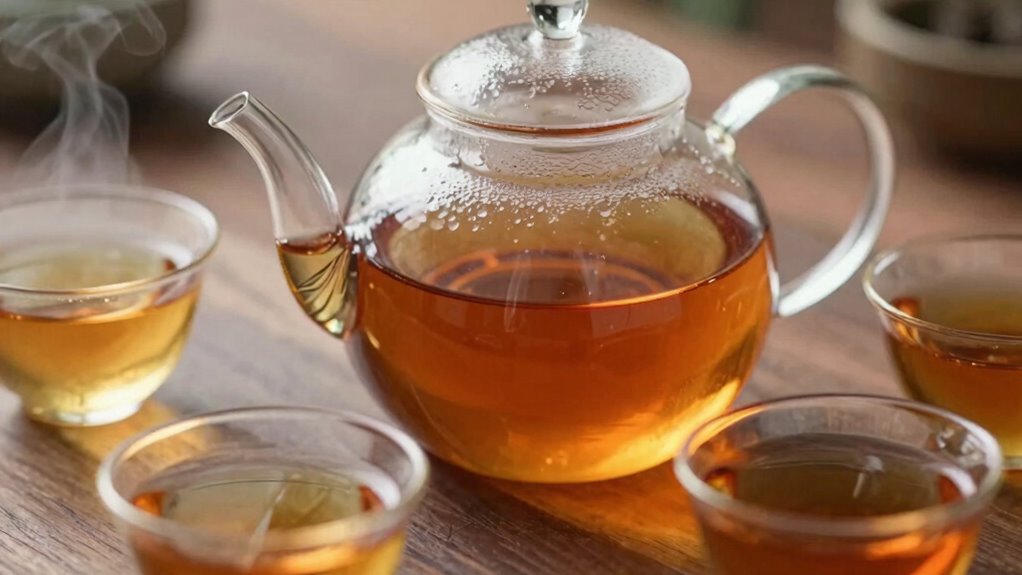

To brew each tea perfectly, you need to match the water temperature to the tea type. For white and green teas, aim for 160–185°F, while black and oolong teas do best between 195–212°F. Using a thermometer or kettle helps you hit the right temp, preventing over- or under-extraction. Keeping an eye on these details guarantees you enjoy the true flavor and aroma—if you want to master this process, there’s more to discover.
Key Takeaways
- Match tea type to recommended water temperature: white/green (160°F–185°F), black/oolong (195°F–212°F), aged teas (boiling).
- Use a thermometer or kettle with temperature control for precise brewing.
- Allow boiling water to cool slightly before pouring for delicate teas to prevent over-extraction.
- Proper temperature preserves aroma, flavor complexity, and prevents bitterness or dullness.
- Small temperature adjustments significantly impact tea flavor, so always aim for optimal temperature for each tea type.
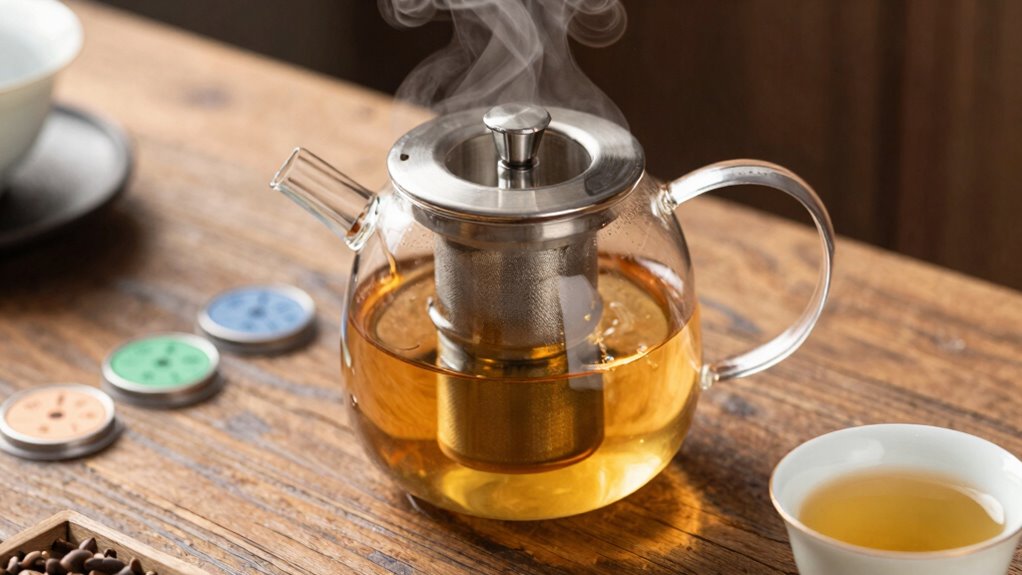
Ever wonder what the perfect temperature for brewing tea is? The answer depends on the type of tea you’re making, but understanding how temperature influences tea steeping can dramatically improve your brewing results. When you start with the right temperature, you guarantee proper flavor extraction, revealing the nuanced tastes and aromas that make each tea special. If the water is too hot or too cold, you risk either over-extracting or under-extracting the delicate compounds in the leaves, which can result in a brew that’s bitter or bland.
Tea steeping is a delicate process where temperature plays a crucial role. For delicate teas like white and green, lower temperatures—around 160°F to 185°F—are ideal. These cooler waters help prevent the leaves from becoming bitter and preserve their fresh, grassy, or floral notes. Conversely, black and oolong teas require hotter water, typically between 195°F and 212°F, to fully open the leaves and extract their bold, robust flavors. Pu-erh and other aged teas often need boiling water to achieve the depth and complexity expected from their steeping process.
Delicate teas like white and green thrive at 160°F–185°F, preserving their fresh, floral notes.
Getting the temperature right isn’t just about avoiding bitterness; it also influences how well flavors are extracted from the leaves. Proper flavor extraction means that the subtle undertones and complex layers of aroma are released into your cup. If water’s too hot for green tea, it can cause over-extraction, turning the brew bitter and astringent. If it’s too cool for black tea, the flavor may be weak and underdeveloped. The goal is to match the tea type with the right temperature, guaranteeing the leaves release their full potential without turning unpleasant. Additionally, understanding the importance of temperature control in brewing can help you consistently achieve optimal results. Using a thermometer or temperature-controlled kettle can make a significant difference, especially if you’re aiming for precision. Allow your water to reach the recommended temperature before pouring over the tea leaves. If you’re using a traditional kettle that doesn’t have temperature control, you can let the water sit for a minute or two after boiling to cool down to the desired temperature. This small step helps you control the tea steeping process, ensuring that each brew is optimized for flavor extraction.
Frequently Asked Questions
How Does Altitude Affect Ideal Tea Brewing Temperatures?
Altitude effects your tea temperature by causing water to boil at lower temperatures as you go higher. This means you need to adjust your brewing process because the water’s not as hot, which can impact your tea’s flavor. To get the best taste, you might need to steep longer or use slightly hotter water to compensate for the altitude effects. Always pay attention to your tea’s specific temperature needs for ideal brewing.
Can Water Mineral Content Influence Tea Flavor at Different Temperatures?
Imagine your tea as a symphony, where water mineral content acts as the conductor’s baton. Mineral interactions can subtly influence flavor extraction, amplifying or muting delicate notes at different temperatures. Hard water may bring out astringency, while soft water enhances sweetness. So, yes, water mineral content profoundly shapes your tea’s flavor profile, and adjusting brewing temperatures allows you to orchestrate a harmonious balance tailored to each tea’s unique character.
Are There Specific Temperature Tips for Brewing Herbal Teas?
For herbal infusions, you should aim for a temperature around 200°F (93°C), but be mindful of their temperature sensitivity. Too hot can cause bitterness, while too cool might not extract full flavor. You’ll want to steep herbal teas just below boiling point to preserve delicate flavors and nutrients. Adjust slightly based on the herbs’ strength, and always steep for the recommended time to avoid over-extraction.
How Long Should I Steep Tea at Various Temperatures?
Think of steeping like painting a masterpiece; timing is everything. For green teas at 160-180°F, steep 2-3 minutes to develop a delicate taste, while black teas at 200-212°F need 3-5 minutes for full flavor. Herbal teas, often steeped at boiling for 5-7 minutes, maximize taste development. Adjust steep time based on your preference, but remember, over-steeping can turn your tea bitter.
Do Different Teapots Require Different Temperature Adjustments?
Yes, different teapots need temperature adjustments based on their material and size. For example, a ceramic teapot retains heat well, so you might lower the temperature slightly to prevent over-extraction. A smaller teapot heats quickly and may require a slightly higher temperature to brew properly. Keep in mind, glass or clay teapots also affect heat retention, so adjust your brewing temperature accordingly to get the best flavor.
Conclusion
By mastering tea temperatures, you can enjoy perfect brews every time. For example, imagine brewing a delicate green tea at the ideal 175°F; it preserves its bright flavor without bitterness. If you follow this guide, you’ll avoid ruining your favorite teas and elevate your tea experience. So next time you brew, remember the right temperature, and savor each cup just as it’s meant to be enjoyed—full of flavor and aroma.