
TL;DR

Get kitchen staples and gadgets delivered free — and shop member deals
- Fast, free delivery on millions of items
- Access to Prime Big Deal Days deals on October 6–7
- Prime Video, Amazon Music and more included
A report by The Kitchn describes how AI-generated recipe results can combine ingredients and instructions from different online sources, sometimes with inaccurate details and no evidence of testing. Recipe developers say this can mislead cooks, waste food and undermine trust; the reliability and testing behind individual AI recipe results are not always clear.
The Kitchn has reported that AI-generated recipes appearing in search results and social media can combine ingredients and methods from different sources, producing instructions that may be inaccurate or untested. The report, published recently, draws on accounts from recipe developers who say the results can mislead home cooks and misrepresent their work.
The Kitchn describes these mixed outputs as “Frankenstein recipes,” a term used by food blogger Adam Gallagher of Inspired Taste. According to the report, a search for a dish such as lasagna or roast chicken may return an AI-generated answer assembled from details across multiple recipe websites. The result can read like a single coherent recipe even when its ingredients and method came from different sources.
Gallagher told The Kitchn that the issue became more serious after Gemini 3 arrived in November 2025. He said AI results had included Inspired Taste photos and combined recipe details in ways that did not match the site’s published instructions. One example cited by the report was a key lime pie result that said the site used three egg yolks; Inspired Taste’s Joanne Gallagher said its recipe calls for five.
Recipe developers say a central concern is that generated instructions may not have been cooked and tested. Baker Sally McKenney told The Kitchn that AI can produce recipes that sound plausible without showing that they work or taste good. The report also points to AI-generated food images and videos shared on social media, some under accounts that appear not to represent identifiable recipe developers.
Why Untested Recipes Cost Cooks
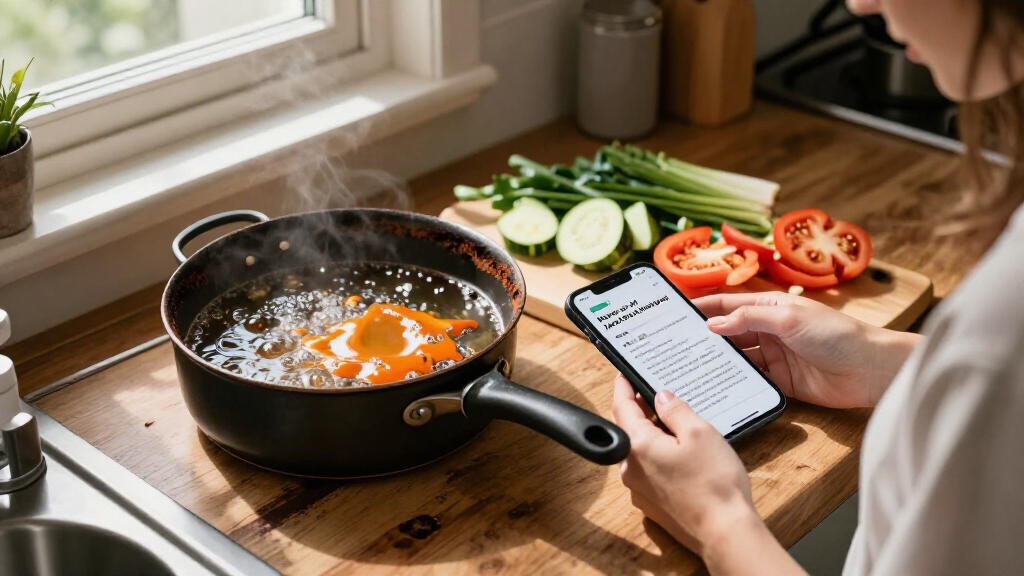
For people cooking at home, a plausible-looking recipe is not necessarily a dependable one. If ingredient amounts or steps are wrong, the result can be a failed meal or bake, along with wasted ingredients, time and money. The risk is particularly hard to spot before cooking because generated instructions may use familiar terminology and appear authoritative.
The report also raises questions about credit and trust. If an AI summary mixes work from multiple recipe publishers, readers may not know whose instructions they are following or whether anyone has tested them. Developers interviewed by The Kitchn said inaccurate results can damage a publisher’s credibility, even when the publisher did not create the faulty version.
Those concerns do not establish that every AI-generated recipe is wrong. They do show why cooks should distinguish between text that has been generated or summarized and a recipe with an identifiable author, clear sourcing and a record of testing.
digital kitchen scale for precise ingredient measurement
As an affiliate, we earn on qualifying purchases.
As an affiliate, we earn on qualifying purchases.
How AI Recipes Enter Search
The Kitchn says recipe content generated by AI has become more visible over the past few years. Its report describes AI-produced recipe summaries in Google search, including AI Overviews or AI mode, alongside recipe images and videos circulating on platforms such as TikTok. These formats can put instructions in front of users before they visit the original sites.
Adam and Joanne Gallagher told The Kitchn they first noticed AI recipes gaining popularity in March 2024. The couple later began speaking publicly about the issue; The Kitchn says a video series they posted in December 2025 went viral. The report also cites McKenney, who has published recipes on Sally’s Baking since 2011, on the difference between generated text and recipes developed through repeated testing and tasting.
The article reflects interviews and observations from recipe publishers and The Kitchn staff. It does not provide a systematic count of AI recipes, a measurement of how often generated results fail, or an independent test of specific search systems.
““LLMs (Large Language Models) are trying to take tokens or words from around the internet and gobble them up, then predict something it’s seen before.””
— Adam Gallagher, co-founder of Inspired Taste, speaking to The Kitchn
What the Report Cannot Establish
The Kitchn’s reporting documents examples and concerns raised by recipe developers, but it does not establish how common inaccurate AI recipes are across search engines or social platforms. The supplied report also gives no failure-rate data, independent testing results, or detailed assessment of how each platform selects and labels recipe answers.
It remains unclear which specific results have been tested by a person, whether platforms consistently identify generated or combined material, and what steps publishers can take when their photos or recipe details appear in an AI response. The provided source text cuts off during its discussion of visual clues, so it does not supply a complete checklist of signs to look for.
Checks Before You Start Cooking
For now, cooks can reduce the chance of relying on a mismatched result by opening the original recipe page, checking that the listed ingredients match the instructions, and looking for an identifiable author or publisher. A recipe that gives no source, offers contradictory quantities or uses steps that do not fit its ingredients merits extra scrutiny. When the instructions remain unclear, choose a recipe from a source that explains its testing process rather than guessing at a correction.
There is no specific platform change or regulatory step announced in the source report. The issue may continue to develop as search tools and recipe publishers respond to concerns about accuracy, attribution and labeling. Until more evidence or platform details are available, the report’s practical takeaway is limited but direct: treat generated recipe text as unverified, not as proof that a dish has been made successfully.
Key Questions
What does “Frankenstein recipe” mean?
It is Adam Gallagher’s term, as reported by The Kitchn, for a recipe-like result that combines details from multiple sources, such as ingredients from one site and a method from another.
Are all AI-generated recipes inaccurate?
The report does not show that every AI-generated recipe is wrong. Its concern is that generated instructions may sound plausible without being tested or verified, and it provides no overall failure rate.
How can I check a recipe before making it?
Look for a named author and publisher, compare the ingredient list with the method, and check the original linked recipe rather than relying only on a search summary. If quantities or steps conflict, choose a clear, traceable recipe.
What can go wrong if a recipe is inaccurate?
As recipe developer Sally McKenney told The Kitchn, an untested recipe may not work or taste good. The report gives examples of possible failed bakes and notes that cooks may lose food, time and money.
Source: rss
Fall Picks
fall essentials
As an affiliate, we earn on qualifying purchases.