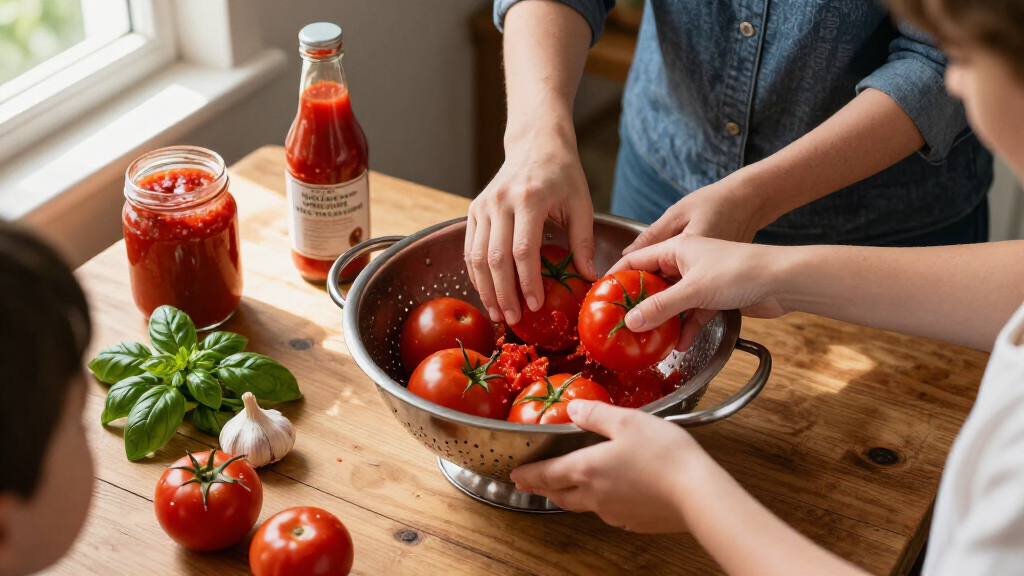

📊 Full opportunity report: Homemade Passata Day: How Italian Families Bottle A Year Of Tomato Sauce on Mad Tasting — validation score, market gap, and execution plan.

Get kitchen staples and gadgets delivered free with Prime
- Fast, free delivery on millions of items
- Prime Video, Amazon Music and more included
- Member-only deals all year
TL;DR
Homemade Passata Day is an annual family event in Italy and diaspora communities, where ripe tomatoes are processed into passata for the year. It combines tradition, skill-sharing, and modern food safety methods. The event varies by region and family, but remains a key cultural practice. Learn more about the cultural significance of this tradition in the original analysis.
Homemade Passata Day is an annual family gathering where Italian households process ripe summer tomatoes into bottled passata for the year. This tradition, practiced mainly in southern Italy and among diaspora communities, involves washing, milling, straining, and heat-processing tomatoes using current, validated recipes. It remains a vital cultural event that combines food preservation with family bonding and regional identity.
On Passata Day, family members work together in open courtyards or kitchens, using tools like tomato mills and sterilized jars to produce a fresh, plain tomato purée. The process includes thorough cleaning, milling, straining, and heat-processing to ensure food safety, following current scientific guidelines for acidification and processing times. This traditional approach is detailed in the original analysis. The event often begins early in the morning, with tomatoes being sorted and prepared under the sun, and continues through the day with shared meals and storytelling.
The resulting passata is a versatile, lightly processed tomato product that serves as a base for sauces, soups, and other dishes throughout the year. The choice of tomatoes—often plum varieties like Roma or San Marzano—affects yield and consistency, but regional and family traditions influence the timing and specific methods. The practice is not officially regulated but relies on current safety standards to prevent spoilage and foodborne illness.
Homemade Passata Day
How Italian families transform ripe summer tomatoes into a year of sauce—combining shared labor, inherited knowledge, regional identity, and modern food-safety practice.
From sun-warmed fruit to sealed jars
The day often starts early in a courtyard, garage, or large kitchen. Work is divided across generations, turning a large tomato harvest into a smooth, plain purée ready for sauces, soups, and braises.
Sort & wash
Choose fully ripe, sound tomatoes. Remove damaged fruit and wash everything thoroughly.
Trim & soften
Remove unwanted parts and prepare the tomatoes according to the validated recipe being used.
Mill & strain
A tomato mill separates smooth pulp from skins and seeds. Food-safe modern equipment can also help.
Fill clean jars
Use suitable containers and follow the recipe’s instructions for headspace, acidification, and handling.
Heat-process
Apply the validated time and method for the jar size, product, equipment, and local conditions.
Tradition does not replace tested guidance. Shelf-stable passata requires a current, validated canning recipe with the specified acidification and heat treatment. If that process is not followed, refrigerate or freeze the product instead.
A pantry project with a social heartbeat
Passata Day survives despite supermarket convenience because its value is not measured only in jars. The event connects food, memory, place, and family participation.
Regional roots
Tomato varieties, tools, timing, and techniques express the customs of a particular town, region, or family line.
Skills in motion
Experienced hands teach younger relatives how to judge ripeness, organize the workflow, operate equipment, and recognize quality.
Shared labor
Washing, milling, filling, cooking, eating, and storytelling turn preservation work into a recurring family gathering.
Season, place, and tomatoes shape the day
There is no official Passata Day date and no single universal recipe. Families schedule it around peak fruit, weather, available helpers, inherited routines, and current preservation guidance.
| Setting | Usual window | Common character | What varies |
|---|---|---|---|
| Southern Italy | Late summer | Courtyard or household gathering | Local harvest and regional technique |
| Italian diaspora | Local tomato season | Heritage ritual adapted to a new climate | Equipment, varieties, and household scale |
| Australia | January–March | Summer production across generations | Timing by heat, supply, and ripeness |
| Modern small batch | Peak season or frozen supply | Compact kitchen workflow | Batch size and preservation method |
The recipe is part of the equipment
A clean jar alone does not make tomato purée shelf-stable. Safe preservation depends on following a complete, scientifically validated process without improvising its critical steps.
Four non-negotiables
Use a current tested recipe. Follow a trusted food-safety or extension authority from start to finish.
Do not guess acidification. Use the exact acid type and quantity specified for the container size.
Match the process. Processing method and time must correspond to the product, jar, altitude, and equipment.
Inspect before eating. Discard containers with leakage, swelling, broken seals, mold, spurting, or suspicious odor.
Choose the right storage path
The preservation method determines where the finished passata belongs.
Store sealed jars in the conditions specified by the tested recipe and inspect every jar before use.
Do not treat the product as shelf-stable. Refrigerate promptly for short-term use or freeze it.
Do not taste the contents. When safety is uncertain, discard the product.
Cultural and Food Safety Importance of Passata Day
This tradition sustains regional identity and family bonds, passing down skills and stories across generations. It also exemplifies how traditional practices adapt to modern food safety standards, ensuring the preservation of heritage while safeguarding health. For many, Passata Day is more than food; it’s a celebration of community and cultural continuity.
As an affiliate, we earn on qualifying purchases.
Regional Variations and Modern Adaptations of Passata Tradition
While there is no single official date or recipe, Passata Day typically occurs during late summer in Italy, especially in southern regions like Campania, and during the Australian summer months from January to March. Historically, families relied on heirloom tools and local tomatoes, but today, many adapt the process using validated recipes and sterilization techniques to meet food safety standards. The practice has persisted despite the availability of store-bought passata, emphasizing its cultural significance and the value placed on homemade preservation.
“Passata Day is a vital link to regional identity, blending tradition with modern safety practices.”
— Italian food historian Maria Russo
Uncertainties About Regional Practices and Food Safety Standards
While the general process and safety guidelines are established, specific regional variations, timing, and family customs can differ widely. It is not yet clear how widespread adherence to current safety standards is, or how the tradition might evolve with changing food regulations and climate conditions. Details about the exact recipes and processing times used by different families remain anecdotal.
Future of Passata Day Amid Changing Food Regulations
As awareness of food safety grows, more families are expected to adopt validated canning methods, possibly standardizing practices across regions. There may also be increased documentation and sharing of recipes online, helping preserve the tradition while ensuring safety. Monitoring how climate change affects tomato ripening and harvest timing could influence future Passata Day schedules and methods.
Key Questions
Can I participate in Passata Day if I don’t have traditional equipment?
Yes. While traditional tools like tomato mills are common, modern food-safe blenders or food processors can be used, provided you follow validated safety and acidification guidelines.
What tomatoes are best for making passata?
Fully ripe, fleshy, and flavorful tomatoes like Roma or San Marzano are preferred because they contain more pulp and less water, making processing easier and yield better.
Is homemade passata safe to store at room temperature?
Only if processed according to current, validated canning recipes that include proper acidification and heat treatment. Otherwise, refrigeration or freezing is recommended.
How long does homemade passata last?
Properly canned and stored in sterilized jars, passata can last up to a year or more. Always check for signs of spoilage before use.
Can I make passata outside of the traditional season?
While peak-season tomatoes are ideal, frozen or imported ripe tomatoes can be used, but processing times and safety measures should be adjusted accordingly.
Source: Mad Tasting
NFL season / tailgating Picks
team gear
As an affiliate, we earn on qualifying purchases.