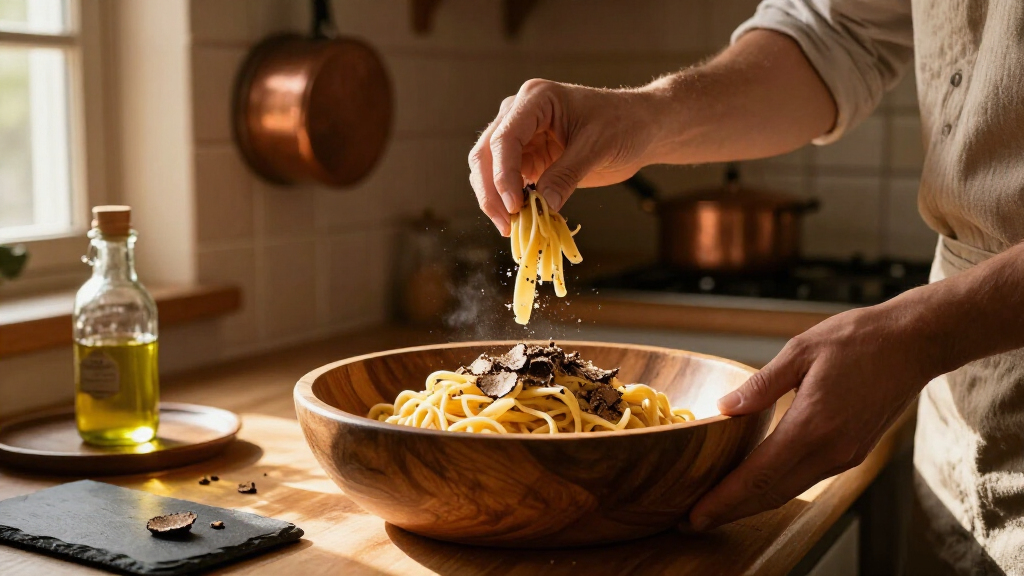

🔍 Read the full analysis: Strangozzi Al Tartufo Nero: Umbria's Truffle Pasta At Home on Mad Tasting

Get kitchen staples and gadgets delivered free with Prime
- Fast, free delivery on millions of items
- Prime Video, Amazon Music and more included
- Member-only deals all year
TL;DR
This article details how to make traditional Umbrian strangozzi al tartufo nero at home, emphasizing gentle heat, quality ingredients, and proper truffle handling. It explains why this dish captures the earthy aroma of Umbrian woodlands and how to achieve the best flavor. The piece also discusses truffle types, preparation tips, and what makes this pasta unique.
The traditional Umbrian dish strangozzi al tartufo nero can be made at home following specific techniques that preserve the truffle’s aroma, according to culinary experts. This guide provides step-by-step instructions for creating this rustic, earthy pasta, emphasizing the importance of gentle heat and quality ingredients. With fresh black truffle, a few simple ingredients, and careful technique, home cooks can replicate the dish that celebrates Umbria’s woodland bounty.
The dish involves thick, hand-cut strangozzi noodles made from flour and water, traditionally without eggs. These noodles, with their irregular shape and ridged surface, are ideal for holding a delicate truffle-infused oil-based sauce. The key to success lies in gentle cooking: warming the olive oil with garlic, then adding the pasta until just al dente, and finally mixing in most of the freshly grated black truffle off the heat. About 10 to 20 grams of truffle per person is recommended for a pronounced aroma, which varies depending on the species and freshness. The process also emphasizes the importance of using starchy pasta water to loosen the sauce, creating a glossy coating that enhances flavor without overpowering the truffle’s subtle earthiness.
Experts advise brushing the truffle carefully to remove soil, avoiding soaking, and warming serving bowls to retain aroma. The dish is best served immediately, as the aroma diminishes quickly once exposed to heat or cold. Different truffle species, like Tuber melanosporum (winter black truffle) and Tuber aestivum (summer truffle), impart distinct fragrances, and choosing the right one depends on season and budget. The technique outlined ensures the truffle’s aroma is preserved, avoiding the common mistake of frying it, which can cause aroma loss.
Strangozzi al Tartufo Nero
Umbria’s black truffle pasta, made at home. Thick hand-cut noodles, warmed olive oil, garlic, and freshly grated black truffle — a rustic dish that captures the earthy aroma of the Umbrian woodlands around Spoleto, Norcia, and the Valnerina.
A Woodland Tradition from Central Italy
Strangozzi al tartufo nero embodies Umbrian culinary tradition: centuries of truffle foraging, hand-rolled pasta, and a cooking philosophy built on minimal ingredients and maximum aroma. Local farmers and truffle hunters built the dish around winter harvests from wooded slopes and fertile valleys.
Spoleto & Norcia
The heartlands of the dish, where the truffle harvest is celebrated as part of local culture through festivals and trattoria traditions rooted in rustic, home-style cooking.
Hand-Cut Noodles
Thick, irregular strangozzi made from just flour and water — no eggs. The ridged, rough surface traps the delicate truffle-infused oil better than smooth shapes.
Ingredient-Driven
No cream, no heavy sauces. The dish proves that a humble recipe, built on quality ingredients and precise technique, can evoke an entire landscape.
Gentle Heat, Perfect Aroma
The single most common mistake is frying the truffle, which destroys its aroma. Follow this sequence to preserve every note of earthy fragrance.
Warm the Oil
Gently warm olive oil with garlic over low heat. Never let the garlic brown — the goal is infusion, not frying.
Cook the Pasta
Boil strangozzi until just al dente. Reserve the starchy pasta water — it is essential for the sauce.
Loosen the Sauce
Add pasta to the warm oil with a splash of pasta water, mixing to create a glossy coating that carries flavor.
Truffle Off Heat
Remove from heat, then grate most of the fresh black truffle over the pasta. Serve immediately in warm bowls.
Never expose the truffle to high heat — aroma diminishes quickly once the truffle is cooked, chilled, or left standing. Grate it off the heat and serve at once.
Species at a Glance
Different truffle species impart distinct fragrances. The right choice depends on season, budget, and how intense you want the aroma.
| Species | Season | Aroma Intensity | Best For |
|---|---|---|---|
| Tuber melanosporum Winter Black Truffle |
Winter months | ✓ Pronounced | The definitive version of the dish — intense, complex aroma worth building a meal around. |
| Tuber aestivum Summer Truffle |
Summer season | ~ Milder | A budget-friendly option with a subtler fragrance — use toward the higher end of the 10–20 g range. |
| Truffle oil Substitute Only |
Year-round | ~ One-dimensional | Adds aroma but cannot replicate the complex flavor of fresh truffle. Acceptable only when fresh is unavailable. |
What Happens to the Aroma
Relative aroma intensity by preparation approach, as recommended by culinary experts. Handling and heat are everything.
Respect the Truffle
Brush, Don’t Soak
Brush the truffle carefully to remove soil. Soaking in water damages the surface and leaches aroma.
Warm Your Bowls
Pre-warmed serving bowls help the truffle’s fragrance open up and remain vivid until the last bite.
Save the Pasta Water
Starchy cooking water loosens the oil into a glossy sauce that coats every ridge — no cream required.
Cook It Ahead
The dish is best served immediately after preparation. Reheating significantly diminishes the truffle’s scent.
Before You Cook
Can I substitute fresh truffle with truffle oil?
Truffle oil adds aroma but does not replicate the complex flavor of fresh truffle. For authentic taste, fresh truffle is strongly recommended.
What pasta shape is best for truffle sauce?
Thick, ridged pasta like strangozzi, pici, or tonnarelli hold the oil and tiny truffle particles better than smoother shapes like spaghetti.
How much truffle per serving?
Typically 10–20 grams of fresh black truffle per person is sufficient for a noticeable aroma, depending on the species and freshness.
Are there gluten-free options?
Yes — gluten-free flours and pasta recipes exist, though they may alter texture and flavor. Follow tested gluten-free formulas for best results.
Cultural and Culinary Significance of the Dish
Strangozzi al tartufo nero embodies Umbrian culinary tradition, highlighting the region’s rich truffle heritage and rustic pasta craftsmanship. Its simplicity, relying on quality ingredients and precise technique, showcases how a humble dish can deliver intense earthy flavors that evoke the Umbrian woodland landscape. For home cooks, mastering this recipe offers a taste of Italy’s central region, deepening appreciation for seasonal ingredients and traditional methods. The dish’s popularity has grown beyond Italy, as food enthusiasts seek authentic, ingredient-driven recipes that emphasize aroma and texture over heavy sauces or creams.
Moreover, this dish underscores the importance of sustainable truffle harvesting and regional biodiversity. As truffle prices fluctuate based on species and harvest conditions, understanding how to select and handle different types empowers consumers to enjoy high-quality, ethically sourced ingredients. The technique also demonstrates how proper handling preserves the delicate aroma, a critical aspect of truffle appreciation. In a broader context, making strangozzi al tartufo nero at home encourages culinary exploration and supports local Umbrian producers, fostering cultural connection through food.
As an affiliate, we earn on qualifying purchases.
Historical and Regional Background of the Dish
Originating from the central Italian region of Umbria, particularly around Spoleto, Norcia, and the Valnerina, strangozzi al tartufo nero reflects a centuries-old tradition of woodland-based cuisine. The region’s rugged landscape, characterized by wooded slopes and fertile valleys, provides the ideal environment for black truffle cultivation and foraging. Historically, local farmers and truffle hunters would harvest these prized fungi during winter months, incorporating them into simple, hearty pasta dishes that could be prepared with minimal ingredients but maximum flavor.
Traditionally, the pasta was made by hand, using local flour and water, with the ridged texture designed to trap the earthy, aromatic truffle oils. Over time, the dish gained recognition as a regional specialty, especially in the towns of Spoleto and Norcia, where the truffle harvest is celebrated as part of local culture. In recent decades, the dish has become a symbol of Umbrian gastronomy, often featured in regional festivals and high-end trattorias, but its core remains rooted in rustic, home-style cooking. The seasonal availability of truffles influences how and when the dish is prepared, with winter truffles providing a more intense aroma than summer varieties.
What Aspects of the Technique Are Still Being Refined
While the outlined method is widely recommended, some details remain subject to personal preference or regional variation. For instance, the optimal amount of garlic or the precise temperature for warming the oil can vary. Additionally, the impact of different pasta shapes or cooking times on aroma retention is still being explored by chefs and home cooks alike. The exact influence of truffle species and freshness on aroma intensity, especially in different seasons, also requires further empirical validation. As with many traditional dishes, adaptation and individual taste play a role, making some aspects of the technique open to interpretation.
Future Trends in Home Truffle Pasta Preparation
Moving forward, culinary experts anticipate increased accessibility to high-quality truffles and more refined techniques for home cooks. Innovations such as truffle-infused oils or powders may complement fresh truffles, allowing for consistent aroma even when fresh truffles are unavailable. Additionally, educational resources, including online tutorials and regional cooking classes, will likely promote better understanding of traditional methods. As awareness of sustainable harvesting grows, consumers may also prioritize ethically sourced truffles, influencing purchasing decisions. In the near future, more home kitchens may feature this iconic dish, fostering greater appreciation for Umbrian culinary heritage and seasonal ingredients.
Key Questions
Can I substitute fresh truffle with truffle oil?
While truffle oil can add aroma, it does not replicate the complex flavor of fresh truffle. For authentic taste, fresh truffle is recommended, especially for dishes like strangozzi al tartufo nero.
What pasta shape is best for truffle sauce?
Thick, ridged pasta like strangozzi, pici, or tonnarelli are ideal because they hold the oil and tiny truffle particles better than smoother shapes like spaghetti.
How much truffle should I use per serving?
Typically, 10–20 grams of fresh black truffle per person is sufficient to impart a noticeable aroma, depending on the species and freshness.
Can I prepare this dish in advance?
It is best served immediately after preparation to preserve the aroma. Reheating can diminish the truffle’s scent, so fresh is preferred.
Are there gluten-free options for strangozzi?
Yes, gluten-free flours and pasta recipes are available, but they may alter the texture and flavor. It’s advisable to follow tested gluten-free pasta formulas for best results.
Source: Mad Tasting
Halloween Picks
halloween
As an affiliate, we earn on qualifying purchases.