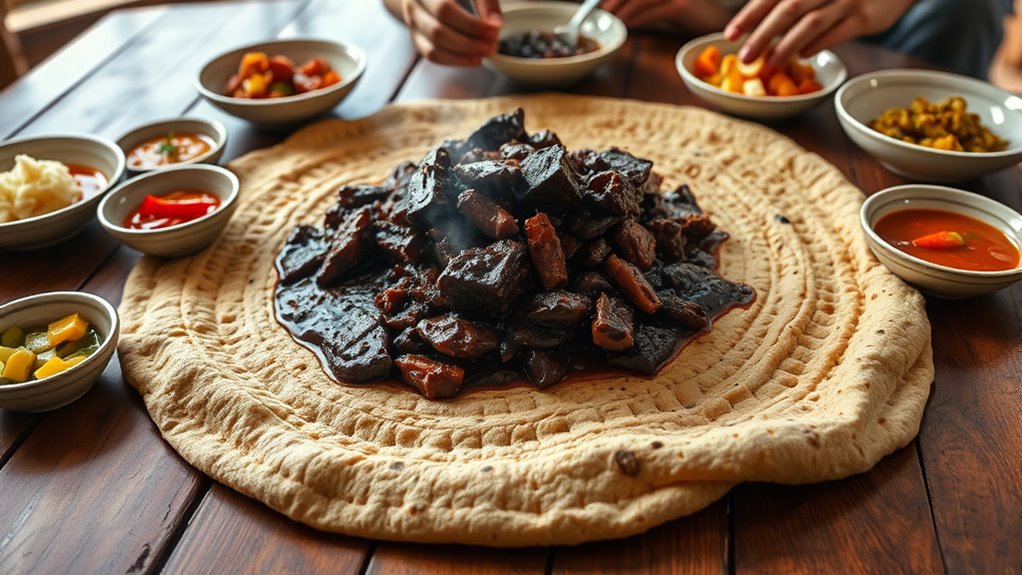

Ethiopian injera and wot showcase a rich communal dining tradition rooted in hospitality and cultural values. You’ll gather around a large shared platter, using injera to scoop up flavorful, spicy stews. This style of eating fosters connection, respect, and a sense of unity among diners. Every element of the meal reflects tradition and community. If you explore further, you’ll discover how these practices deepen cultural understanding and strengthen bonds around the table.
Key Takeaways
- Injera and wot are central to Ethiopian communal meals, symbolizing unity, hospitality, and cultural identity.
- Meals are served on a large shared platter, with injera used as both plate and utensil.
- Sharing food fosters social bonds, participation, and a warm, inclusive atmosphere.
- The dishes emphasize harmony of sour, spicy, and aromatic flavors reflecting traditional culinary practices.
- Participating in this meal style embodies Ethiopian values of community, respect, and cultural heritage.
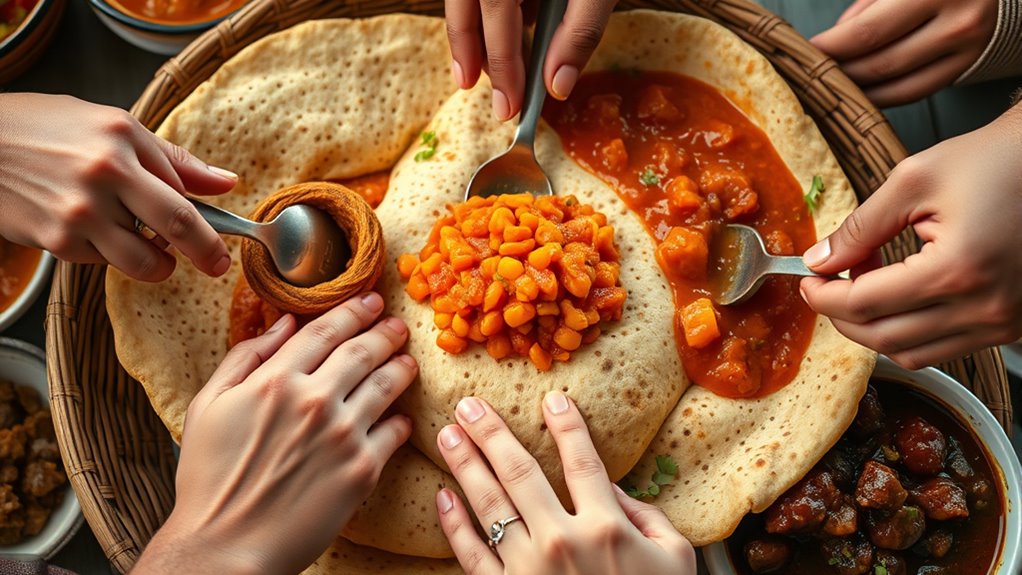
Have you ever wondered what makes Ethiopian cuisine so unique? It’s the rich blend of flavors, the communal spirit, and the deep-rooted traditions that bring people together around a shared meal. When you experience Ethiopian cuisine, you’re stepping into a vibrant cultural tapestry that emphasizes connection, hospitality, and history. One of the most iconic aspects of this culinary tradition is the way meals are served and enjoyed—often as a communal dining experience that fosters closeness and conversation. This tradition is centered around injera and wot, which are more than just food; they are symbols of unity and cultural identity.
Traditional dining in Ethiopia revolves around eating from a large communal platter, usually a giant piece of injera, a spongy, sourdough flatbread made from teff flour. As you sit down to share this meal, you’re encouraged to break off pieces of injera and use it as a utensil to scoop up the accompanying stews, known as wot. Wot is a flavorful, spicy sauce often made with meat, lentils, or vegetables, seasoned with Berbere spice blend and other aromatic ingredients. The process of sharing from one platter reinforces social bonds and emphasizes a sense of togetherness. It’s not just about satisfying hunger but about participating in a tradition that has been passed down through generations.
In Ethiopian cuisine, the act of traditional dining isn’t just about the food; it’s an expression of community and respect. Meals are often served family-style, with everyone gathering around the same plate, creating a warm, inclusive atmosphere. This style of eating encourages conversation and connection, making the meal a shared experience rather than a solitary one. The use of injera as both a plate and utensil exemplifies the ingenuity of Ethiopian culinary practices, where nothing goes to waste and every element has a purpose. The sourness of injera balances the spicy wot, creating a harmonious flavor profile that’s both comforting and exciting. Additionally, the practice of sharing a meal fosters a sense of social cohesion and mutual respect among diners.
Participating in this traditional dining practice allows you to immerse yourself fully in Ethiopian culture. It’s not just about tasting the food but about understanding the values of hospitality, community, and tradition that define Ethiopian cuisine. Whether you’re a first-time visitor or a seasoned foodie, sharing a meal of injera and wot offers a genuine connection to Ethiopia’s rich culinary heritage. It’s a celebration of flavors and fellowship, a timeless ritual that continues to bring people together around a single, shared table.

Ethiopian 18.5" Injera Maker Mitad (Mogogo), Electric Griddle with Adjustable Temperature & Time, Non-Stick Surface for Norwegian Lefse, Swedish Pancake, Indian Dosa, Digital Handle
- Fast & Even Heating: Triple-Ring technology for consistent heat
- Large Nonstick Surface: 18.5-inch PFOA-free durable coating
- Adjustable Digital Controls: Precise temperature and timer settings
As an affiliate, we earn on qualifying purchases.
As an affiliate, we earn on qualifying purchases.
Frequently Asked Questions
How Is Injera Traditionally Prepared?
You prepare injera by selecting ingredients like teff flour, which is essential for authentic flavor. You mix the flour with water and allow it to ferment for several days, enabling the natural fermentation process to develop the batter’s signature tanginess. Once fermented, you pour the batter onto a hot, seasoned griddle or clay plate, cooking until bubbles form and the surface is spongy. This traditional method creates the perfect base for Ethiopian dishes.
What Varieties of Wot Are Most Popular?
You’ll find that the most popular varieties of wot showcase regional flavors and ingredient variations. Doro Wot, made with chicken and hard-boiled eggs, is a favorite across Ethiopia, while Yetsom Wot features lentils or split peas for a vegetarian option. Each region adds its unique spices and ingredients, creating distinct flavors. These diverse varieties allow you to experience Ethiopia’s rich culinary heritage through vibrant, hearty, and flavorful dishes.
How Do Ethiopians Typically Share Injera and Wot?
You typically share injera and wot through Ethiopian communal dining, where everyone gathers around a large platter. You tear off a piece of injera and scoop up the flavorful wot, passing it around. This practice holds deep cultural significance, emphasizing unity, hospitality, and togetherness. By sharing these dishes, you connect with others, honor tradition, and enjoy a meal that’s more than just sustenance—it’s a meaningful social experience.
Are There Specific Occasions for Serving Injera and Wot?
You’ll find injera and wot served during both festive celebrations and everyday meals, bridging joy and routine. On special occasions, they symbolize unity and tradition, while daily, they nourish connections among loved ones. Whether celebrating a wedding or sharing a simple lunch, these dishes evoke warmth and togetherness. You feel the richness of Ethiopian culture in every bite, reminding you that food is more than sustenance — it’s a shared experience.
What Utensils Are Used to Eat Injera and Wot?
You typically use your hands to eat injera and wot, following Ethiopian dining etiquette that emphasizes communal sharing and respect. No utensils are used, as tearing off pieces of injera to scoop up the stew is customary. This practice holds cultural significance, fostering connection and unity at the meal. Using your hands demonstrates appreciation for tradition and helps preserve the authentic experience of Ethiopian cuisine.
Conclusion
As you share injera and wot with others, you become part of Ethiopia’s rich communal tradition. Nearly 80% of Ethiopians still gather around the same table, emphasizing unity and togetherness. This tradition isn’t just about food; it’s about connecting hearts and fostering community. So next time you enjoy injera and wot, remember you’re tasting a centuries-old bond that brings people together, one delicious bite at a time.