To avoid wasting food with vacuum sealing, make certain your bags are high quality and properly prepared, with no debris or moisture at the open edge. leave enough space for a secure seal, and choose the correct setting for moist or dry foods. Always double-check seals for gaps or weak spots, resealing immediately if needed. By mastering these tips, you’ll minimize leaks and keep your food fresh longer—keep exploring for more expert advice.

Get kitchen staples and gadgets delivered free with Prime
- Fast, free delivery on millions of items
- Prime Video, Amazon Music and more included
- Member-only deals all year
Key Takeaways
- Ensure the sealing strip is free of debris and moisture to prevent weak seals that can cause food spoilage.
- Avoid overfilling bags; leave 2-3 inches at the open end for a secure seal and proper air removal.
- Use the correct sealing setting (moist or dry) based on food type to achieve an airtight, leak-proof seal.
- Regularly inspect seals after sealing; reseal immediately if weak spots or leaks are detected.
- Select high-quality, multi-layer vacuum bags and avoid thin or damaged bags to prevent punctures and air leaks.
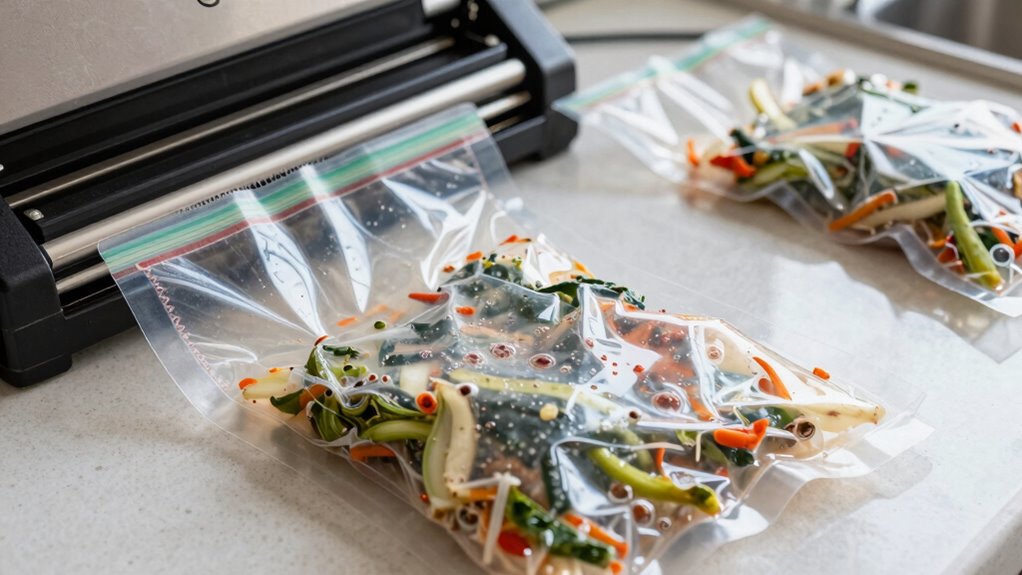
Vacuum sealing can greatly extend the freshness of your food, but making common mistakes can undermine its effectiveness. One of the most critical aspects is guaranteeing proper seal integrity. If your seal isn’t airtight, air can seep in, causing freezer burn, spoilage, or mold growth. To avoid this, always check the sealing strip for debris or moisture before sealing, as these can prevent a secure closure. When sealing, press the bag firmly around the edges, making sure there are no wrinkles or gaps that could compromise the seal. Additionally, use the correct sealing setting on your machine—some foods require a moist setting, while others need a dry one. Failing to adjust appropriately can result in weak seals that won’t hold over time.
Ensure seal integrity by checking for debris and moisture, pressing firmly, and selecting the correct setting for optimal vacuum sealing.
Another common mistake involves bag selection. Not all vacuum sealer bags are created equal, and choosing the wrong type can lead to poor results. Thin or low-quality bags might puncture easily or allow air to pass through, defeating the purpose of vacuum sealing. It’s best to opt for bags specifically designed for vacuum sealing, which have a multi-layer construction to provide durability and barrier protection. When selecting a bag, consider the size—cut or buy larger bags than you think you’ll need, so you can leave enough space for a proper seal without crowding the opening. Proper bag size ensures you can remove excess air effectively and prevents the bag from tearing during sealing or freezing.
Furthermore, pay attention to how you place food inside the bag. For ideal seal integrity, leave at least 2-3 inches of space at the open end of the bag to allow for a good seal. Avoid overfilling, as this can cause the bag to burst or prevent a proper seal from forming. When sealing, make sure the open edge is flat and free of food particles or moisture, which can interfere with the sealing process. If your vacuum sealer has a pulse or manual mode, use it carefully to remove air without crushing delicate items or causing leaks. Also, understanding the seal quality of your machine can help prevent common issues with weak seals and leaks.
Lastly, always inspect the seal after completing the process. If you notice a weak spot or if the bag isn’t fully closed, reseal immediately. Ignoring imperfect seals can lead to air exposure and food spoilage. By paying close attention to seal integrity and choosing the right bags, you greatly enhance your vacuum sealing results, keep your food fresher longer, and reduce waste.
Products Worth Considering

Breville Bambino Espresso Machine, Brushed Stainless Steel

Ninja Luxe Café Premier 3-in-1 Espresso Machine, Drip Coffee & Cold Brew

De’Longhi Classic Matte Black Espresso Machine with Milk Frother
As an affiliate, we earn on qualifying purchases.
Frequently Asked Questions
Can Vacuum Sealing Cause Freezer Burn?
Yes, poor vacuum seal quality or improper sealing techniques can cause freezer burn. If you don’t remove enough air or don’t get a tight seal, moisture escapes and causes dehydration, leading to freezer burn. To prevent this, make certain you use proper sealing techniques, remove excess air, and check that the seal is secure. Doing so keeps your food fresh and prevents freezer burn effectively.
How Long Can Vacuum-Sealed Food Last?
Did you know vacuum-sealed food can last 2-3 times longer than traditional storage? You can typically store vacuum-sealed items in the freezer for 2-3 years and in the fridge for 1-2 weeks, depending on the food. Proper vacuum sealing prevents spoilage by removing air, which slows bacterial growth. To maximize shelf life and spoilage prevention, always guarantee a tight seal and label your packages with dates.
Is It Safe to Reseal Previously Sealed Bags?
Yes, you can reseal previously sealed bags, but you need to take into account resale safety and bag integrity. Make certain the bag isn’t torn or punctured, as compromised bags can harbor bacteria. Resealing works best if the original seal remains intact or if you cut and reseal, making sure the bag stays airtight. Always check for leaks or damage, and avoid resealing over spoiled food to prevent contamination.
What Foods Should You Avoid Vacuum Sealing?
You should avoid vacuum sealing soft foods like berries, bread, and cooked pasta, as their high moisture content can cause spoilage or crushing. Studies show that improper storage method can reduce shelf life by up to 50%. For best results, stick to sturdy, low-moisture food types like dry meats and cheese. Soft foods tend to trap moisture, making vacuum sealing less effective and potentially accelerating spoilage.
How Do I Store Vacuum-Sealed Food Properly?
To store vacuum-sealed food properly, use airtight storage containers designed for vacuum sealing. Make sure to label each package with the date and contents to keep track of freshness. Store the sealed food in the freezer or refrigerator, depending on the type of item. Keep the containers upright and avoid overfilling to prevent damage. Proper storage and clear food labeling help you maintain freshness and reduce waste effectively.
Conclusion
By avoiding these common vacuum sealing mistakes, you’ll save food and money, making your kitchen more efficient. Remember, a stitch in time saves nine—taking a moment to seal correctly now prevents waste later. Pay attention to details like proper sealing techniques and storage tips, and you’ll extend your food’s freshness. Don’t let small errors turn into big waste; with a little care, you’ll get the most out of every meal.