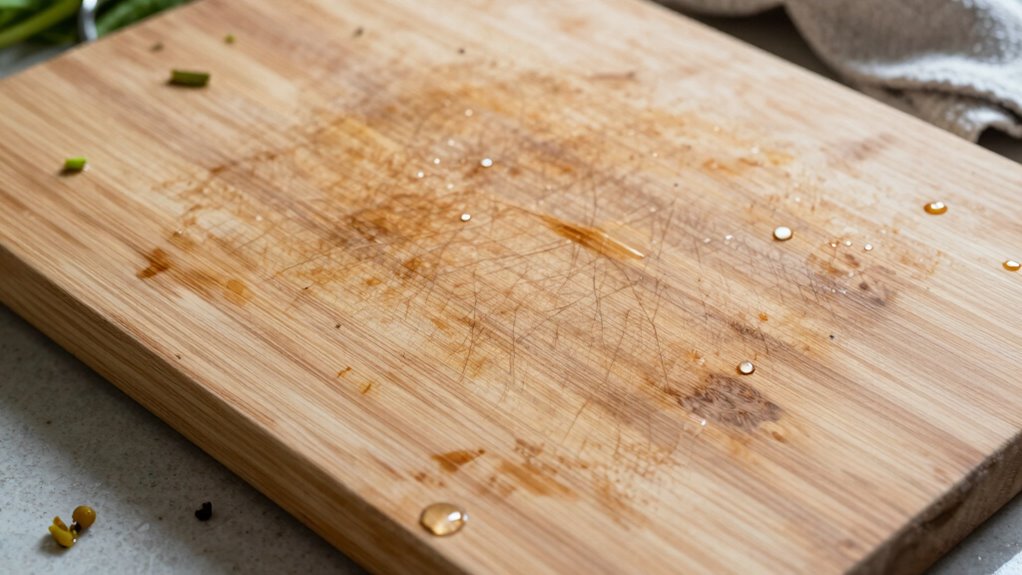

Many kitchens make the mistake of not cleaning cutting boards properly after each use, especially with raw meat or poultry. You might rinse them quickly or use soap but forget to disinfect thoroughly, which leaves bacteria behind. Wooden boards need special attention to avoid soaking or warping, while plastic ones should go through a hot dishwasher cycle regularly. Proper cleaning prevents cross-contamination and keeps your tools safe—learn more for tips to protect your family’s health.
Key Takeaways
- Using the same cutting board for raw meat and ready-to-eat foods without proper cleaning spreads bacteria.
- Failing to disinfect cutting boards thoroughly after cutting raw meat allows harmful bacteria to survive.
- Not replacing or deep-cleaning wooden boards regularly, leading to bacterial buildup and warping.
- Relying solely on rinsing without proper scrubbing or disinfecting increases bacteria risk.
- Cross-contamination occurs when hygiene practices are neglected during cleaning and sanitizing routines.

Cleaning techniques play an equally indispensable role in preventing bacteria from lingering on your cutting board. After each use, rinse off food debris and then wash the surface with hot, soapy water. For deeper sanitation, especially after cutting raw meat or poultry, disinfect your cutting board with a solution of bleach and water or a commercial sanitizer. Rinse thoroughly afterward to remove any chemical residues. For wooden boards, it’s best to use less water and avoid soaking, as excessive moisture can cause warping and bacteria growth within the wood. Instead, scrub with a brush and apply vinegar or a food-safe sanitizer. Plastic boards are easier to disinfect thoroughly since they’re dishwasher safe; just run them through a hot cycle regularly. Remember, never use the same cutting board for raw meats and ready-to-eat foods without proper cleaning, as cross-contamination can occur easily. Incorporating proper hygiene practices such as proper cleaning techniques and knife safety helps prevent bacteria transfer and prolongs the lifespan of your tools.
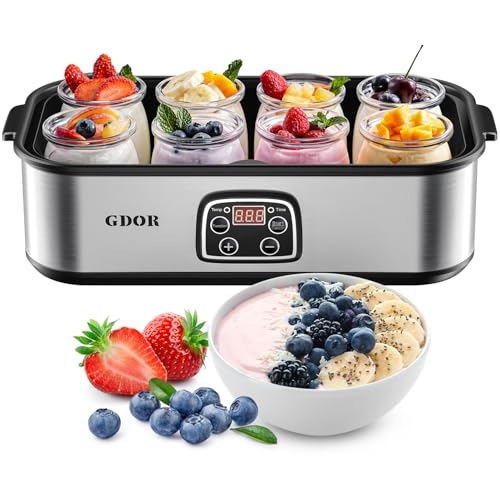
GDOR Yogurt Maker with Adjustable Temp & Timer– Probiotic-Rich – Digital Greek Yogurt Machine with 8×6oz BPA-Free Glass Jars, Easy to Use for Home, Stainless Steel
Create Your Ideal Yogurt Texture & Taste: Fine-tune fermentation with adjustable temperature (68–131°F) and up to 48-hour timer...
As an affiliate, we earn on qualifying purchases.
Frequently Asked Questions
Can I Use the Dishwasher to Sanitize My Cutting Board?
Yes, you can use your dishwasher for sterilization and sanitizing methods on your cutting board. Most plastic or heat-resistant boards withstand dishwasher cycles well, effectively killing bacteria through high-temperature sterilization. Just make sure your cutting board is dishwasher-safe. For added safety, run it on a hot cycle with a good amount of detergent. This method helps prevent cross-contamination and keeps your kitchen hygienic.
How Often Should I Replace Plastic Cutting Boards?
You should replace your plastic cutting board every one to two years, depending on its plastic longevity and how often you use it. Regularly inspect for deep cuts, stains, or grooves where bacteria can hide. If it shows significant wear or warping, it’s time for a replacement to maintain proper hygiene. Following a consistent replacement schedule helps prevent cross-contamination and keeps your kitchen safer.
Are Bamboo Cutting Boards More Hygienic Than Wood?
Bamboo cutting boards are generally more hygienic than wooden ones because bamboo’s durability resists deep scratches where bacteria hide. Unlike wood’s porosity, bamboo’s tight grain makes it less absorbent, reducing bacteria buildup. You’ll find bamboo easier to clean and maintain, making it a safer choice in your kitchen. While both are good options, bamboo’s durability and lower porosity give it a hygiene edge over traditional wooden boards.
What Are the Best Cleaning Agents for Cutting Boards?
You should use antibacterial sprays or natural disinfectants like vinegar or lemon juice to clean your cutting boards effectively. Spray or apply the disinfectant thoroughly, then let it sit for a few minutes before rinsing with hot water. Regularly sanitizing with these agents helps eliminate bacteria, especially on wooden or bamboo boards. Avoid harsh chemicals, and always dry your board completely to prevent bacterial growth.
Can Bacteria Transfer From Cutting Boards to Other Kitchen Surfaces?
Yes, bacteria can transfer from cutting boards to other kitchen surfaces, increasing cross contamination risks. You should be aware of bacteria transfer pathways, such as when you move a cutting board to a counter or wash it without proper cleaning. Always disinfect your cutting boards thoroughly after use, especially when switching between raw meat and produce, to prevent bacteria from spreading and minimize health hazards in your kitchen.

Extra Large End Grain Cutting Board for Kitchen with Non-slip Feet, Acacia Wood Heavy Duty Checkered Cutting Board Handcrafted Luxury Chopping Board for Cheese and Vegetables Housewarming Gift
ATELIER COLLECTION, END-GRAIN CUTTING BOARD: Crafted from carefully selected acacia wood, the Socisen Workshop Series cutting board showcases...
As an affiliate, we earn on qualifying purchases.
Conclusion
To keep your kitchen safe, always sanitize your cutting boards after each use. Did you know that studies show cutting boards can harbor up to 200 times more bacteria than toilet seats? By regularly cleaning and replacing your boards, you reduce the risk of cross-contamination and foodborne illnesses. Remember, a little extra effort goes a long way in maintaining hygiene and protecting your health. Stay vigilant and keep your kitchen bacteria-free!

End Grain Cutting Board for Kitchen with Non-slip Feet, Acacia Wood Heavy Duty Checkered Cutting Board Handcrafted Luxury Chopping Board for Cooking and Serving Wooden Butcher Block Non Toxic
ATELIER COLLECTION, END-GRAIN CUTTING BOARD: Crafted from carefully selected acacia wood, the Socisen Workshop Series cutting board showcases...
As an affiliate, we earn on qualifying purchases.
![Bearchop Acacia Wood Cutting Board for Kitchen, Butcher Block with 4-Side Reinforced Bar for Anti Crack/Warp, [24"x18"x1.25"] Extra Large End Grain Cutting Boards with Gift Box, Juice Groove, Handle](https://m.media-amazon.com/images/I/51zkbdxtOCL._SL500_.jpg)
Bearchop Acacia Wood Cutting Board for Kitchen, Butcher Block with 4-Side Reinforced Bar for Anti Crack/Warp, [24"x18"x1.25"] Extra Large End Grain Cutting Boards with Gift Box, Juice Groove, Handle
🌿 Built From 100% Solid Acacia Wood 🌿: This acacia wood cutting board is crafted from 100% solid...
As an affiliate, we earn on qualifying purchases.