
To build better salads with leftover grains and beans, start by creating a colorful base using grains like rice or quinoa and adding beans such as chickpeas or lentils. Then, layer in vibrant vegetables, fresh herbs, and contrasting flavors like citrus or spicy jalapeños to boost taste and visual appeal. Balance textures with crunchy seeds or sliced radishes, and finish with a flavorful dressing. Keep experimenting with combinations to make your salads truly stand out—there’s always more to discover.

Get kitchen staples and gadgets delivered free with Prime
- Fast, free delivery on millions of items
- Prime Video, Amazon Music and more included
- Member-only deals all year
Key Takeaways
- Layer leftovers with colorful vegetables and herbs for visual appeal and flavor contrast.
- Incorporate bright dressings and spicy elements to enhance depth and excitement.
- Build the salad in stages, starting with grains and beans, then adding proteins and crunchy toppings.
- Use contrasting textures like creamy avocado and toasted nuts for a balanced eating experience.
- Garnish thoughtfully with herbs, cheese, or seeds to elevate presentation and flavor.
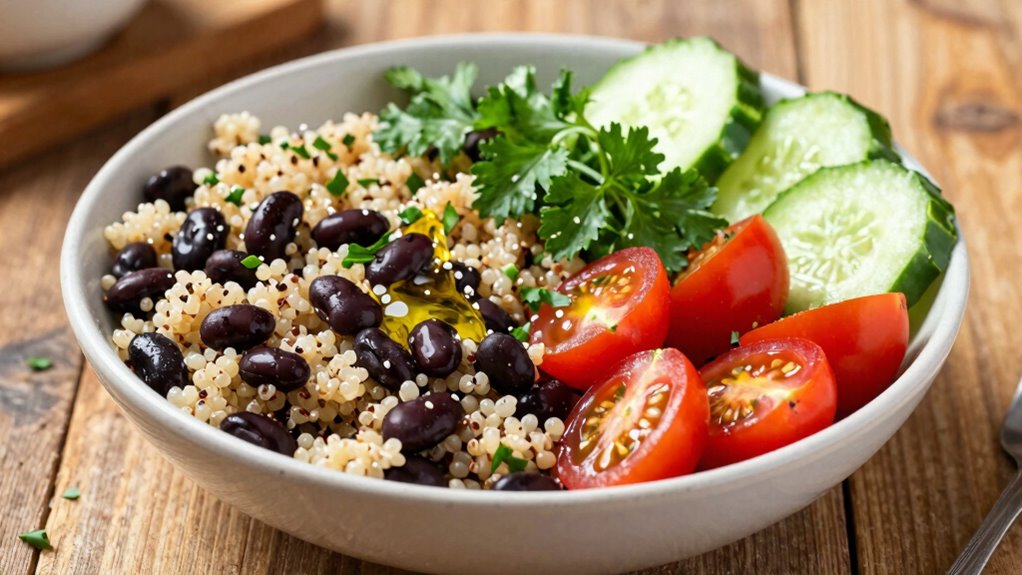
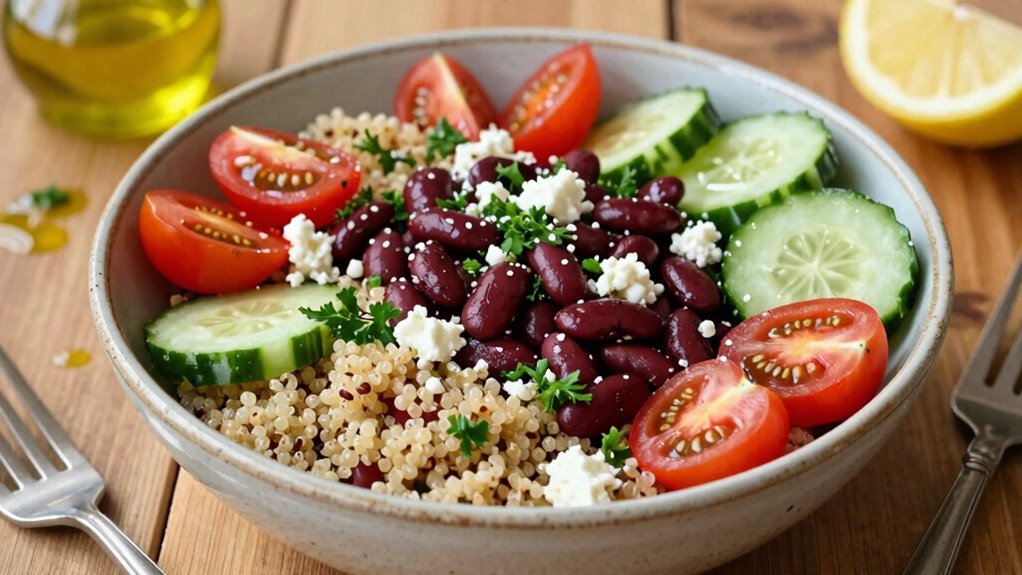
Leftover grains and beans are a versatile foundation for making delicious, nutritious salads, and with a few simple tips, you can transform them into satisfying meals. The key to elevating your salads lies in choosing the right flavor combinations and mastering presentation tips. When working with grains like rice, quinoa, or bulgur, and beans such as chickpeas, black beans, or lentils, think about adding contrasting flavors to create depth. Bright citrus juice pairs beautifully with smoky spices, while herbs like cilantro or parsley introduce freshness. Spicy elements like jalapeños or a dash of hot sauce can add excitement, and a touch of sweetness from dried cranberries or roasted sweet potatoes balances savory notes. Experiment with different ingredients to find combinations that excite your palate.
Presentation tips also play a vital role in making your salad appealing. Visual appeal starts with color contrast—incorporate vibrant vegetables like cherry tomatoes, bell peppers, or shredded carrots to brighten the dish. Arrange ingredients thoughtfully, placing colorful components around the grains and beans to create a balanced look. Using a large, shallow bowl allows for an attractive, layered presentation, making each ingredient visible and inviting. Drizzle your dressing evenly over the top, ensuring every bite is flavorful without making the salad soggy. Garnish with fresh herbs, crumbled cheese, or toasted nuts to add texture and visual interest. These small touches make the salad look as good as it tastes. Incorporating Visual appeal can significantly enhance your overall dining experience by making the dish more enticing.
To build a better salad, start with your leftover grains and beans as a base, then build upward with ingredients that complement each other. Add a protein like grilled chicken or tofu if you want extra filling, and include crunchy elements such as sliced radishes or toasted seeds for contrast. When choosing flavor combinations, aim for a harmonious balance—think tangy vinaigrette with hearty grains, or creamy avocado with spicy beans. Keep in mind that good presentation enhances the overall experience, making your salad more appealing and encouraging you to savor every bite. Understanding the versatility of leftovers can help you maximize ingredients and reduce waste while creating exciting new dishes. With these tips, your leftover grains and beans can become the foundation for colorful, flavorful, and satisfying salads that you’ll want to make again and again.
As an affiliate, we earn on qualifying purchases.
Frequently Asked Questions
Can I Use Canned Grains and Beans for Salads?
Yes, you can use canned grains and beans for salads. Canned alternatives are convenient and save time; just drain and rinse them thoroughly to remove excess sodium. For the best results, store your canned goods in an airtight container once opened and use them within a few days. Incorporate them into your salads with fresh vegetables, herbs, and your favorite dressing for a quick, nutritious meal.
How Long Can Leftover Grains and Beans Be Stored Safely?
Imagine a jar filled with vibrant grains and beans, your secret ingredient for fresh salads. You can safely store leftovers for up to four to five days in an airtight container in the fridge. To maximize shelf life, use proper storage tips: keep them cool, label with date, and reheat thoroughly before using. This way, your grains and beans stay flavorful and safe to enjoy, anytime you crave a healthy bite.
What Are Some Quick Dressings for Grain and Bean Salads?
For quick dressings, you can toss your salad with olive oil, lemon juice, or a simple vinaigrette. Dressing alternatives include tahini, balsamic glaze, or a dollop of Greek yogurt mixed with herbs. Add flavorful toppings like chopped herbs, crumbled feta, or roasted nuts to enhance taste and texture. These options keep your grain and bean salads vibrant, delicious, and easy to prepare, making each bite satisfying.
Are There Any Flavor Combinations to Avoid?
You should avoid unpleasant flavor pairings and overpowering ingredient combinations that clash or dominate your salad. Steer clear of mixing overly strong ingredients like too much garlic or pungent cheeses with delicate grains and beans. Also, be cautious with overly sweet dressings or acidic components that can overshadow subtle flavors. Balancing flavors is key; aim for complementary ingredients that enhance, rather than overpower, your salad’s natural taste.
How Can I Make Salads More Filling Without Adding Meat?
Think of your salad as a canvas, waiting for bold strokes. To make it more filling without meat, add vegetarian protein sources like chickpeas, tofu, or tempeh. Incorporate creative toppings such as nuts, seeds, or avocado slices for extra richness and texture. These additions boost satiety and flavor, transforming a simple salad into a satisfying meal. Keep experimenting with different combinations to find what keeps you full and energized!
Conclusion
Next time you’re wondering what to do with that leftover rice or beans, remember you’re only a few ingredients away from a delicious, nutritious salad. Imagine turning yesterday’s dinner into a vibrant meal—like Sarah, who added cherry tomatoes, feta, and a tangy vinaigrette to her leftover quinoa. With a little creativity, you can transform simple leftovers into a satisfying dish. So go ahead, experiment and enjoy the tasty, wholesome salads you build!
NFL season / tailgating Picks
team gear
As an affiliate, we earn on qualifying purchases.