
Adding herbs too early to your salad is a common mistake that can make your greens soggy and lose their crispness quickly. When herbs sit with the greens, moisture from them seeps in, causing the leaves to wilt and flatten. To keep your salad fresh and vibrant, add herbs just before serving. Want to discover more tips on maintaining perfect salads? Keep exploring for expert advice that helps elevate your dish.

Get kitchen staples and gadgets delivered free with Prime
- Fast, free delivery on millions of items
- Prime Video, Amazon Music and more included
- Member-only deals all year
Key Takeaways
- Adding herbs too early introduces moisture, causing greens to wilt quickly.
- Rinsing herbs with water and not thoroughly drying adds excess moisture, leading to sogginess.
- Incorporating herbs before serving diminishes their vibrant flavor and texture.
- Using pungent herbs in large quantities without proper timing overwhelms and flattens the salad.
- Handling herbs roughly or storing improperly accelerates wilting and reduces freshness.
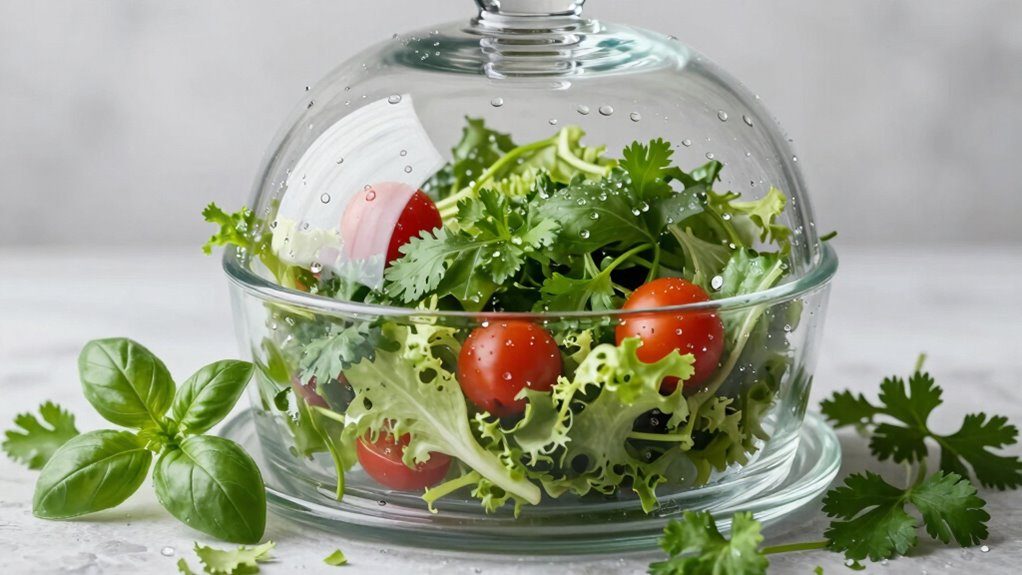
Adding herbs to your salad seems simple enough, but one common mistake can quickly turn your fresh greens into a soggy, flattened mess. The key is understanding how herb freshness and flavor balance work together. If you add herbs too early or use herbs that have lost their vibrant aroma, your salad can become overwhelmed, soggy, and less appealing. Fresh herbs are delicate; their flavors can fade quickly if not handled properly, and their moisture content can cause unwanted wateriness in your greens. To keep your salad crisp and flavorful, you need to pay attention to when and how you add herbs.
When you pick herbs, choose those with bright, lively leaves and a strong aroma. Herb freshness is crucial because wilted or dried herbs won’t provide the same vibrant flavor and can introduce excess moisture. If you buy fresh herbs, store them properly—preferably in a damp paper towel inside a plastic container—to prolong their freshness. Before adding them to your salad, rinse gently and pat dry thoroughly. Any residual water can cause the herbs to release moisture onto your greens, leading to sogginess and flattening the salad. So, always ensure your herbs are dry and fresh for the best flavor and texture.
Another mistake that can flatten your salad is adding herbs too early in the preparation process. If you toss herbs with the greens too far in advance, their moisture will seep into the leaves, causing them to wilt and lose their crispness. Instead, add herbs at the last minute or right before serving. This preserves their flavor and prevents excess moisture from compromising the texture of your greens. Also, consider how your herbs contribute to flavor balance. Strong, pungent herbs like basil or mint should be used sparingly to avoid overpowering the salad, while milder herbs like parsley or chives can be added more generously without overwhelming the dish.
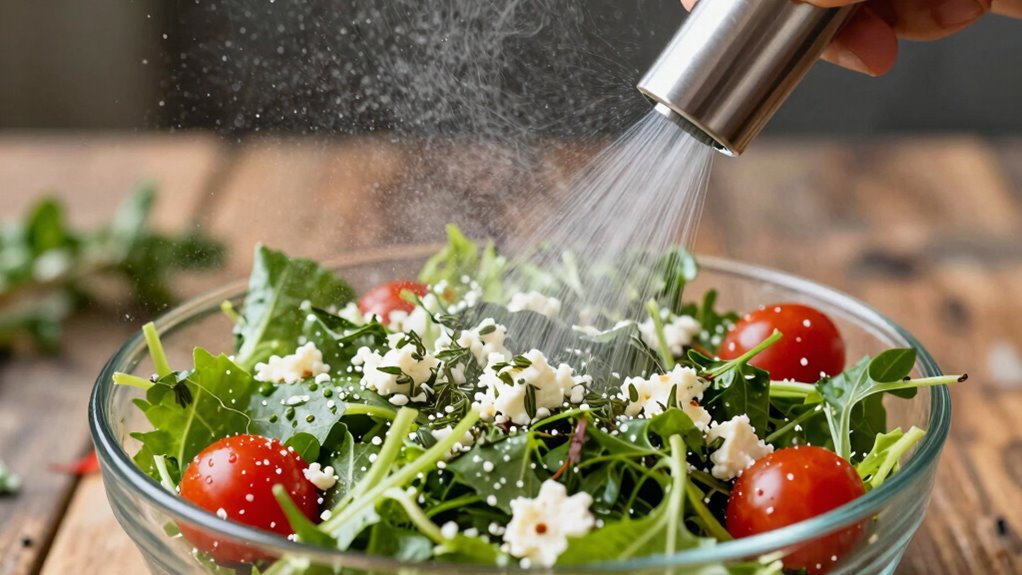
Using herbs as a finishing touch allows you to maintain both their herb freshness and the overall flavor balance of your salad. A light sprinkle just before serving enhances aroma and taste without sacrificing crunch. When you keep these tips in mind—select fresh herbs, dry them thoroughly, add them at the right moment, and balance their flavors—you’ll prevent your greens from becoming soggy and flattened. Proper herb handling is essential to preserve their delicate qualities and achieve the perfect salad. Additionally, understanding how moisture content affects the texture can help you make smarter choices about ingredient preparation. Being mindful of herb preservation techniques can further extend the freshness of your herbs, ensuring they add optimal flavor and texture. For example, using air-tight containers can help prevent herbs from drying out or absorbing excess moisture. This simple adjustment makes a big difference in the presentation and enjoyment of your salad, elevating a basic dish into something truly delightful.
As an affiliate, we earn on qualifying purchases.
Frequently Asked Questions
Which Herbs Are Most Likely to Ruin a Salad?
You should avoid using strong herbs like oregano or basil in delicate salads, as their bold flavors can overpower and flatten the freshness. Herb flavor pairing is key, so opt for milder herbs like parsley or chives instead. If you don’t have the right salad herb substitutes, skip intense herbs altogether or use a light drizzle of herbs-infused oil. This keeps your salad vibrant without risking flavor overload.
How Can I Fix a Salad After Herb Over-Seasoning?
Think of fixing an over-herbed salad like balancing a scale—add ingredients gradually. To restore herb flavor balance, toss in more greens, a splash of citrus, or a mild dressing to dilute the intensity. If herbs dominate, try salad herb substitutions like basil or parsley instead of stronger varieties. My friend once rescued her overly herbed salad with lemon juice and extra lettuce, making it fresh and enjoyable again.
Are Dried Herbs Safer Than Fresh for Salads?
Dried herbs are generally safer for salads because they have a longer herb potency, allowing you to control flavor without overwhelming the dish. Fresh herbs offer brighter, more vibrant flavor but tend to lose their freshness quickly, reducing flavor longevity. Using dried herbs can prevent over-seasoning and guarantee your salad remains flavorful over time. Just use them sparingly, as their concentrated nature might be stronger than fresh herbs.
How Quickly Do Herbs Affect Salad Texture?
A stitch in time saves nine, and that’s true for herbs on salads. Herbs affect salad texture within minutes if you add dried varieties or strong fresh herbs prematurely. Their flavor profiles intensify quickly, risking sogginess and a wilted look. To keep your salad crisp, add herbs late in the salad dressing process, ensuring they enhance the flavor without compromising the texture. Timing is everything in salad dressings and herb use.
Can Herb Mistakes Be Avoided With Proper Storage?
Yes, herb mistakes can be avoided with proper storage. To maintain herb freshness, store herbs in a damp paper towel inside a sealed container or jar, and keep them in the refrigerator’s crisper drawer. Follow these storage tips to preserve their flavor and texture longer, preventing them from wilting or spoiling quickly. Proper storage guarantees your herbs stay vibrant and ready to elevate your salads without risking that flattening mistake.
Conclusion
So, next time you toss your salad, remember that a tiny herb mistake can turn your vibrant mix into a wilted mess in seconds. It’s like adding sunshine to a rainy day — it brightens, but too much can drown the scene. Keep your herbs fresh and measured, and your salad will stay crisp and colorful. After all, a perfect salad is a delicate balance — too much of a good thing, and it’s game over.
NFL season / tailgating Picks
team gear
As an affiliate, we earn on qualifying purchases.