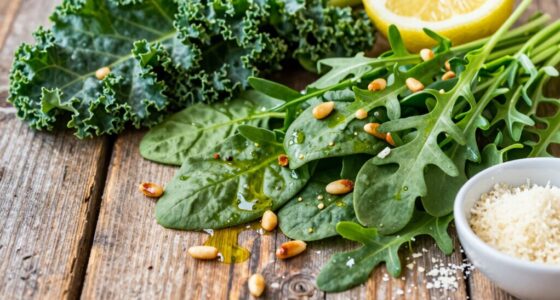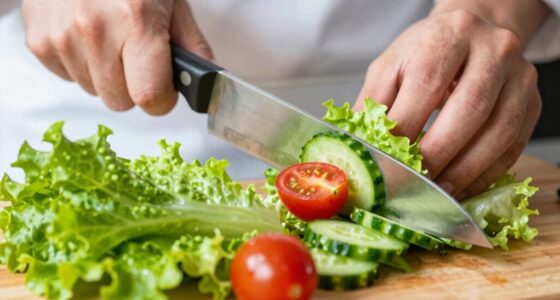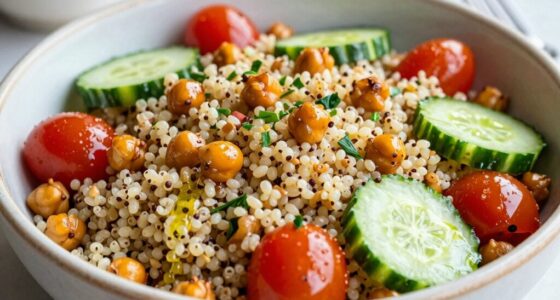
To keep your salads fresh and crisp, start by placing sturdy vegetables like carrots, cucumbers, or bell peppers at the bottom to act as a barrier against moisture. Add your proteins and grains next, then layer softer ingredients like cheese or avocado on top, away from the dressing. Store the dressing separately and only add it before eating. Proper layering and moisture control help prevent sogginess, and you’ll discover even more tips to perfect your salad prep several steps further.
Open a free Amazon Business account
Business pricing, bulk buying and tax-exempt orders.
As an affiliate, we earn on qualifying purchases.
Key Takeaways
- Use sturdy vegetables like carrots or cucumbers as a base to prevent moisture seepage and provide crunch.
- Store dressing separately and add it just before serving to keep ingredients crisp.
- Layer heavier ingredients at the bottom, with delicate greens and toppings at the top.
- Keep moisture-sensitive items dry by drying greens thoroughly and using paper towels in containers.
- Use airtight containers with proper sealing to maintain freshness and prevent sogginess.
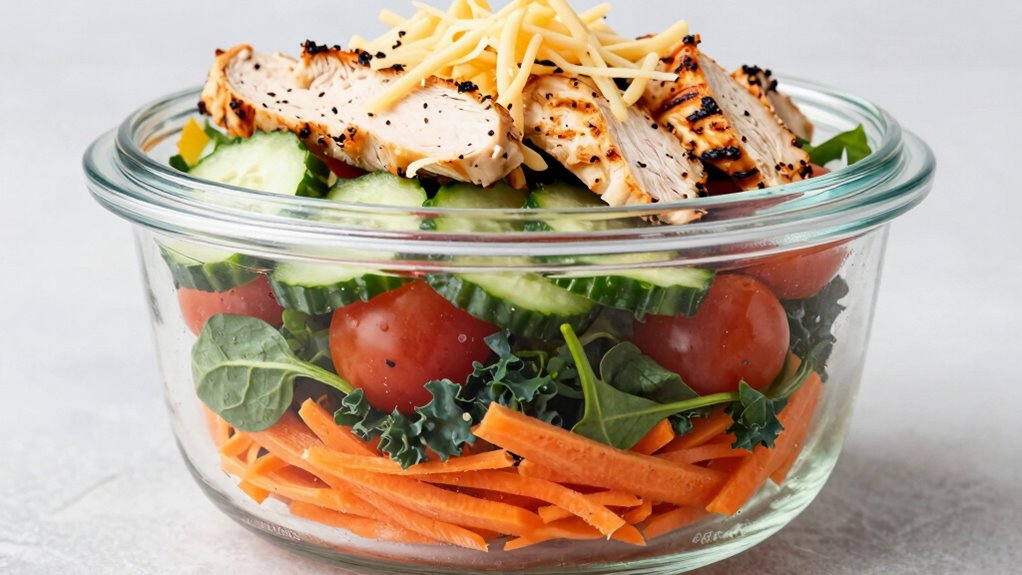
Layering salads for meal prep is a smart way to keep your meals fresh and flavorful throughout the week. When you organize your ingredients properly, you can avoid the soggy mess that often comes from storing salads in advance. The key is to think about the order in which you layer your ingredients and how each element interacts with others over time. Starting with a solid foundation of sturdy vegetables, like carrots, cucumbers, or bell peppers, helps create a barrier that prevents moisture from seeping into more delicate ingredients. These vegetables hold up well and provide crunch, making your salads enjoyable even days later.
Next, you want to focus on ingredient prep and the placement of different components. Keep softer ingredients—such as cherry tomatoes, avocado, or cheese—at the top of the jar or container, so they don’t get crushed or soggy. When it’s time to eat, you can simply toss everything together or add the softer items right before serving. To further prevent sogginess, store your salad dressing separately. This way, you won’t risk wilting your greens or turning your ingredients mushy. When you’re ready to eat, just pour the dressing over the salad and give it a good toss. Maintaining the dressing at the bottom or in a separate container preserves the texture and flavor until mealtime.
Another trick involves the way you layer your ingredients within the container. Place the dressing or any moist ingredients at the very bottom, followed by dense vegetables, then lighter greens at the top. This arrangement minimizes contact between the dressing and the more delicate ingredients. When you’re prepared to eat, you can either shake the container vigorously to distribute the dressing or open it and toss everything together in a bowl. This method ensures each bite is flavorful without the greens turning slimy or soggy. Additionally, understanding the importance of ingredient preservation helps you select the best storage practices to keep your salads fresh longer. Proper storage techniques, such as using airtight containers and controlling moisture, are essential for maintaining freshness.
You’ll also want to think about how you prep your ingredients in advance. Wash, dry, and chop everything thoroughly before packing. Removing excess moisture from ingredients, especially greens, helps keep the salad crisp. Incorporating moisture control techniques, like using paper towels in your containers, can further extend freshness. Using airtight containers and proper sealing methods also plays a crucial role in preventing spoilage and preserving flavor. When you assemble your salads, layer in this order: sturdy vegetables at the bottom, then proteins or grains, followed by softer toppings and greens at the top. Keep your salad dressing separate until just before you eat to maintain freshness and texture. Following these simple steps, you can enjoy fresh, vibrant salads all week long—no sogginess, just delicious crunch and flavor every time.
airtight salad container with divider
As an affiliate, we earn on qualifying purchases.
As an affiliate, we earn on qualifying purchases.
Frequently Asked Questions
Can I Add Dressing Before Storing the Salad?
You shouldn’t add dressing before storing your salad, as it can cause sogginess. Instead, focus on dressing timing by keeping the dressing separate until you’re ready to eat. Use proper storage techniques, like layering ingredients with sturdier vegetables at the bottom and delicate greens on top, and store the dressing in a small container. When you’re ready to enjoy, just pour the dressing on and toss for freshness.
How Long Can Layered Salads Stay Fresh?
Layered salads typically stay fresh for about 3 to 5 days when stored properly. To preserve freshness, keep the salad dressing separate until you’re ready to eat, preventing sogginess. Use airtight containers, and place hearty ingredients at the bottom and delicate ones at the top. This method helps maintain crispness and flavor, ensuring your salad stays delicious for several days without losing its texture.
What Are the Best Containers for Layered Salads?
Did you know that 85% of people prefer reusable containers for meal prep? For layered salads, choose container types with separate compartments or tight-fitting lids to prevent sogginess. Material considerations matter—BPA-free plastic, glass, or durable silicone are great options, as they’re microwave-safe and won’t stain or retain odors. These containers keep ingredients fresh and flavors distinct, ensuring your salads stay crisp and delicious throughout the week.
Should I Include Wet Ingredients in My Layers?
You should avoid including wet ingredients directly in your salad layers, especially near the dressing placement, to prevent sogginess. Instead, keep moist ingredients like tomatoes or cucumbers separate until you’re ready to eat. If you must include them, pat dry to reduce ingredient moisture. Placing the dressing at the bottom of the container and layering dry ingredients above helps keep your salad crisp and fresh.
How Do I Reheat Salads Without Ruining Layers?
Reheating salads is like reviving a delicate painting—you want to restore it without damaging the layers. To keep your salad fresh, use salad storage wisely: remove any cold ingredients that don’t reheat well, then gently reheat only the hearty components like proteins or grains. Follow reheating tips by warming in short bursts, avoiding microwaving everything together. This way, your salad stays vibrant, and the layers remain intact.
Conclusion
By mastering the art of layering, you’re fundamentally crafting a vibrant, edible mosaic that stays fresh and inviting. Think of your salad as a well-staged masterpiece, where each ingredient plays its part without overshadowing the others. With a little planning, you’ll find your meals remaining crisp and colorful, like a garden in full bloom. So, embrace this technique, and let your salads flourish beautifully, turning simple ingredients into a feast for both the eyes and the palate.
Flea & tick season Picks
flea and tick prevention
As an affiliate, we earn on qualifying purchases.