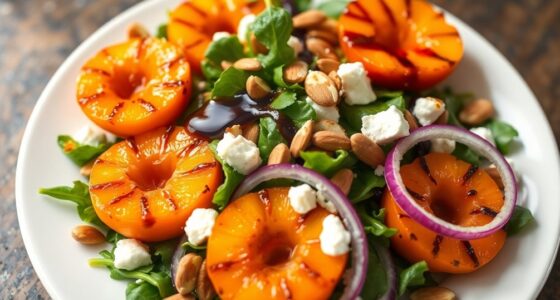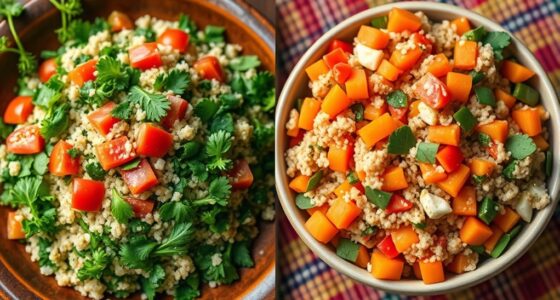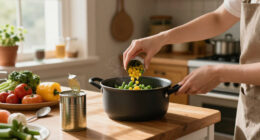

To make salads taste restaurant-good, focus on using fresh, high-quality ingredients and balanced flavors. Experiment with dressings that complement rather than overpower, such as tangy, creamy, or spicy styles. Pay attention to texture by combining crunchy and soft ingredients, and arrange everything attractively. Fresh herbs and thoughtful presentation also enhance appeal. Small details like these can turn a simple salad into a memorable dish—keep exploring to discover more pro tips.

Get kitchen staples and gadgets delivered free with Prime
- Fast, free delivery on millions of items
- Prime Video, Amazon Music and more included
- Member-only deals all year
Key Takeaways
- Fresh, high-quality ingredients and seasonal produce elevate flavor and texture.
- Well-balanced dressings that complement ingredients enhance overall taste.
- Thoughtful combination of textures, like crunchy toppings with soft greens, creates interest.
- Proper presentation and careful arrangement improve visual appeal and perceived quality.
- Attention to detail, including seasoning and ingredient freshness, transforms simple salads into gourmet dishes.

A great salad can be the highlight of any meal, but achieving the perfect balance of flavors takes a bit of know-how. One key to making salads taste restaurant-quality is paying attention to dressings variation. The dressing you choose can transform a simple mix of greens into a flavorful masterpiece. Instead of sticking to basic vinaigrette every time, experiment with different styles—perhaps a tangy lemon and herb dressing, a creamy avocado blend, or a spicy Asian-inspired soy sauce mix. Variety keeps your palate interested and elevates your salad from ordinary to extraordinary. Remember, the right dressing should complement the ingredients, not overpower them. Use just enough to coat everything evenly, allowing each element to shine.
Vary dressings to elevate salads—try tangy, creamy, or spicy styles that complement and enhance fresh ingredients.
Beyond dressings, one of the most overlooked factors in creating restaurant-grade salads is fresh ingredient selection. The quality of your produce directly impacts the taste and texture. Always opt for fresh, in-season vegetables and greens; they’re more vibrant, crisp, and flavorful. When choosing ingredients, look for leaves that are firm and bright, with no wilting or browning. For toppings like tomatoes, cucumbers, or herbs, select those with a firm texture and vivid color to guarantee maximum freshness. If you’re adding proteins like grilled chicken or seafood, verify they’re cooked properly and seasoned well—nothing ruins a salad more than bland or overcooked ingredients.
Combining a variety of textures also plays an essential role. Incorporate crunchy elements like nuts, seeds, or croutons alongside softer ingredients to create a satisfying mouthfeel. Balance is critical—if your salad is too heavy on one element, it might feel unbalanced or dull. Layering flavors and textures, from the crisp greens to the tender proteins and the zing of your dressings, makes each bite more interesting and satisfying. Additionally, paying attention to ingredient freshness can significantly enhance the overall taste and presentation. Using seasonal ingredients not only boosts flavor but also supports sustainable living practices and local biodiversity. Incorporating herbs and spices can add depth and aroma to your salad, making it more complex and inviting. Remember, fresh herbs like basil, cilantro, or parsley can brighten up the entire dish when used thoughtfully.
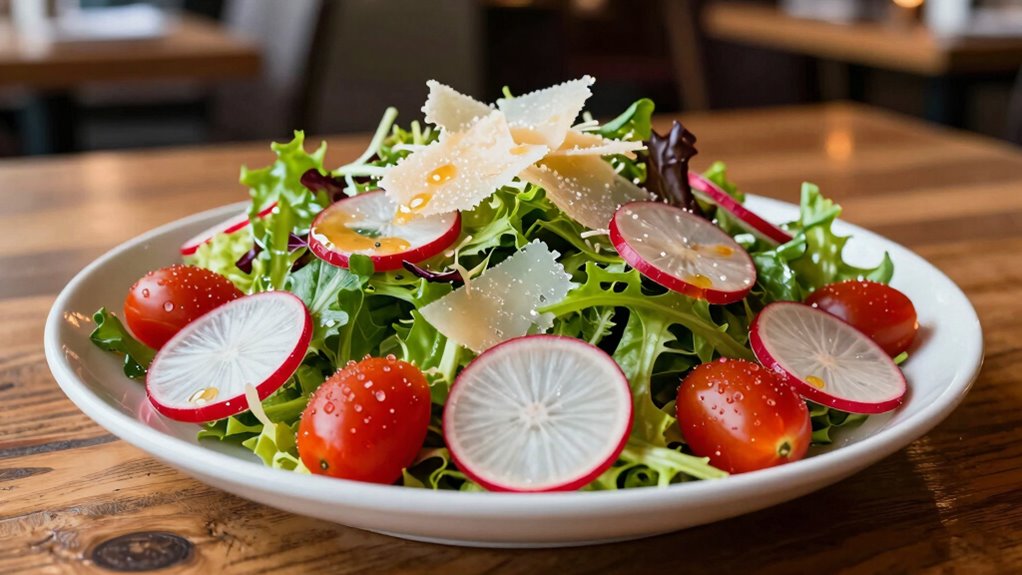
Finally, presentation matters. A beautifully arranged salad with thoughtfully placed ingredients not only looks appealing but also influences your perception of its taste. When you take the time to arrange your components neatly, it signals to your senses that the salad is special, just like at a restaurant. Paying attention to ingredient presentation can elevate the eating experience and make your salad feel more gourmet.
In the end, achieving that restaurant-quality flavor isn’t just about following a recipe. It’s about selecting fresh ingredients, playing with dressings variation, balancing textures, and presenting your salad with care. These small details make all the difference, turning a simple bowl of greens into a memorable, delicious dish.
As an affiliate, we earn on qualifying purchases.
Frequently Asked Questions
How Does the Freshness of Ingredients Affect Salad Taste?
You’ll notice that the freshness of ingredients directly impacts your salad’s flavor. Fresh produce offers vibrant taste and crisp texture, enhancing dressing consistency and overall appeal. When ingredients are cold and fresh, they absorb flavors better, making each bite more flavorful. Conversely, wilted or stale ingredients can make the salad dull and unappetizing. Always choose fresh, cold ingredients to guarantee your salad tastes as delicious as those at a restaurant.
What Role Does Seasoning Play in Enhancing Salad Flavor?
Think of seasoning as the secret dance in your salad, where balance is key. When you sprinkle just enough salt, pepper, or herbs, it heightens each ingredient’s natural flavor, acting as flavor enhancers. Too much or too little throws off the harmony, making your salad taste dull or overpowering. Mastering seasoning balance transforms simple greens into a vibrant, restaurant-quality dish that excites the palate with every bite.
Can Water Quality Impact the Taste of Salads?
Yes, water quality can impact the taste of salads. Water purity guarantees there are no impurities that can alter flavor, while mineral content influences the freshness of greens and vegetables. If you use tap water with high mineral levels or impurities, it can introduce off-flavors or a metallic taste. To keep your salads tasting fresh and vibrant, use clean, filtered water, especially when rinsing produce.
How Does Salad Presentation Influence Perceived Flavor?
Like an artist’s brushstrokes, your salad’s presentation influences how you perceive its flavor. Using thoughtful garnish techniques and paying attention to plate aesthetics makes the salad appear more appetizing, enhancing your tasting experience. When the colors, textures, and arrangement are visually appealing, it primes your senses to enjoy the flavors more fully. A well-presented salad doesn’t just look good; it heightens your overall enjoyment and makes the flavors seem more vibrant.
Do Different Types of Lettuce Change Overall Salad Taste?
Yes, different types of lettuce can change your salad’s overall taste. Crisp romaine offers a mild, fresh flavor, while buttery butter lettuce adds creaminess. The taste is influenced by dressing varieties and ingredient sourcing, which enhances or balances the lettuce’s natural flavor. Experimenting with fresh, quality ingredients and complementary dressings makes your salad taste more restaurant-quality and satisfying.
Conclusion
When you master these salad tips, your greens will taste as good as they do at a restaurant—think of your salad as a symphony, where each ingredient plays its part perfectly. With fresh produce, the right balance of flavors, and a little creativity, you can elevate your salad game from ordinary to extraordinary. So, keep experimenting and don’t be afraid to try new dressings or toppings. Before you know it, your salads will become the highlight of your meals, just like a well-crafted masterpiece.
Columbus Day / Indigenous Peoples' Day Picks
long weekend sales
As an affiliate, we earn on qualifying purchases.