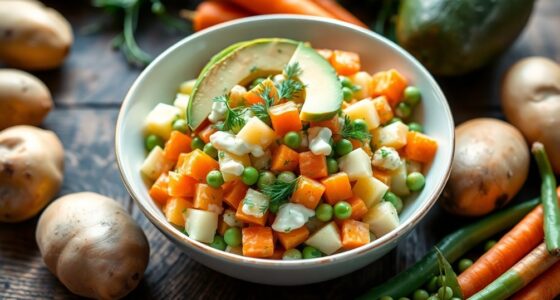
To build a more satisfying salad with roasted vegetables, focus on creating flavor and texture contrasts. Roast vegetables with herbs and spices like thyme, rosemary, or smoked paprika to develop rich flavors, then toss them with fresh greens, crunchy nuts, or seeds for added texture. Serve them at the right moment—either warm or chilled—and enhance their taste with vinaigrette or citrus. Keep exploring to discover more tips for elevating your salads beyond the basics.

Get kitchen staples and gadgets delivered free with Prime
- Fast, free delivery on millions of items
- Prime Video, Amazon Music and more included
- Member-only deals all year
Key Takeaways
- Incorporate roasted vegetables as a flavorful, hearty base to add richness and depth to your salad.
- Use contrasting textures, pairing tender roasted veggies with crisp greens and crunchy toppings like nuts or seeds.
- Prepare roasted vegetables in advance and toss with vinaigrette or lemon juice to enhance flavor before assembling.
- Season vegetables with herbs and spices to create a harmonious flavor profile that complements other salad ingredients.
- Combine roasted vegetables with fresh, seasonal produce for a balanced, satisfying meal.
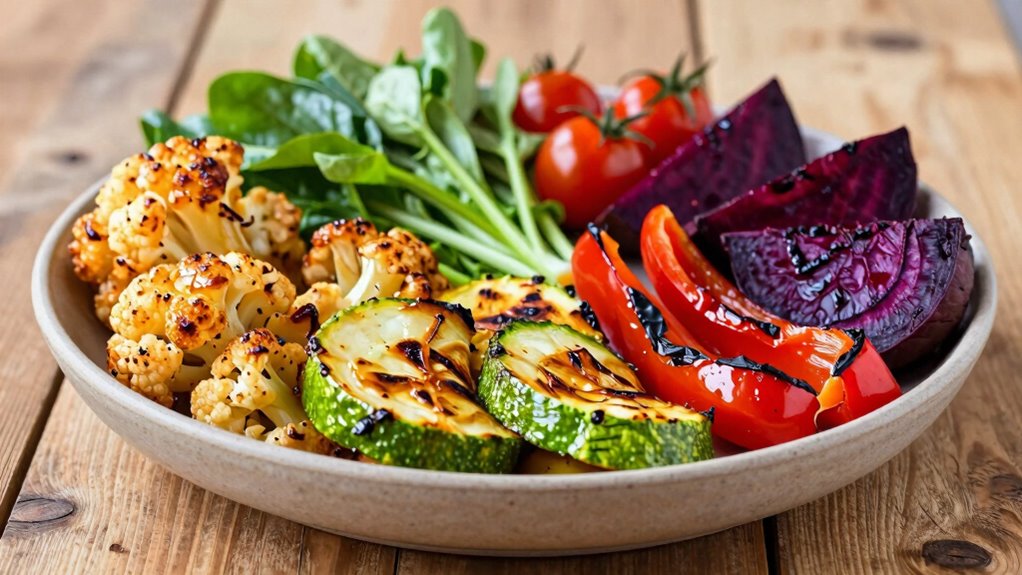
Roasted vegetables are a simple way to elevate your salads by adding depth, flavor, and texture. When you roast vegetables, their natural sweetness intensifies, creating a rich, savory foundation that complements fresh greens and other ingredients. To maximize their impact, focus on flavor pairing—think about how the roasted vegetables will harmonize with the other components of your salad. For instance, roasted sweet potatoes pair beautifully with peppery arugula and tangy feta, while caramelized carrots work well with bitter greens like kale or radicchio. The key is to choose vegetables that enhance each other’s flavors, creating a balanced, satisfying bite every time.
Roasted vegetables add depth and balance, pairing beautifully with greens and cheese for a flavorful, satisfying salad.
In addition to flavor, texture contrast plays an essential role in building a more satisfying salad. Roasted vegetables bring a tender, slightly crispy exterior that contrasts nicely with crisp lettuce or fresh herbs. This variety in texture keeps each forkful interesting and prevents the salad from feeling monotonous. For example, the softness of roasted zucchini or eggplant complements crunchy cucumbers or radishes, providing a pleasing mouthfeel. You can also add toasted nuts or seeds to introduce additional crunch that works well with the softer roasted vegetables, further enhancing the textural complexity. Incorporating seasoning techniques can also help to elevate their flavor profile and make the roasted vegetables even more appealing.
When incorporating roasted vegetables into your salad, consider how you’ll season them before roasting. A simple drizzle of olive oil, salt, pepper, and herbs like thyme or rosemary can elevate their flavor, making them a standout element. You might also experiment with bold spices such as cumin or smoked paprika to add a smoky depth that pairs well with milder greens. The goal is to create a harmony where the roasted vegetables don’t overpower the other ingredients but instead serve as a flavorful anchor around which the rest of your salad revolves.
Another tip is to add your roasted vegetables at the right time. While some vegetables, like cherry tomatoes and avocados, are best added fresh, most roasted vegetables can be prepared in advance and chilled. This allows the flavors to meld and makes assembling your salad quicker. Tossing the roasted vegetables with a bit of vinaigrette or lemon juice before adding them to your greens can also brighten their flavor and introduce an extra layer of freshness. Incorporating biodiversity and sustainable practices into your ingredient choices can also support more environmentally friendly eating habits. Additionally, selecting seasonal or locally sourced vegetables can further enhance the freshness and sustainability of your salads.
Ultimately, using roasted vegetables in your salads is about balancing flavor pairing and texture contrast. When done thoughtfully, it transforms a simple salad into a hearty, satisfying meal that’s rich in flavor and pleasing to the senses.
As an affiliate, we earn on qualifying purchases.
Frequently Asked Questions
Can I Prepare Roasted Vegetables in Advance for Salads?
Yes, you can prepare roasted vegetables in advance for salads. To keep them fresh, store them in an airtight container in the fridge. For meal prep tips, roast the vegetables ahead of time and reheat or add them cold to your salad. To enhance flavor, toss the vegetables with herbs or a little oil before storing. This way, your salads stay flavorful and satisfying without extra effort.
What Are the Best Vegetables to Roast for Salads?
You should roast vegetables like sweet potatoes, bell peppers, zucchini, carrots, and red onions for salads, as they offer versatile flavor combinations. Use proper roasting techniques—high heat for caramelization and even cooking—and toss with herbs and olive oil beforehand. These vegetables develop rich, smoky flavors that elevate your salads, providing satisfying textures and depth. Experiment with spice blends and seasoning to enhance the flavor profile further.
How Do I Store Roasted Vegetables to Keep Them Fresh?
Think of your roasted vegetables as precious treasures. To keep their vegetable freshness intact, store them in airtight storage containers, like safes for your culinary gems. Place the containers in the fridge, and aim to consume within 3-4 days. This way, your roasted vegetables stay flavorful and vibrant, ready to elevate your salads whenever you need a satisfying crunch. Proper storage makes your roasted treasures last longer.
Should I Season Vegetables Before Roasting for Salads?
Yes, you should season vegetables before roasting for salads. Seasoning techniques like tossing vegetables with olive oil, salt, pepper, and herbs enhances flavor and boosts flavor enhancement. This process guarantees the vegetables are flavorful and attractive, making your salads more satisfying. Proper seasoning also helps the spices and herbs infuse during roasting, resulting in a richer taste and a more delicious, well-rounded salad experience.
Can I Use Leftover Roasted Vegetables in Other Dishes?
Absolutely, you can reuse leftover roasted vegetables in other dishes—because, clearly, their vegetable versatility knows no bounds! Instead of tossing them out, think of them as flavor-enhancing superheroes ready to rescue your soups, pasta, or grain bowls. They bring rich, caramelized goodness to every meal, proving that roasting isn’t just a one-trick pony. Embrace the reuse; it’s eco-friendly, budget-friendly, and downright delicious.
Conclusion
By incorporating roasted vegetables into your salads, you’re revealing a flavor explosion that can transform even the dullest greens into a culinary masterpiece. It’s like turning a simple meal into a symphony of textures and tastes that could make a gourmet chef jealous. So go ahead, load up your plate with those caramelized treasures—you might just discover the secret to a salad so satisfying, it’ll make all other meals pale in comparison. Happy eating!
NFL season / tailgating Picks
team gear
As an affiliate, we earn on qualifying purchases.