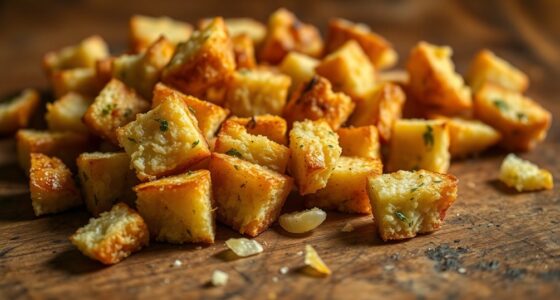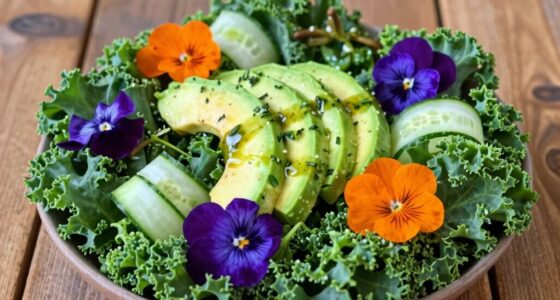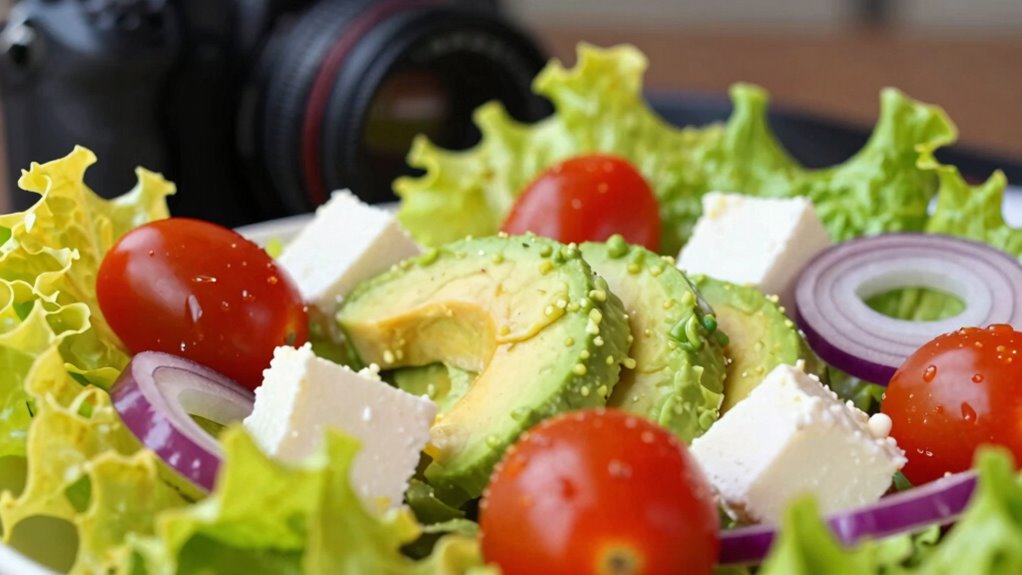

To craft the perfect salad, balance crunch, cream, and acid in every bite. Use sturdy greens like romaine or napa cabbage for crunch, adding shredded carrots, radishes, or toasted nuts for texture. Incorporate creamy elements such as feta, hummus, or avocado, then brighten the flavors with lemon juice, vinegar, or citrus zest. Pairing these components thoughtfully creates vibrant, satisfying salads. Keep exploring to discover how customizing each element elevates your salad game even further.
Key Takeaways
- Incorporate sturdy greens and crunchy vegetables, like romaine and shredded carrots, to achieve satisfying crunch in every bite.
- Add creamy elements such as feta, hummus, or avocado for smooth contrast that balances crispness.
- Use acidic components like lemon juice or vinegar to brighten flavors and enhance the salad’s freshness.
- Pair crunch, cream, and acid with complementary dressings—vinaigrettes or creamy—to unify textures and flavors.
- Customize ingredients with substitutions (nuts, cheeses, vinegars) to maintain the perfect crunch + cream + acid balance consistently.
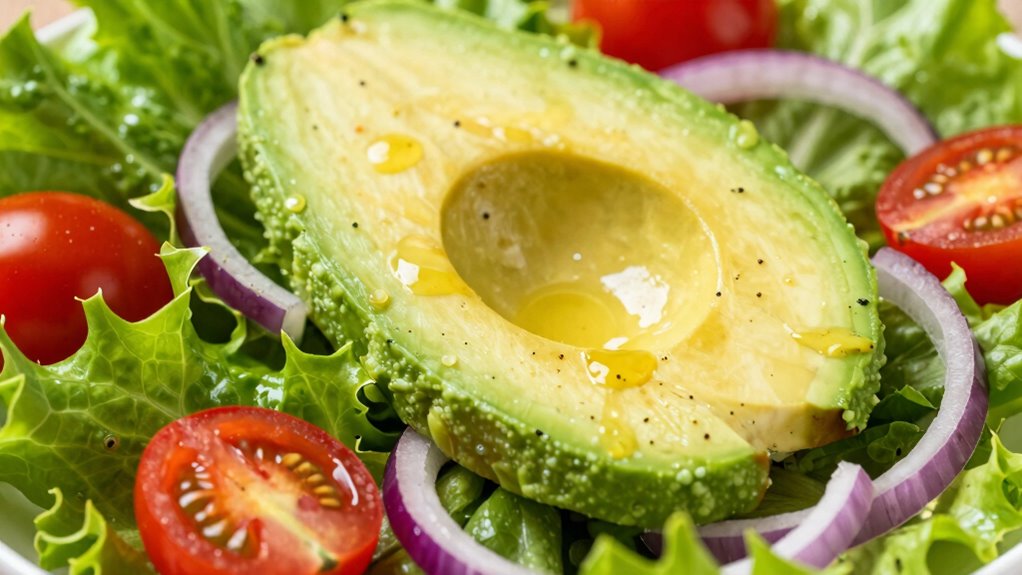
Ever wondered how to create the perfect salad with a satisfying texture? It all comes down to mastering a simple but effective formula: crunch, cream, and acid. When you get this balance right, your salads become not just a side dish, but a memorable experience. The key is understanding how dressing pairings and ingredient substitutions can elevate each component, ensuring every bite hits the right notes.
Start with the crunch. Think of sturdy greens like romaine or napa cabbage that give a satisfying bite. If you prefer lighter options, shredded carrots or sliced radishes add crispness without overpowering the dish. When selecting crunchy elements, consider ingredient substitutions—perhaps toasted nuts or seeds like almonds or sunflower seeds for extra texture and flavor. These additions bring a delightful crunch and can be swapped based on what you have on hand or your taste preferences. For dressing pairings, a simple vinaigrette with a splash of lemon or apple cider vinegar enhances the crunch with a bright, tangy note. You can also experiment with different oils—olive, sesame, or avocado—to match your crunch elements.
Next, incorporate the cream. This component provides a smooth, rich contrast that balances the crunch. Fresh cheeses like feta, goat cheese, or even ricotta work beautifully, adding a creamy layer that melts in your mouth. If you’re dairy-free or want a lighter touch, consider avocado slices or hummus dollops—these ingredient substitutions still deliver that lush texture. When choosing dressings, creamy options like a tahini or yogurt-based dressing work well, adding richness without overwhelming the salad. Alternatively, a simple drizzle of extra virgin olive oil can provide a subtle silky note that ties everything together. The goal is to have a creamy element that complements the crunch without overshadowing it.
Finally, the acid component is vital for brightness and balance. A squeeze of lemon or lime juice works wonders, but you can also experiment with vinegar—balsamic, red wine, or apple cider—depending on your flavor profile. Incorporating acid through dressing pairings brightens the entire salad, cutting through the richness of the cream and complementing the crispness. If you prefer a sweeter tang, a splash of honey or maple syrup in your dressing can add complexity. Remember, ingredient substitutions like using flavored vinegars or citrus zest can create nuanced flavors that elevate your salad.
Frequently Asked Questions
How Can I Adapt the Formula for Vegan Salads?
To adapt the formula for vegan salads, you can swap traditional ingredients with plant-based proteins like chickpeas, tofu, or tempeh for crunch and substance. Use nut butters, such as almond or peanut, to add creaminess, and include tangy elements like lemon juice or vinegar for acidity. This combination keeps your salad satisfying, flavorful, and true to the original texture balance, all while staying plant-based.
What Are Some Unexpected Ingredients That Work Well?
Like Alice tumbling down the rabbit hole, you might find unexpected flavor combinations that surprise the palate. Try roasted fennel for a sweet, licorice note or pomegranate seeds for tartness and crunch. Seasonal ingredient swaps, such as roasted root vegetables in winter or fresh berries in summer, add depth. These unexpected ingredients elevate your salad, creating a delightful mix of textures and flavors that keep every bite intriguing.
How Does Temperature Affect the Salad’s Texture?
Temperature effects markedly influence your salad’s texture variance. When you serve it chilled, the crunch remains crisp and invigorating, but if it warms up, the ingredients soften and lose some of their crispness. Cold tempers the creaminess, making it feel more revitalizing, while warmer temperatures can cause the dressing to become runnier. To keep your salad’s ideal texture, serve it at the right temperature and avoid prolonged exposure to heat.
Can This Formula Be Applied to Warm Salads?
Yes, you can apply the formula to warm salads, but you need to contemplate temperature impact. Warm ingredients soften crunch and may change cream textures, so choose sturdier crunchy elements like toasted nuts or crispy croutons. For cream, opt for ingredients that hold up well when warm, such as hearty cheeses or warm dressings. You might also try ingredient substitutions to maintain the balance of crunch, cream, and acid in the salad.
How Do Dietary Restrictions Influence Ingredient Choices?
If you have a nut allergy, you might replace nuts with seeds like sunflower or pumpkin seeds, ensuring crunch without allergens. For gluten-free needs, swap croutons for roasted chickpeas or rice crackers. For example, a friend with celiac switched breaded chicken to quinoa salad with crunchy vegetables, maintaining texture and flavor. Dietary restrictions definitely shape ingredient choices, guiding you toward safe, delicious, and satisfying salads that meet your health needs.
Conclusion
Now you’re armed with the ultimate salad texture formula: crunch, cream, and acid every time. Stick to this simple rule, and you’ll craft salads so perfectly balanced, they might just outshine even the most legendary dishes. Remember, a great salad is like a symphony—every element playing its part in perfect harmony. So go ahead, experiment and delight your taste buds with the magic of crunch, cream, and acid. Your salads will never be boring again!