
To balance salt, tang, and crunch when adding fermented veggies to your salad, start by choosing a mild or well-seasoned variety like sauerkraut or kimchi. Toss the chopped fermented veggies with fresh greens, and add creamy or sweet ingredients like avocado or cherry tomatoes to soften acidity. Use a light vinaigrette to enhance flavor without overpowering. Combining these elements creates a harmonious, delicious salad — keep exploring for more tips to perfect your mix.
Key Takeaways
- Balance tangy fermented veggies with milder greens like spinach or arugula to prevent overpowering flavors.
- Incorporate creamy elements such as avocado or yogurt dressings to mellow acidity and add smooth texture.
- Add sweet ingredients like cherry tomatoes or apple slices to contrast the saltiness and enhance overall flavor harmony.
- Use light vinaigrettes with vinegar or lemon juice to complement fermentation tang without increasing salt content.
- Include crunchy nuts or seeds to provide texture contrast and support a balanced, satisfying salad experience.
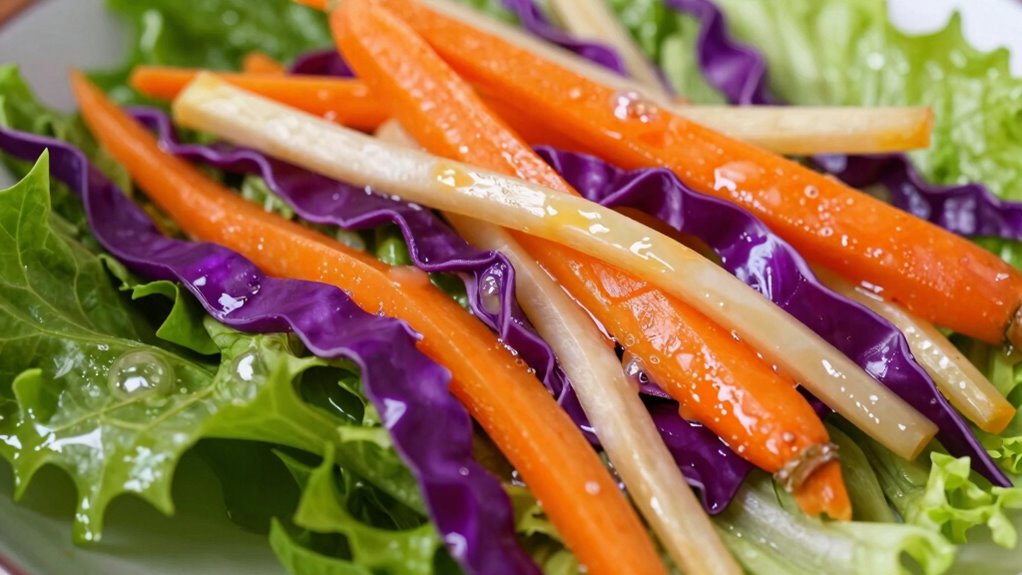
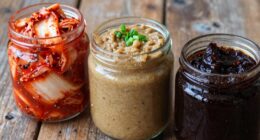
Have you ever considered adding fermented veggies to your salad? If not, you’re missing out on more than just a burst of flavor—you’re also missing out on the probiotic benefits that these tangy additions offer. Fermented vegetables, like sauerkraut, kimchi, or pickled cucumbers, introduce beneficial bacteria into your diet that support gut health, boost immunity, and promote digestion. When you incorporate them into your salads, you’re not only enhancing taste but also nourishing your body in a simple, natural way. The key is to balance their strong tangy flavor with other ingredients so that each bite is satisfying and harmonious.
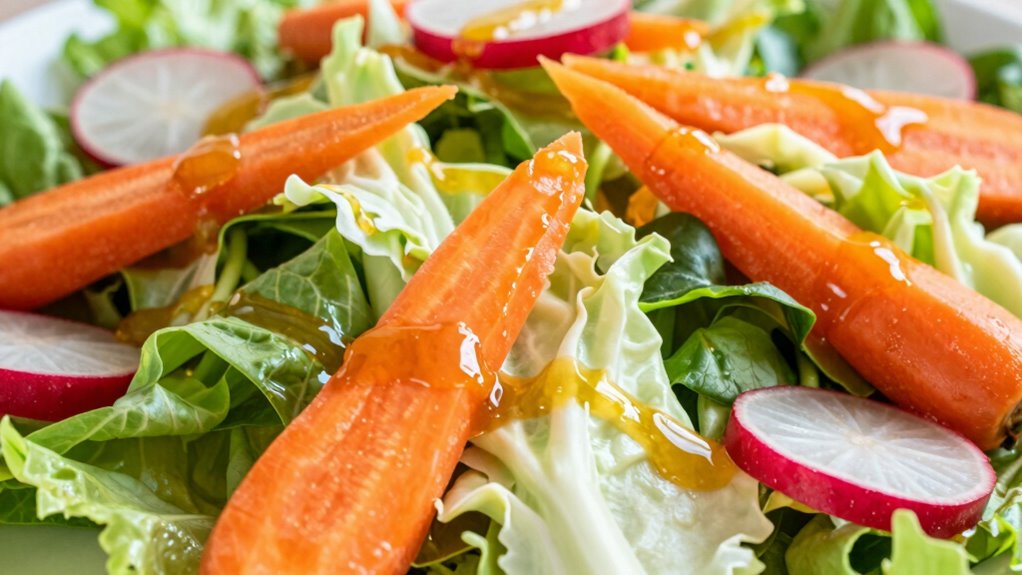
The flavor pairing of fermented veggies is vital to creating a balanced salad. Their sharp, tangy notes can stand out, so pairing them with milder ingredients helps prevent overwhelming your palate. Consider adding fresh greens, such as spinach or arugula, which provide a crisp, neutral base that complements the acidity of the fermented veggies. Adding creamy elements like avocado or a drizzle of yogurt-based dressing can mellow the tang and create a more rounded flavor profile. Sweet additions, like cherry tomatoes or thin slices of apple, can also provide contrast that balances the saltiness and acidity. Think of the salad as a canvas where the fermented veggies serve as the flavorful centerpiece, while other ingredients enhance and support their bold character. Incorporating safe food handling practices ensures that your fermentation process and ingredients remain fresh and free from contamination, making your salad both delicious and safe to enjoy.
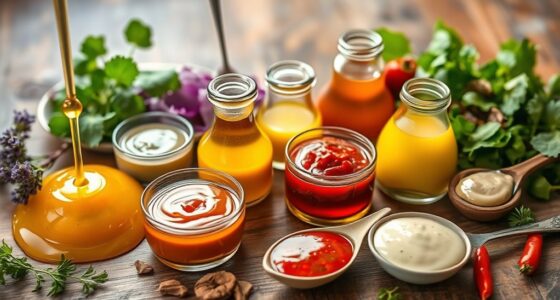
Incorporating fermented veggies into your salad is straightforward. Start by choosing your preferred fermented variety—kimchi offers a spicy kick, while sauerkraut provides a milder, tangy crunch. Chop or shred them into bite-sized pieces and toss them into your greens. To keep the flavors well-balanced, consider seasoning your salad with a light vinaigrette that contains a splash of apple cider vinegar or lemon juice, which complements the acidity of the fermented veggies. A touch of olive oil, salt, and pepper helps bring everything together without overpowering the flavors. You can also sprinkle nuts or seeds for added texture and nutrients, making your salad more satisfying.
Frequently Asked Questions
How Long Do Fermented Veggies Stay Fresh on a Salad?
Fermented veggies on a salad stay fresh for about 1 to 3 days, depending on the fermentation timeline and storage conditions. You should keep your salad refrigerated to maintain salad freshness and prevent over-fermentation. After this period, the veggies might lose their crunch, become too tangy, or develop an off flavor. For ideal flavor and texture, enjoy your fermented veggies within this timeframe.
Can You Mix Different Types of Fermented Veggies Together?
Absolutely, you can mix different types of fermented veggies together—your flavor combinations and texture blending will create a salad explosion! Imagine a symphony of tangy sauerkraut, spicy kimchi, and crunchy pickles all in one bite. Combining them enhances the taste experience, making every forkful a delightful adventure. Don’t hold back—mix away! Your salad will be a vibrant, flavor-packed masterpiece that keeps your palate excited with every crunch.
Are There Any Health Risks With Eating Fermented Veggies Daily?
Eating fermented veggies daily is generally healthy, but watch out for probiotic overstimulation, which can cause digestive issues in some people. Also, consider your salt intake, as these foods often contain high salt levels that may impact blood pressure. Moderation is key; enjoy a variety of fermented veggies without overdoing it to reap benefits without risking side effects.
How Do I Prevent Over-Fermentation When Adding to Salads?
To prevent over-fermentation when adding fermented veggies to salads, practice fermentation control by tasting small amounts first. Keep your veggies refrigerated to slow fermentation and maintain salad freshness. Adjust the amount you add based on your taste and fermentation level, and avoid leaving them out at room temperature for too long. This way, you enjoy the tangy crunch without risking over-fermentation or compromising salad freshness.
What’s the Best Way to Store Leftover Fermented Veggies?
Think of your leftover fermented veggies as precious gems—store them carefully. Use airtight glass containers to keep the bubbles in and prevent spoilage. Keep them in the fridge, where they’re like a cool cellar preserving their lively tang. Storage tips include leaving some space for expansion and labeling the date. This way, your fermented treasures stay fresh, crunchy, and flavorful for future salads and snacks.
Conclusion
Incorporating fermented veggies into your salad is a delightful way to elevate flavor and boost health. Balance the salt, tang, and crunch to suit your taste, and you’ll enjoy a crust of modernity with a touch of old-world charm—like a culinary time machine. Embrace this ancient tradition, and soon you’ll be savoring a plate that’s both vibrant and nourishing, proving that good taste and wellness are timeless companions, even in this fast-paced, digital age.