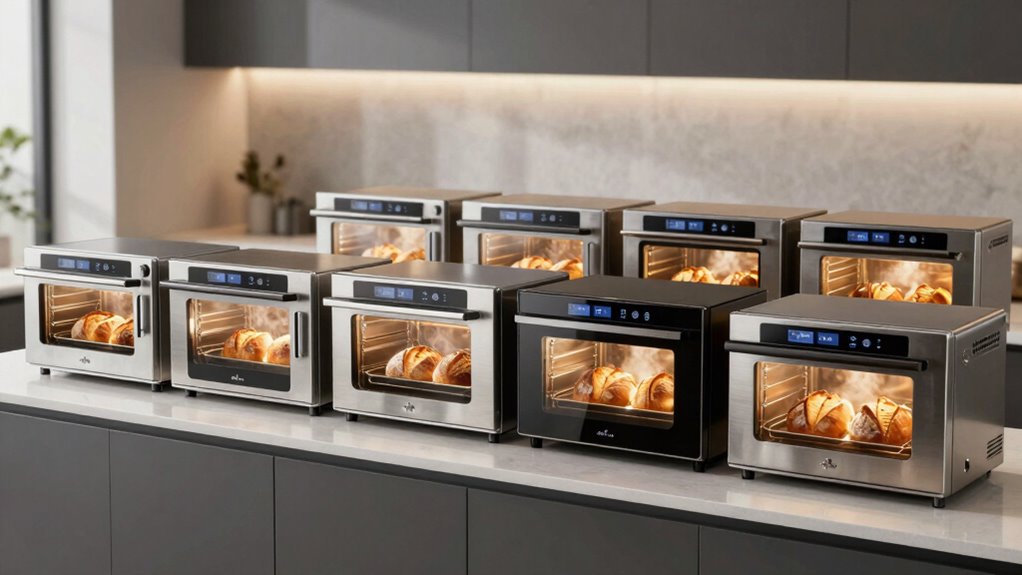

Artisan bread lives or dies by steam — a burst of moisture in the first 10 minutes of the bake is what gives a loaf its glossy, blistered crust — and a combi steam oven is the most reliable way to get it at home without dripping water into a cast iron pan. For dedicated bread baking, the ROBAM R-Box Pro 1.2 cu. ft. stands out as the best overall pick thanks to its generous cavity, precise steam control, and strong convection heat that handles multiple loaves at once. If countertop space is tight, the Toshiba 6-in-1 Compact Steam Oven delivers surprising fermentation and steam performance for the footprint, while the SMEG COF01 trades capacity for beautiful build quality and consistent low-and-slow proofing. The main tradeoff you will face in this category is steam volume and oven capacity versus counter space and price — bread ovens need room to vent moisture, and the cheapest combos often under-steam. Read on for the full breakdown of all eight models.

Get kitchen staples and gadgets delivered free — and shop member deals
- Fast, free delivery on millions of items
- Access to Prime Big Deal Days deals on October 6–7
- Prime Video, Amazon Music and more included
Key Takeaways
- The ROBAM R-Box Pro 1.2 cu. ft. took the top spot because it is one of the few countertop options with enough cavity volume to bake two round loaves while maintaining steam pressure long enough for proper oven spring.
- Several budget combos, including the Ninja Combi and Nuwave multi-cooker, can produce steam but their shallow cavities and weak top heat lead to pale, soft crusts — fine for sandwich bread, disappointing for baguettes and boules.
- A dedicated proofing or ferment mode (found on the Toshiba and FOTILE ChefCubii) matters more than raw cooking function count if you bake sourdough regularly, since controlled 78–82°F dough rising beats any warm spot in your kitchen.
- The SMEG COF01 and ROBAM models justify their higher cost with insulated stainless cavities that recover heat quickly after the door opens — a real advantage when you rotate loaves mid-bake.
- Air fryer-first designs like the ROBAM CT766 excel at crust browning but offer the least steam control, making them better as a second oven than a primary bread oven.
| SMEG COF01 Countertop Combi Steam Oven, 10 Cooking Functions, Black |  | Best Design-Forward Pick | Model: COF01BLUS | Cooking functions: 10 | Automatic recipes: 33 | VIEW ON AMAZON | See Our Full Breakdown |
| OUNIN 24L Steam and Air Fryer Combo Countertop Oven, 11-in-1 Convection Baking and Steam |  | Best Budget Workhorse | Capacity: 25 Quarts (24L) | Power: 1600W | Material: 304 Stainless Steel | VIEW ON AMAZON | See Our Full Breakdown |
| ROBAM R-Box Pro 1.2 cu. ft. Countertop Combi-Steam Oven |  | Best for Multi-Stage Bread Programs | Capacity: 1.2 cu. ft. (35 L) | Cooking modes: 15+ | Convection power: 1800 W | VIEW ON AMAZON | See Our Full Breakdown |
| FOTILE ChefCubii HYZK32-E3-B 4-in-1 Combi-Steam Oven with Air Fry, Convection, and Dehydrator Functions, 1.1 cu. ft., Black |  | Best Precision Control | Model: HYZK32-E3-B | Capacity: 1.1 cu. ft. | Power: 1800W | VIEW ON AMAZON | See Our Full Breakdown |
| Nuwave Combi Steam Oven, 16-Quart Non-Toxic Stainless Steel Multi-Cooker |  | Best for Beginners | Capacity: 16 quarts | Power: 1800 watts | Temperature range: 50°F–450°F | VIEW ON AMAZON | See Our Full Breakdown |
| Ninja Combi 14-in-1 Multicooker, Air Fryer, Toaster Oven, and Steamer (SFP701) | 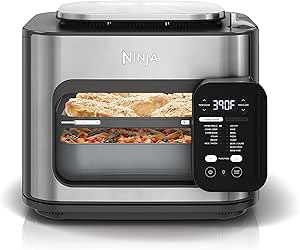 | Best for Multi-Taskers | Cooking modes: 14 | Functions: Combi Meals, Combi Crisp, Combi Bake, Rice/Pasta, Sear/Sauté, Steam, Bake, Toast, Pizza, Slow Cook, Proof, Sous Vide, Air Fry, Broil | Capacity: Feeds up to 8; fits a 6 lb roast chicken or 10-inch pizza | VIEW ON AMAZON | See Our Full Breakdown |
| ROBAM R-Box Pro Toaster Air Fryer Oven Combo CT766 |  | Best for Family-Sized Bakes | Capacity: 1.2 cu. ft. (1.1 cu. ft. usable) | Power: 1800W | Preset recipes: 32 | VIEW ON AMAZON | See Our Full Breakdown |
| Toshiba 6-in-1 Compact Steam Oven, 20L Countertop Combi Oven |  | Best for Small-Space Sourdough | Capacity: 20L double-layer | Functions: Steam, hot air bake, steam bake, air fry, slow cook, ferment | Temperature range: 160–445°F | VIEW ON AMAZON | See Our Full Breakdown |
| combi steam ovens for artisan bread | Capacity | Functions | Power |
|---|---|---|---|
| SMEG COF01 Countertop Combi St | — | — | — |
| OUNIN 24L Steam and Air Fryer | 25 Quarts (24L) | 11-in-1 | 1600W |
| ROBAM R-Box Pro 1.2 cu. ft. Co | 1.2 cu. ft. (35 L) | — | — |
| FOTILE ChefCubii HYZK32-E3-B 4 | 1.1 cu. ft. | 4-in-1 (steam, bake, air fry, dehydrate) | 1800W |
| Nuwave Combi Steam Oven | 16 quarts | — | 1800 watts |
| Ninja Combi 14-in-1 Multicooke | Feeds up to 8; fits a 6 lb roast chicken or 10-inch pizza | Combi Meals, Combi Crisp, Combi Bake, Rice/Pasta, Sear/Sauté, Steam, Bake, Toast, Pizza, Slow Cook, Proof, Sous Vide, Air Fry, Broil | — |
| ROBAM R-Box Pro Toaster Air Fr | 1.2 cu. ft. (1.1 cu. ft. usable) | Steam cooking, convection baking, air frying | 1800W |
| Toshiba 6-in-1 Compact Steam O | 20L double-layer | Steam, hot air bake, steam bake, air fry, slow cook, ferment | — |
More Details on Our Top Picks
SMEG COF01 Countertop Combi Steam Oven, 10 Cooking Functions, Black
SMEG’s COF01 is the rare combi oven you’d actually want visible on your counter. The retro glossy black finish with chrome accents makes it a statement piece rather than an appliance you hide behind the toaster. Functionally, its 10 cooking modes cover the essentials — steam, bake, convection, grill, air fry — and the 104°F to 446°F range is wide enough for everything from proofing-adjacent low heat to serious crust development. Where it lags behind the OUNIN 24L or the Nuwave Combi is in bread-specific detail: there’s no published cavity capacity, no adjustable steam percentage like the Nuwave’s 10–90% range, and no multi-stage programming like the ROBAM R-Box Pro. For artisan bakers who want design and steam-assisted baking in one package, it delivers — just with less control granularity than dedicated alternatives.
Pros:- 10 cooking functions cover steam, bake, convection, grill, and air fry in one unit
- 33 automatic recipes lower the learning curve for new combi users
- Wide 104°F–446°F temperature range suits both gentle steaming and high-heat crust work
- Distinctive retro design that earns permanent countertop placement
Cons:- No published cavity capacity makes it hard to judge loaf or batard fit before buying
- Lacks adjustable steam-level control offered by dedicated combi competitors
- Premium styling comes at a cost compared with plainer, more spec-rich rivals
Best for: Design-conscious home bakers who want a stylish countertop centerpiece that still handles steam, bake, and air fry duties
Not ideal for: Data-driven bakers who need exact cavity dimensions and adjustable humidity percentages for repeatable sourdough results
- Model:COF01BLUS
- Cooking functions:10
- Automatic recipes:33
- Temperature range:104°F–446°F
- Display:LCD digital display
- Dimensions:19.75 × 19.5 × 15.5 in
Our verdict“Buy this if style matters as much as steam — but skip it if you need precise humidity control and known capacity for serious bread work.”
OUNIN 24L Steam and Air Fryer Combo Countertop Oven, 11-in-1 Convection Baking and Steam
The OUNIN 24L is the practical choice when you want combi functionality without the premium pricing of the ROBAM or FOTILE ChefCubii. Its 25-quart stainless cavity is genuinely bread-friendly — roomy enough for a boule or a 13-inch pizza, and noticeably more generous than the Nuwave Combi’s 16 quarts. The steam-plus-convection combo mode is what matters most here: it delivers the shiny, blistered crust artisan bakers chase, then crisps it in the same cycle. At 1600W it’s the least powerful unit in this lineup, so expect slightly longer bake times than the 1800W ROBAM. The real tradeoff is pedigree — OUNIN is a lesser-known brand with a shorter track record, so long-term reliability is less proven than established names like Nuwave or SMEG.
Pros:- Roomy 25-quart interior handles a 13-inch pizza, whole chicken, or large boule
- Steam and convection combo mode produces crisp crusts with moist interiors
- 360° hot air circulation cooks up to 30% faster with little or no oil
- 11-in-1 functionality replaces several separate countertop appliances
Cons:- Lesser-known brand means limited track record on durability and support
- 1600W output trails the 1800W competitors for fast preheat and recovery
- Digital control panel offers fewer precision features than dedicated bread ovens
Best for: Value-focused bakers who want big capacity and steam-plus-convection performance at an accessible price
Not ideal for: Buyers who prioritize brand reputation and documented long-term durability over upfront savings
- Capacity:25 Quarts (24L)
- Power:1600W
- Material:304 Stainless Steel
- Functions:11-in-1
- Fits:13-inch pizza, 6 slices of toast, whole chicken
Our verdict“The smart pick for bakers who want capacity and combi results on a budget, provided they accept a newer, less proven brand.”
ROBAM R-Box Pro 1.2 cu. ft. Countertop Combi-Steam Oven
Multi-stage cooking is the R-Box Pro’s killer feature for artisan bread — you can program a high-steam phase for oven spring, then automatically drop into dry convection for crust development, all in one press. That’s something the OUNIN and SMEG simply can’t do, and it mirrors how professional deck ovens are actually used. With three steam levels, 32 presets, and a scratch-resistant blue enamel interior with one-touch self-clean and descaling, it’s built for people who bake several times a week and don’t want maintenance chores piling up. The 90-minute continuous steam ceiling is generous for most loaves, though marathon bakers doing multiple batches will want to plan refills. Compared with the FOTILE ChefCubii, you trade the ChefCubii’s ±1°F precision for more automation — a fair swap depending on whether you tinker or program.
Pros:- Up to 3 programmable cooking stages automate steam-then-crust bread cycles
- Three adjustable steam levels plus 15+ modes for fine control
- One-touch self-clean and descaling keeps a heavily used unit low-maintenance
- 90 minutes of continuous steam supports long, humid bakes
Cons:- Steam range tops out at 302°F, capping high-heat steam-assisted bakes
- 1.2 cu. ft. capacity can restrict larger roasts and multiple loaves
- Countertop footprint demands serious kitchen real estate
Best for: Frequent artisan bakers who want automated steam-to-crust programming and low-maintenance self-cleaning
Not ideal for: Bakers who regularly roast oversized dishes, since the 1.2 cu. ft. cavity can feel limiting for large cuts
- Capacity:1.2 cu. ft. (35 L)
- Cooking modes:15+
- Convection power:1800 W
- Steam temperature range:86°F–302°F
- Cooking stages:Up to 3
- Presets:32
- Continuous steam:Up to 90 minutes
- Interior:Non-stick blue enamel with self-clean and descaling
Our verdict“The best choice for bakers who want set-it-and-forget-it multi-stage bread programs with easy cleanup after.”
FOTILE ChefCubii HYZK32-E3-B 4-in-1 Combi-Steam Oven with Air Fry, Convection, and Dehydrator Functions, 1.1 cu. ft., Black
If you’re the type of baker who keeps a spreadsheet of bake logs, the ChefCubii’s ±1°F precision and four steam modes with humidity control are the standout draw. That level of granularity beats every other model here — the ROBAM adjusts in ±36°F steps, which is a canyon-wide difference when you’re dialing in crust color on a lean dough. The dual-zone 360° convection and foldable bottom heating tube make both even baking and cleanup genuinely easier, and the external water tank lets you refill mid-bake without venting steam and dropping cavity temperature. Compared with the Nuwave Combi, the ChefCubii’s 1.1 cu. ft. cavity is smaller, so bakers working with wide batards or multiple loaves may feel squeezed. It’s the most refinement-per-cubic-inch option in this lineup, aimed squarely at perfectionists.
Pros:- ±1°F/°C precision with dual-zone 360° convection for highly repeatable bakes
- Four steam modes with humidity control outclass rivals’ fixed steam settings
- External water tank allows mid-bake refills without losing cavity heat
- 50 preset menus plus foldable heating tube simplify both cooking and cleaning
Cons:- 1.1 cu. ft. capacity is tight for large or multiple loaves
- 4-in-1 core functions are fewer than the 11–15 modes of OUNIN or ROBAM
- Premium build and precision command a higher price than budget rivals
Best for: Detail-obsessed artisan bakers who want lab-grade temperature precision and humidity control for repeatable results
Not ideal for: Bakers who routinely produce multiple or oversized loaves — the 1.1 cu. ft. cavity is the smallest serious option here
- Model:HYZK32-E3-B
- Capacity:1.1 cu. ft.
- Power:1800W
- Functions:4-in-1 (steam, bake, air fry, dehydrate)
- Presets:50 menus
- Temperature precision:±1°F/°C
- Interior:304 stainless steel cavity with foldable heating tube
Our verdict“The precision pick for bakers who measure everything — less capacity, but unmatched control for perfecting crumb and crust.”
Nuwave Combi Steam Oven, 16-Quart Non-Toxic Stainless Steel Multi-Cooker
The Nuwave Combi is the gentlest on-ramp to combi bread baking in this lineup. Its 120 interactive presets mean a first-timer can get a respectable crusty loaf without understanding steam percentages or stage programming — and the 10–90% adjustable steam range is there when they’re ready to experiment. That humidity band is broader than anything the SMEG or OUNIN advertise, which matters enormously for getting oven spring right before transitioning to dry heat. The PFAS-free stainless construction and dishwasher-safe accessories also remove cleanup anxiety, a real hurdle for newcomers. Its footprint is the catch: at 14.75 inches deep and over 21 pounds, it’s bulkier than its 16-quart capacity suggests, and the 50°F–450°F range, while wide, lacks the ChefCubii’s precision. Compared with the ROBAM, you swap multi-stage automation for sheer preset quantity.
Pros:- 120 interactive presets make combi baking approachable with zero learning curve
- Wide 10–90% steam adjustability supports experimentation as skills grow
- PFAS-free stainless steel build with fully dishwasher-safe accessories
- 16-quart cavity fits a 5 lb roast or whole chicken for non-bread days
Cons:- Bulky 14.75″D × 13.88″W footprint relative to its 16-quart capacity
- No multi-stage programming for automated steam-to-crust bread cycles
- Long-term software support timeline is unclear
Best for: Beginners who want guided presets, forgiving controls, and a non-toxic build while learning steam baking
Not ideal for: Space-constrained kitchens — the deep footprint and 21.4-pound weight demand a dedicated counter zone
- Capacity:16 quarts
- Power:1800 watts
- Temperature range:50°F–450°F
- Steam range:10%–90%
- Presets:120 (100 easy-cook, 50 memory slots)
- Material:PFAS-free stainless steel
- Dimensions:14.75″D × 13.88″W × 14.88″H, 21.4 lbs
Our verdict“The easiest way into steam-assisted bread baking — ideal for beginners, skippable for compact kitchens or advanced tinkerers.”
Ninja Combi 14-in-1 Multicooker, Air Fryer, Toaster Oven, and Steamer (SFP701)
The Ninja Combi SFP701 earns its spot by being the most function-crowded option on this list — 14 cooking modes, including a dedicated Proof function and HyperSteam technology. For artisan bread bakers, that proof mode plus steam means you can bulk-ferment dough and bake it in the same appliance. Compared with the Toshiba 6-in-1, the Ninja goes further with sous vide, sear/sauté, and slow cook functions, making it a true kitchen consolidator rather than a specialist baking tool.
Where it falls short for bread specifically is capacity: it fits a 10-inch pizza, but the round Combi Cooker Pan shape is awkward for a batard or boule. The ROBAM R-Box Pro CT766, with its 1.2 cu. ft. box cavity, handles loaf shapes more naturally. Still, for someone who wants one appliance that cooks dinner and proofs weekend dough, this makes sense.
Pros:- Dedicated Proof mode plus HyperSteam covers fermentation and crust development
- 14 functions replace several separate appliances, including sous vide and slow cook
- Dishwasher-safe nonstick accessories make post-bake cleanup quick
- Cooks some foods straight from frozen without planning ahead
Cons:- Round cavity and pan shape don’t accommodate loaf pans or longer batards well
- Steam output is meal-oriented rather than tuned for high-humidity bread baking like dedicated combi ovens
Best for: Busy households who want one appliance to handle weeknight meals and occasional bread baking, and who value dishwasher-safe cleanup
Not ideal for: Dedicated bread bakers who need a rectangular cavity for loaf pans and batards — the round pan shape limits shaping options
- Cooking modes:14
- Functions:Combi Meals, Combi Crisp, Combi Bake, Rice/Pasta, Sear/Sauté, Steam, Bake, Toast, Pizza, Slow Cook, Proof, Sous Vide, Air Fry, Broil
- Capacity:Feeds up to 8; fits a 6 lb roast chicken or 10-inch pizza
- Technology:HyperSteam and Air Fry
- Included accessories:Combi Cooker Pan, bake tray, crisper tray, recipe book with cooking charts
- Cleaning:Dishwasher-safe accessories; nonstick pan
Our verdict“A strong pick if bread baking is one of many kitchen tasks rather than your primary mission, and you want maximum function-per-inch of counter space.”
ROBAM R-Box Pro Toaster Air Fryer Oven Combo CT766
The ROBAM R-Box Pro CT766 stands out for having the largest usable cavity in this batch — 1.2 cu. ft. — which matters enormously for bread. A full-size batard, two baguette pans, or a family pizza all fit comfortably, something neither the Ninja Combi’s round pan nor the Toshiba’s 20L double-layer box can match. Its 3-stage cooking programs are the headline feature for bakers: you can sequence steam, convection, and air fry so a loaf gets oven spring from steam, then deep browning from dry heat, without manual mode switching mid-bake.
The tradeoff is trust. With 32 presets and LED touch controls, the interface pushes you toward guided recipes rather than full manual control, which experienced bakers may find limiting when dialing in a custom steam-and-bake profile. And at 1800W on a countertop, it shares the circuit-strain issue of the Toshiba‘s high-draw modes.
Pros:- 1.2 cu. ft. cavity is the roomiest here, fitting batards and family-sized bakes
- 3-stage cooking programs automate the steam-then-crisp sequence bread demands
- 32 preset recipes lower the learning curve for combi cooking newcomers
- Includes practical extras like anti-scald gloves and a descaler for steam maintenance
Cons:- Preset-heavy controls limit manual tuning for custom bread formulas
- Substantial countertop footprint despite being marketed as compact
Best for: Families and intermediate bakers who bake larger loaves and want automated multi-stage programs instead of babysitting steam timing
Not ideal for: Bakers who want precise manual control over humidity and temperature curves — the preset-driven interface constrains experimentation
- Capacity:1.2 cu. ft. (1.1 cu. ft. usable)
- Power:1800W
- Preset recipes:32
- Cooking stages:3-stage programmable
- Functions:Steam cooking, convection baking, air frying
- Door style:Dropdown door
- Included components:Anti-scald gloves, baking pan, broiling rack, oven descaler
- Warranty:1-year protection
Our verdict“The choice when loaf size and hands-off multi-stage baking matter more than granular manual control.”
Toshiba 6-in-1 Compact Steam Oven, 20L Countertop Combi Oven
Of the three, the Toshiba 6-in-1 is the one designed most deliberately around bread. Its Ferment mode offers four precise temperatures (85–115°F), which is genuine proofing control — the Ninja Combi has a Proof function but no published temperature granularity, and the ROBAM CT766 skips dedicated fermentation presets entirely. The triple steam-baking mode reaching 445°F is the closest thing here to a true European combi bake, delivering simultaneous steam and high heat for glossy, blistered crusts.
Two design details show real thought: the 4° dome prevents condensation dripping onto your loaf mid-bake — a common failure of budget steam ovens — and the large water box runs 5 hours, enough for long retard-proof-bake sessions. The catch is size: 20L means smaller boules and batch limits versus the ROBAM, and some smart features lean on the Toshiba TSmartLife app, which won’t suit anyone who prefers hardware buttons.
Pros:- Four selectable fermentation temperatures give real control over proofing
- Triple steam-baking mode reaches 445°F for proper artisan crust development
- 4° dome design stops condensation dripping onto bread mid-bake
- 5-hour water box runtime supports extended ferment-and-bake sessions
Cons:- 20L capacity limits loaf size and batch volume
- Some functionality is tied to the TSmartLife app, which frustrates users who prefer standalone controls
Best for: Apartment dwellers and sourdough hobbyists with limited counter space who need precise proofing temperatures and true steam-plus-heat baking
Not ideal for: Larger households or high-volume bakers — the 20L capacity caps loaf size and batch counts well below the ROBAM CT766
- Capacity:20L double-layer
- Functions:Steam, hot air bake, steam bake, air fry, slow cook, ferment
- Temperature range:160–445°F
- Steam mode:Up to 212°F, 2-minute heat-up, 1400W
- Steam baking power:1900W
- Fermentation temperatures:85°F, 95°F, 105°F, 115°F
- Preset menus:36
- Water box runtime:Up to 5 hours
- App control:Toshiba TSmartLife
Our verdict“The most bread-literate compact option here — pick it if proofing precision matters more than cavity size.”

How We Picked
I judged every model through one narrow lens: can it produce bakery-quality artisan bread? That starts with steam delivery — how much moisture the unit generates, how long it sustains it, and whether steam reaches the loaf evenly rather than pooling at the bottom. Next came heat quality: even convection, strong top-element browning, and how quickly the oven recovers after you open the door to load or rotate dough. Cavity size and shape determined ranking too, because a tall boule needs vertical clearance and a baguette needs length — dimensions that matter far more for bread than for reheating leftovers.
Beyond raw performance, I weighed bread-specific features like dedicated proof and ferment modes, programmable multi-stage cooking (steam, then dry heat), and precise low-temperature control. Ease of descaling and reservoir access affected long-term ownership scores, since steam ovens that are hard to clean get abandoned. Finally, I factored value relative to bread output — an oven with eleven functions but weak steam ranks below a simpler model that nails crust and crumb. Models were then ordered from best overall bread performance down to niche and budget alternatives.
Factors to Consider When Choosing Combi Steam Ovens For Artisan Bread
Before choosing a combi steam oven for bread, it helps to understand what actually drives baking results — and where marketing claims diverge from loaf-on-the-counter reality. These are the factors that shaped this ranking and should shape your decision.Steam Output and Duration
The single biggest differentiator is not whether an oven has a steam function but how much steam it produces and for how long. Artisan bread needs heavy moisture in the first 8–12 minutes of the bake so the crust stays gelatinized while the loaf expands — thin, intermittent mist simply will not do it. Ovens with dedicated water tanks feeding a boiler, like the ROBAM R-Box Pro, sustain steam far longer than drip-tray evaporators found on cheaper combos. A common mistake is buying an oven whose steam mode is designed for vegetables or fish; those low-volume settings leave loaves with dull, matte crusts. Look for language like “steam bake” or adjustable humidity percentages rather than a generic steam preset. If a manufacturer does not publish steam volume or tank size, treat that as a warning sign.
Cavity Height, Width, and Rack Positions
Bread is the least forgiving food when it comes to oven geometry. A tall bâtard or a free-form sourdough boule can rise six-plus inches during oven spring, and it will fuse to the heating element if clearance is tight. Width matters for batards and baguette-shaped loaves — many compact steam ovens are wide enough for a round loaf but too narrow for anything elongated. Multiple rack positions also let you drop the heat source further from the crust, which prevents burnt tops before the interior finishes. This is where countertop multi-cookers with shallow, bucket-shaped cavities fall behind box-style ovens. My advice: measure your typical loaf plus its baking steel or stone before comparing internal dimensions, because manufacturer capacity figures in liters or quarts tell you almost nothing useful about whether bread fits.
Proofing and Fermentation Modes
Most buyers focus entirely on the bake and overlook proofing, yet controlled fermentation is half of artisan bread quality. Sourdough wants a steady 78–82°F for bulk rise, and kitchen counters swing wildly outside that range across seasons. Ovens with a true ferment mode — the Toshiba and FOTILE ChefCubii both include one — hold dough at stable low temperatures, which improves flavor development and predictability. Some models also combine low steam with gentle heat for proofing, preventing the dried, cracked surface you get proofing uncovered in a dry oven. Without this feature, you are back to improvising with a warm oven light and a bowl of water. If you bake yeasted breads occasionally it matters less, but for weekly sourdough bakers it justifies paying more or choosing a smaller oven that proves well over a bigger one that does not.
Heat Recovery and Insulation
Every time you open the door to load dough, slash the top, or rotate a loaf, your oven dumps heat — and bread crust quality collapses in a cold oven. Well-insulated stainless cavities with higher-wattage elements recover in a minute or two, while thin-walled glass and plastic multi-cookers can take five minutes or more. Recovery speed is rarely listed in spec sheets, so use build quality as a proxy: heavier doors, double-glazed glass, and substantial overall weight usually mean better heat retention. This is a large part of why the premium models in this roundup outperform cheap combos even when their steam specs look similar on paper. If you bake one loaf at a time and load quickly, it matters less; if you bake in batches, treat recovery as a deciding factor.
Descaling and Maintenance
Steam ovens scale, and a scaled boiler loses steam output gradually — meaning your crusts decline over months with no obvious fault. Before buying, check where the water tank sits and whether the manufacturer specifies a descaling routine or cleaning mode. Front-access tanks are far more convenient than ones requiring you to reach into a hot cavity, and removable drip trays save real frustration. Countertop combis with hidden boilers can sometimes not be descaled at all, which shortens their useful life considerably. Use filtered or distilled water from day one regardless of the model, since prevention beats every cleaning cycle. Maintenance burden is the least glamorous criterion in this guide, but it is the one that determines whether your bread oven still performs in year three.
When to Pay More (and When Not To)
Paying more in this category buys three things: bigger and better-built cavities, precise digital control over temperature and humidity, and durable steam systems. That investment makes sense if you bake bread weekly, sell to friends, or shoot for competition-level crusts. If you bake a loaf every other weekend and mostly want better results than a Dutch oven, a mid-range model like the OUNIN or Toshiba gets you 80 percent of the way for far less money. Where I would not pay extra is for sheer function count — air frying, dehydrating, and 14-in-1 presets add nothing to a baguette. The mistake I see most often is buyers paying for versatility they will never use while skimping on the steam and capacity that actually affect the loaf. Match the spend to your baking frequency, not the spec sheet.
Frequently Asked Questions
Can a countertop combi steam oven really replace a Dutch oven for sourdough?
Yes, and in some ways it can beat one. A Dutch oven works by trapping the dough’s own moisture, which means steam tapers off quickly and you must lift a screaming-hot lid mid-bake. A combi oven injects sustained steam for as long as you program it, then switches automatically to dry convection heat for the browning phase — no lid wrestling, no temperature crash. The catch is cavity geometry: a small combi may not fit a large boule with room for airflow, whereas a Dutch oven handles any size dough you can shape. If your loaves are under about eight inches across and you value repeatability, a quality combi like the ROBAM R-Box Pro is a genuine upgrade. Bakers who regularly make massive loaves or long batards may still want the Dutch oven as a fallback.
How much steam does artisan bread actually need, and do budget combos provide it?
For a classic lean dough, you want a saturated atmosphere for roughly the first 10–15 minutes — enough to keep the crust gelatinized until oven spring finishes, then dry heat to set and brown it. Budget combos vary widely here: some, like the OUNIN, push enough steam for a decent batard, while multi-cooker style units like the Nuwave produce a light mist better suited to reheating. The tell is the water system — a dedicated tank with a boiler generally outperforms a small reservoir that evaporates a few tablespoons at a time. If your loaves consistently come out with pale, matte crusts and poor ear formation, insufficient steam is almost always the cause. You can partially compensate with an ice cube or preheated pan of water in the cavity, but that workaround only goes so far.
Is a proofing mode worth choosing one oven over another?
If you bake sourdough or any long-fermented dough, yes — it is arguably more valuable than an extra air fry preset. Controlled proofing at a stable 78–82°F gives you predictable timing, better flavor development, and consistent results across winter and summer kitchens. Models like the Toshiba and FOTILE ChefCubii include ferment modes with gentle heat, and some add low humidity so your dough surface never skins over. Without it, you are guessing with a warm oven cracked open, which produces variable loaves no matter how good your bake phase is. Yeasted sandwich bakers who proof in under two hours can treat it as a nice-to-have. Weekly sourdough bakers should treat it as close to a requirement.
Do I need a baking stone or steel inside a combi steam oven?
It depends on the oven’s bottom heat. A stone or steel stores energy and delivers an aggressive burst of heat to the loaf base, which improves oven spring and prevents pale bottoms — the classic weakness of countertop convection ovens. If your combi has strong lower-element output and a good base rack position, you may get acceptable results without one. In thinner-walled units like the Ninja Combi or Nuwave, a thin steel can noticeably improve the base of your loaves, but check the manufacturer’s weight and clearance limits first, because many countertop combis are not rated for heavy stones. Leave at least an inch of clearance above the steel for spring. When in doubt, a lightweight perforated baking sheet preheated in the oven is a safer compromise than a 15-pound stone.
Which of these ovens can bake more than one loaf at a time?
Only the larger box-style units realistically handle batch baking. The ROBAM R-Box Pro 1.2 cu. ft. has the cavity volume for two medium boules or several small rolls with room for steam to circulate, and the ROBAM CT766 can manage two baguettes thanks to its width. The SMEG COF01 fits a second smaller loaf on an upper rack, though steam distribution is better with a single loaf. Compact multi-cookers like the Nuwave 16-quart and the Ninja Combi are single-loaf machines — crowding them kills both steam coverage and crust color. If you bake for a household or give loaves away, batch capacity should push you toward the bigger models even at a higher price. Otherwise, one-loaf-at-a-time capability is perfectly fine and saves counter space.
Conclusion
The right combi steam oven depends less on specs and more on how seriously you bake. For best overall bread performance, the ROBAM R-Box Pro 1.2 cu. ft. is my top recommendation — its steam capacity, insulation, and cavity size handle everything from baguettes to twin boules. The OUNIN 24L earns the best value slot for delivering genuine steam-bake results at a friendlier price, provided your loaves are modest in size. For a premium pick where design and build quality matter as much as the crumb, the SMEG COF01 is the standout, though its smaller capacity means skipping the two-loaf bakes. Beginners should start with the Toshiba 6-in-1 Compact — its ferment mode and forgiving controls make it the easiest path from store-bought to homemade sourdough. The FOTILE ChefCubii suits versatile cooks who dehydrate and air fry alongside their bread habit, the Ninja Combi and Nuwave work as budget all-rounders for casual bakers, and the ROBAM CT766 is the pick for crust-obsessed bakers who want browning muscle in a second oven. Match the oven to your baking frequency and loaf size, and your crust will thank you.
NFL season / tailgating Picks
team gear
As an affiliate, we earn on qualifying purchases.