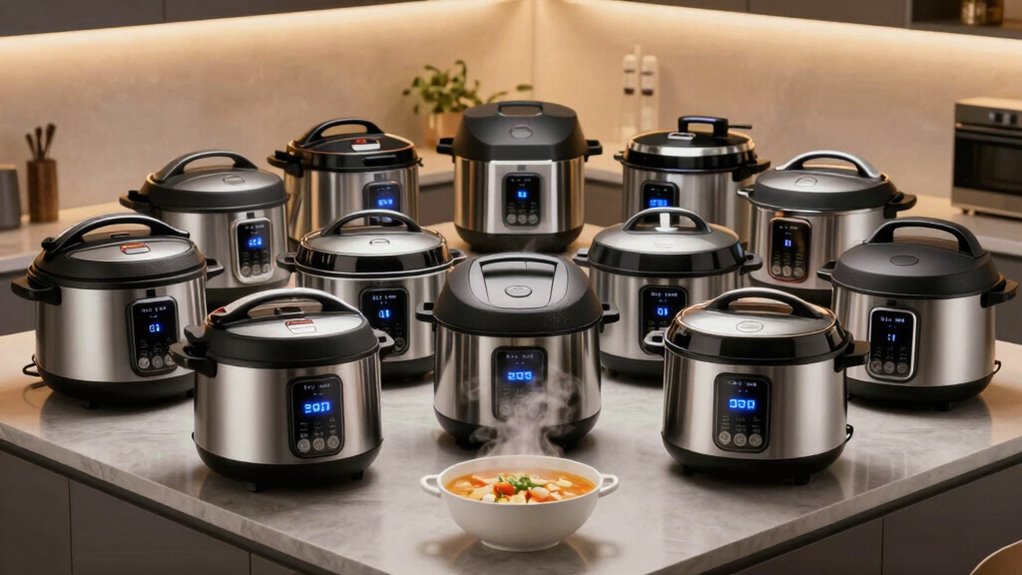

The best multicooker for soups and stews is the Instant Pot Duo 6-Quart 7-in-1, which balances pressure and slow cooking with a capacity that fits most families. If you cook for a crowd, the DUMOS 8-Quart 16-in-1 offers more volume and a ceramic inner pot, while the Instant Pot Rio Mini 4-Quart is the smarter pick for small households. The main tradeoff in this category is between true pressure cooking, which builds deep broth flavor fast, and rice-cooker-style multicookers that only simmer — fine for chili, limiting for stock. Capacity, browning ability, and inner pot material also separate the winners from the rest. Keep reading for the full breakdown of all 11 models.

Get kitchen staples and gadgets delivered free with Prime
- Fast, free delivery on millions of items
- Prime Video, Amazon Music and more included
- Member-only deals all year
Complete the kit


Key Takeaways
- Rice-cooker-style multicookers like the Aroma Professional 8-Cup simply cannot build pressure, so they simmer soups well but take hours longer than the Instant Pot and Chefman models for stock and braised stews.
- Capacity spread across this lineup is wide — 2 quarts to 10 quarts — and the sweet spot for soup households is 6 quarts, which held roughly four to six standard soup servings with room for reduction.
- The Presto 06009 Kitchen Kettle XL is the only non-programmable option here; its 10-quart open design suits bulk soup sessions but removes the set-and-forget convenience every other pick offers.
- Nonstick and ceramic inner pots (COMFEE’, DUMOS) make cleanup after starchy stews easier, but stainless pots (Instant Pot Duo, Duo Plus) brown meat better, which matters more for stew flavor.
- The 4-quart-and-under minis (Instant Pot Duo Mini, Rio Mini, Aroma 2-Quart) cut a soup recipe down to 2-3 servings, so they only make sense as a second appliance or for one-person households.
| Instant Pot Duo Plus 6 Qt 9-in-1 Electric Pressure Cooker, Stainless Steel |  | Best Overall | Capacity: 6 quarts | Cooking Functions: 9-in-1 (pressure, slow cook, sauté, sous vide, steam, sterilize, rice, yogurt, keep warm) | Smart Programs: 15 one-touch presets | VIEW ON AMAZON | See Our Full Breakdown |
| Aroma Housewares Professional Plus ARC-5000SB 20-Cup Digital Rice Cooker, Food Steamer and Slow Cooker |  | Best for Large Batches | Capacity: 10 cups uncooked / 20 cups cooked / 4 quarts | Functions: Rice cooker, food steamer, slow cooker, saute-then-simmer | Timer: 15-hour programmable delay | VIEW ON AMAZON | See Our Full Breakdown |
| Instant Pot Rio Mini 4-Quart 7-in-1 Electric Pressure Cooker |  | Best Compact | Capacity: 4 quarts | Cooking Functions: 7 (pressure cook, slow cook, sauté, steam, rice, yogurt, keep warm) | Power: 800 watts, 120V/60Hz | VIEW ON AMAZON | See Our Full Breakdown |
| COMFEE’ 12-in-1 Electric Pressure Cooker, 6 Quarts, with Nonstick Pot |  | Best Value | Capacity: 6 quarts | Functions: 12-in-1 (pressure cook, slow cook, rice, steam, sauté, yogurt, cake, egg, food warmer) | Preset Programs: 14 programmable presets | VIEW ON AMAZON | See Our Full Breakdown |
| Chefman 13-in-1 Electric Pressure Cooker, 6-Quart Multicooker |  | Best for Beginners | Capacity: 6 quarts | Cooking Functions: 13, with dish presets | Controls: Touchscreen | VIEW ON AMAZON | See Our Full Breakdown |
| Aroma Digital Rice Cooker, 4-Cup Uncooked (8-Cup Cooked), 2 Qt, Stainless Steel |  | Best Budget Starter for Simple Soups | Uncooked rice capacity: 4 cups | Capacity: 2 qt | Automated controls: 7 | VIEW ON AMAZON | See Our Full Breakdown |
| Instant Pot Duo 7-in-1 Mini Electric Pressure Cooker, 3 Quart, Stainless Steel |  | Best Compact Pressure Option | Capacity: 3 quarts | Cooking functions: 7-in-1 (pressure cook, slow cook, sauté, steam, rice, yogurt, warmer) | Smart programs: 11 one-touch programs | VIEW ON AMAZON | See Our Full Breakdown |
| AROMA Professional 8-Cup Digital Rice and Grain Multicooker |  | Best for Broth-and-Grain Bowls | Capacity: 2 qt (8 cups cooked rice) | Functions: 10-in-1 | Timer: 15-hour delay timer | VIEW ON AMAZON | See Our Full Breakdown |
| DUMOS Electric Pressure Cooker 16-in-1, 8QT Programmable Multi Cooker with 12 One-Touch Presets, Ceramic Inner Pot, Black |  | Best for Big-Batch Soup Nights | Capacity: 8 quarts | Power: 1200 watts | Cooking programs: 12 one-touch presets (16-in-1 functions) | VIEW ON AMAZON | See Our Full Breakdown |
| Presto 06009 10-Quart Kitchen Kettle XL Multi-Cooker, Steamer and Deep Fryer |  | Best for Crowd-Sized Simmering | Capacity: 10 quarts | Deep fry capacity: Up to 10 cups | Nonstick finish: PFAS-free ceramic, inside and out | VIEW ON AMAZON | See Our Full Breakdown |
| Instant Pot Duo 6-Quart 7-in-1 Electric Pressure Cooker | 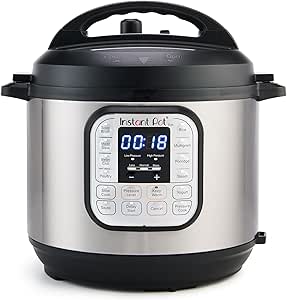 | Best Proven All-Rounder | Capacity: 6 quarts; up to 6 servings | Cooking functions: Pressure cook, slow cook, sauté, steam, rice, yogurt, keep warm | Smart programs: 13 one-touch options | VIEW ON AMAZON | See Our Full Breakdown |
| multicookers for soups and stew | Capacity | Inner Pot | Power | Included Accessories |
|---|---|---|---|---|
| Instant Pot Duo Plus 6 Qt 9-in | 6 quarts | 18/8 stainless steel with tri-ply bottom | 1000 watts, 120V/60Hz | 2 sealing rings, stainless steam rack |
| Aroma Housewares Professional | 10 cups uncooked / 20 cups cooked / 4 quarts | Ceramic-coated nonstick | — | Steam tray, measuring cup, rice spatula |
| Instant Pot Rio Mini 4-Quart 7 | 4 quarts | Stainless steel | 800 watts, 120V/60Hz | Stainless steel steam rack |
| COMFEE’ 12-in-1 Electric Press | 6 quarts | Nonstick | — | Spoon, ladle, condensation cup, measuring cup, steam rack, power cord |
| Chefman 13-in-1 Electric Press | 6 quarts | — | 1000 W, 120 V | — |
| Aroma Digital Rice Cooker | 2 qt | — | — | Steam tray, rice measuring cup, serving spatula |
| Instant Pot Duo 7-in-1 Mini El | 3 quarts | 18/8 stainless steel with tri-ply bottom | 700 watts | — |
| AROMA Professional 8-Cup Digit | 2 qt (8 cups cooked rice) | Dishwasher-safe nonstick | — | — |
| DUMOS Electric Pressure Cooker | 8 quarts | Ceramic, nonstick | 1200 watts | — |
| Presto 06009 10-Quart Kitchen | 10 quarts | — | — | — |
| Instant Pot Duo 6-Quart 7-in-1 | 6 quarts; up to 6 servings | — | 1000 watts | Stainless steel steamer rack |
More Details on Our Top Picks
Instant Pot Duo Plus 6 Qt 9-in-1 Electric Pressure Cooker, Stainless Steel
The Duo Plus earns the top spot because it solves the two problems that matter most for soup and stew work: consistent pressure cooking and hassle-free cleanup. The tri-ply stainless pot distributes heat evenly, which means fewer scorched spots when a chili or stock sits under pressure for an hour. Compared with the COMFEE’ 12-in-1, it gives up a couple of preset buttons but gains a clearer display and the Easy-Release steam switch — a genuine upgrade over the basic Duo 6-Quart for anyone nervous about venting manually. The sous vide and sterilize modes are bonuses most buyers will rarely use, but the core soup-and-stew performance is what justifies the position. Tradeoff: the stainless pot will stick without oil, so deglazing after sautéing becomes a habit, and six quarts fills fast for a big pot of stock.
Pros:- Even heat from the tri-ply stainless pot reduces scorching in long pressure cooks
- Easy-Release steam switch makes venting safer and less startling than manual knobs
- Dishwasher-safe lid and inner pot simplify post-stew cleanup
- Over 10 safety mechanisms with UL and ULC certification
Cons:- Stainless inner pot sticks unless you use oil and deglaze
- 6-quart capacity limits batch cooking for larger families
- Extra functions like yogurt and sterilize add cost many soup-focused buyers won’t use
Best for: Home cooks who want one dependable appliance for weekly soups, stews, and stocks with minimal fuss
Not ideal for: Households of seven or more — a 6-quart pot maxes out around six generous bowls of soup
- Capacity:6 quarts
- Cooking Functions:9-in-1 (pressure, slow cook, sauté, sous vide, steam, sterilize, rice, yogurt, keep warm)
- Smart Programs:15 one-touch presets
- Inner Pot:18/8 stainless steel with tri-ply bottom
- Power:1000 watts, 120V/60Hz
- Safety:10+ mechanisms, UL/ULC listed
- Included Accessories:2 sealing rings, stainless steam rack
- Cleanup:Dishwasher-safe lid and pot
Our verdict“Buy this if you want the most balanced all-around performer for soups and stews without paying for gimmicks.”
Aroma Housewares Professional Plus ARC-5000SB 20-Cup Digital Rice Cooker, Food Steamer and Slow Cooker
This is the lineup’s volume play. With a 20-cup cooked rice capacity and a true 4-quart slow cooker mode, the ARC-5000SB handles a batch of stew for a crowd or a week of meal prep in one go — something the 6-quart Instant Pot Duo Plus simply can’t match. The Saute-Then-Simmer mode is genuinely useful for soup: brown the aromatics in the same pot, then let it simmer hands-off without transferring anything. What it gives up is speed and pressure. Unlike the pressure-based picks, there’s no way to compress a tough beef stew from three hours to under one, so this suits cooks who plan ahead rather than those who need dinner fast. The ceramic nonstick pot also cleans up more easily than stainless, though the footprint demands real counter or cabinet space.
Pros:- 20-cup cooked capacity easily feeds crowds or fills meal-prep containers
- Saute-Then-Simmer mode browns and simmers in one pot
- Ceramic nonstick inner pot releases stuck-on starches and fond easily
- 15-hour delay timer and automatic Keep-Warm suit overnight or workday schedules
Cons:- No pressure cooking, so tough cuts take hours rather than minutes
- Large footprint eats counter and storage space
- Included plastic spatula and accessories feel cheap
Best for: Meal preppers and big families who cook soup, stew, and grains in large volumes and plan meals ahead
Not ideal for: Anyone who wants fast pressure-cooked stews — this is slow-heat only, and its size dominates a small kitchen
- Capacity:10 cups uncooked / 20 cups cooked / 4 quarts
- Functions:Rice cooker, food steamer, slow cooker, saute-then-simmer
- Timer:15-hour programmable delay
- Inner Pot:Ceramic-coated nonstick
- Dimensions:11.2 x 10.8 x 11.4 inches
- Exterior:Stainless steel, BPA-free
- Included Accessories:Steam tray, measuring cup, rice spatula
- Cleanup:Dishwasher-safe inner pot and accessories
Our verdict“Choose this for sheer volume and low-effort simmering; skip it if pressure-cooked speed is the priority.”
Instant Pot Rio Mini 4-Quart 7-in-1 Electric Pressure Cooker
The Rio Mini is the pick when counter space and portion sizes both run small. Its 4-quart pot is right-sized for two to four bowls of soup, and it retains the full pressure-cooking capability of its bigger siblings — up to 70% faster than slow cooking — so a weeknight chicken stew is still a 40-minute job. Compared with the Instant Pot Duo 7-in-1 Mini (3 Quart), the extra quart makes a real difference for soups, where liquid volume is everything. It also undercuts the Duo Plus on footprint while keeping the dishwasher-safe lid and auto-sealing lock. The compromises are straightforward: no sous vide or sterilize modes, an 800-watt element that sautés more slowly, and no room for batch cooking or a whole chicken in stock. One note — the listed color is ambiguous between the title and description, so check the variant before ordering.
Pros:- Compact footprint fits apartments, dorms, and RVs
- Retains true pressure cooking, cutting stew times by up to 70%
- Dishwasher-safe lid and stainless pot keep cleanup short
- Auto-sealing locking lid and overheat protection as standard
Cons:- 4-quart capacity caps batch cooking and large stock pots
- 800-watt element sautés and comes to pressure more slowly
- Product color listing is inconsistent between title and description
Best for: Couples, singles, and small kitchens who want full pressure-cooker performance in a space-saving size
Not ideal for: Families of five or more, or batch cooks — a 4-quart pot fills after about four servings
- Capacity:4 quarts
- Cooking Functions:7 (pressure cook, slow cook, sauté, steam, rice, yogurt, keep warm)
- Power:800 watts, 120V/60Hz
- Safety Features:10+, including overheat protection and auto-sealing locking lid
- Inner Pot:Stainless steel
- Included Accessories:Stainless steel steam rack
- Certifications:UL and ULC listed
Our verdict“The right size for small households that still want fast, pressure-cooked soups without a big appliance.”
COMFEE’ 12-in-1 Electric Pressure Cooker, 6 Quarts, with Nonstick Pot
For buyers who want the most functions per dollar, the COMFEE’ is hard to argue with. You get 12 cooking modes, 14 presets, and a 24-hour delay timer — more programmability than the Instant Pot Duo Plus — plus the accessory kit (ladle, condensation cup, measuring cup) that Instant Pot often leaves out. The nonstick inner pot is the real differentiator for soup and stew cooks: browned bits and thick chowders release without scrubbing, which stainless pots can’t claim. That same coating is the tradeoff. It will scratch and wear over years of metal-spoon stirring, and once it degrades, the pot needs replacing — stainless is a lifetime purchase, nonstick is not. The confusing function count in the marketing (9-in-1, 12-in-1, 14 presets) also suggests less polished documentation than the Instant Pot ecosystem offers. Still, for everyday stew duty on a budget, the value case holds up.
Pros:- Nonstick pot cleans thick stews and chowders with minimal scrubbing
- 14 presets and a 24-hour delay timer offer more programmability than pricier rivals
- 10 safety features including auto pressure release and lid lock
- Generous accessory bundle included
Cons:- Nonstick coating will wear and eventually need replacement
- Inconsistent function naming across packaging and listings causes confusion
- Smaller recipe ecosystem and community support than Instant Pot
Best for: Budget-conscious cooks who prioritize easy cleanup and preset variety over long-term build refinement
Not ideal for: Buyers who want a buy-it-for-life pot — the nonstick coating has a finite lifespan and the documentation is muddled
- Capacity:6 quarts
- Functions:12-in-1 (pressure cook, slow cook, rice, steam, sauté, yogurt, cake, egg, food warmer)
- Preset Programs:14 programmable presets
- Delay Timer:24 hours
- Inner Pot:Nonstick
- Safety Features:10, including overheat protection, auto pressure release, lid-safety lock
- Included Accessories:Spoon, ladle, condensation cup, measuring cup, steam rack, power cord
Our verdict“A strong budget pick for effortless cleanup and everyday soup duty, as long as you accept a finite pot lifespan.”
Chefman 13-in-1 Electric Pressure Cooker, 6-Quart Multicooker
Where the Instant Pot Duo Plus rewards cooks who learn its button logic, the Chefman is built around not making you think. The touchscreen interface walks through 13 functions and dish-specific presets with flat, wipe-clean controls — no knobs to trap splattered broth — and the choice between quick and natural pressure release is presented plainly rather than buried in a manual. That framing makes it the gentlest entry point into pressure-cooked stews for someone upgrading from a basic slow cooker. Compared with the COMFEE’, the stainless construction is a durability win, but it inherits the same sticking issue the Duo Plus has. The honest tradeoff: Chefman’s ecosystem is thinner — fewer tested recipes, fewer aftermarket accessories, and a 1-year warranty — so you’re trading community depth for interface simplicity. Automatic keep-warm and the 24-hour delay start round out a solid, if less battle-tested, package.
Pros:- Touchscreen controls are intuitive and wipe clean after messy soup sessions
- Both quick and natural pressure release handled through simple on-screen options
- Automatic keep-warm and 24-hour delay start fit workday schedules
- Stainless construction is more durable than nonstick alternatives
Cons:- Much smaller recipe and accessory ecosystem than Instant Pot
- Only a 1-year warranty
- Stainless pot requires oil and deglazing to avoid sticking
Best for: First-time pressure cooker buyers who want simple touchscreen controls and guided presets
Not ideal for: Recipe-followers invested in the Instant Pot ecosystem, or anyone wanting a longer warranty than one year
- Capacity:6 quarts
- Cooking Functions:13, with dish presets
- Controls:Touchscreen
- Power:1000 W, 120 V
- Delay Start:Up to 24 hours
- Keep Warm:Automatic
- Construction:Stainless steel
- Safety Certification:cETL approved
- Warranty:1 year
Our verdict“The easiest pressure cooker here to learn on — pick it if a friendly interface matters more than ecosystem depth.”
Aroma Digital Rice Cooker, 4-Cup Uncooked (8-Cup Cooked), 2 Qt, Stainless Steel
This model earns its spot as the gentlest entry point into soup-and-stew cooking. Seven automated controls cover slow-cooked meals, oatmeal, and risotto, while pre-marked water lines remove the guesswork that intimidates first-time multicooker buyers. Where the Instant Pot Duo Mini demands comfort with pressure cooking, this Aroma keeps things低压 and approachable—set the slow cook function and walk away. The steam tray is a nice bonus, letting vegetables cook above a simmering broth. The tradeoff is honest: at 2 quarts, it produces roughly four modest soup servings, so a family of five will need two batches. There’s also no sauté function, so browning meat for a stew happens in a separate pan.
Pros:- Seven automated controls keep operation simple
- Steam tray cooks vegetables above a simmering soup base
- Pre-marked water lines eliminate measuring guesswork
- Stainless steel exterior wipes clean easily
Cons:- 2-quart capacity limits batch size to about four servings
- No sauté function, so browning meat requires a separate pan
Best for: Beginners and couples who want simple, low-pressure slow cooking without a learning curve
Not ideal for: Families of four or more — the 2-quart pot can’t produce enough stew in a single batch
- Uncooked rice capacity:4 cups
- Capacity:2 qt
- Automated controls:7
- Delay timer:Up to 15 hours
- Exterior:Stainless steel
- Functions:Rice, steaming, slow cooking, oatmeal, risotto
- Included accessories:Steam tray, rice measuring cup, serving spatula
Our verdict“A no-stress starter multicooker for small households that value simplicity over capacity or speed.”
Instant Pot Duo 7-in-1 Mini Electric Pressure Cooker, 3 Quart, Stainless Steel
For solo cooks or couples who want pressure-cooked stews in under an hour, this is the smallest credible option in the lineup. Compared with the AROMA Professional 8-Cup, which simmers slowly at atmospheric pressure, the Duo Mini slashes cooking times by up to 70%—a weeknight beef stew becomes realistic rather than a weekend project. The 18/8 stainless steel inner pot also handles sautéing better than nonstick alternatives, so you can brown aromatics right in the pot. That said, the compromises are real: 700 watts means pressure recovery after opening the lid is slower than full-size models like the Instant Pot Duo 6-Quart, and a 3-quart pot maxes out at about four small bowls of soup with little room for the liquid headspace pressure cooking requires.
Pros:- Pressure cooking cuts stew times by up to 70% versus slow cooking
- Stainless steel inner pot allows proper sautéing and browning
- Over 10 built-in safety mechanisms with UL listing
- Dishwasher-safe lid and inner pot simplify cleanup
Cons:- 700 watts is underpowered compared with full-size 1000W-plus models
- 3-quart capacity leaves little headroom for foaming broths and beans
Best for: One- or two-person households wanting fast, pressure-cooked soups in a small footprint
Not ideal for: Households of three or more — capacity fills fast once you account for pressure-cooking headroom
- Capacity:3 quarts
- Cooking functions:7-in-1 (pressure cook, slow cook, sauté, steam, rice, yogurt, warmer)
- Smart programs:11 one-touch programs
- Inner pot:18/8 stainless steel with tri-ply bottom
- Power:700 watts
- Safety:Over 10 safety mechanisms, UL & ULC listed
- Accessories:Stainless steel steamer rack
AROMA Professional 8-Cup Digital Rice and Grain Multicooker
This model carves out a niche the pressure cookers in this roundup don’t fill: it treats grains and soup as one workflow. The Sauté-then-Simmer function is the standout—you can soften onions and toast spices directly in the pot, then let it drop into a gentle simmer for a barley soup or congee without touching a knob. That puts it a step ahead of the smaller Aroma Digital 4-Cup, which skips sautéing entirely, though it still can’t match the raw speed of the Instant Pot Duo Mini. The dishwasher-safe nonstick inner pot makes weeknight cleanup painless, but nonstick coating is a durability question with frequent stirring of chunky stews, and the 2-quart capacity mirrors that smaller Aroma—fine for two, tight for more.
Pros:- Sauté-then-Simmer browns aromatics and simmers soup in one pot
- Sensor Logic adjusts heat for even grain and broth cooking
- 15-hour delay timer plus Keep Warm fits varied schedules
- Dishwasher-safe nonstick inner pot speeds cleanup
Cons:- Nonstick coating may wear with frequent stirring of chunky stews
- 2-quart capacity limits output to small-household portions
Best for: Cookers who alternate between grain bowls, congee, and brothy soups and want sauté built in
Not ideal for: Anyone batching soup for meal prep — the 2-quart pot and nonstick surface both work against heavy use
- Capacity:2 qt (8 cups cooked rice)
- Functions:10-in-1
- Timer:15-hour delay timer
- Cooking technology:Sauté-then-Simmer (STS), Sensor Logic
- Inner pot:Dishwasher-safe nonstick
- Steam tray:BPA-free
Our verdict“The right pick if your soups lean grainy and brothy and you value one-pot sautéing over pressure speed.”
DUMOS Electric Pressure Cooker 16-in-1, 8QT Programmable Multi Cooker with 12 One-Touch Presets, Ceramic Inner Pot, Black
When the goal is eight quarts of stew in one sitting, this is the volume play of the batch. Its 1200 watts outmuscle the Instant Pot Duo Mini’s 700, meaning faster pressurization and quicker recovery when you lift the lid to taste and adjust seasoning. Twelve one-touch presets include a dedicated soup program, and the 24-hour delay start doubles the flexibility of the Aroma models’ 15-hour timers. The ceramic inner pot appeals to buyers avoiding traditional nonstick coatings, though ceramic loses nonstick performance faster than stainless or PTFE over time. Two caveats: the footprint is genuinely large at over 14 inches wide, and the listing’s conflicting capacity details (8QT title, 6-quart bullet) mean buyers should verify pot size on arrival before a big cooking day.
Pros:- 8-quart capacity handles crowd-sized stews and freezer batches
- 1200 watts pressurizes and recovers heat faster than compact models
- 24-hour delay start offers maximum scheduling flexibility
- Overheat protection and dry-boil monitoring add safety confidence
Cons:- Oversized footprint dominates smaller counters
- Ceramic coating typically degrades faster than stainless inner pots
- Listing contains conflicting capacity information worth verifying
Best for: Large families and batch cooks who pressure-cook big volumes of soup weekly
Not ideal for: Small kitchens or occasional cooks — the size and 14.4-pound build demand real counter and storage space
- Capacity:8 quarts
- Power:1200 watts
- Cooking programs:12 one-touch presets (16-in-1 functions)
- Inner pot:Ceramic, nonstick
- Special features:24-hour delay start, keep warm, locking lid, dishwasher safe
- Dimensions:13.15″D x 14.57″W x 13.78″H
- Weight:14.4 pounds
Our verdict“Choose this when volume is the priority and your counter can absorb a full-size pressure cooker.”
Presto 06009 10-Quart Kitchen Kettle XL Multi-Cooker, Steamer and Deep Fryer
This one plays a different sport than everything else here: it’s an open-kettle slow simmer machine, not a pressure cooker. Ten quarts means chili for a potluck or a stockpile of chicken broth in a single run—more raw volume than even the DUMOS 8-quart. The Control Master heat control acts like a built-in thermostat, holding a steady simmer that cheaper multicookers struggle to maintain, and the hook-on draining basket makes blanching vegetables or straining a big batch of stew remarkably easy. The PFAS-free ceramic coating is a genuine plus for slow, acidic dishes like tomato-based soups. But there’s no programmable timer or delay start, no pressure mode, and it eats storage space—plus you must remove the heat control before washing, which adds a step every cleanup.
Pros:- 10-quart capacity is the largest in this roundup for stocks and big stews
- Control Master maintains steady, automatic simmer temperatures
- PFAS-free ceramic surface suits long-simmered acidic dishes
- Hook-on basket drains and strains without extra colanders
Cons:- No programmable timer, delay start, or keep-warm scheduling
- Bulky footprint and awkward storage between uses
- Heat control must be removed before the unit can be immersed for cleaning
Best for: Soup cooks, stock makers, and entertainers who need maximum volume at a controlled simmer
Not ideal for: Anyone wanting set-and-forget programmability — there’s no timer, delay start, or pressure function
- Capacity:10 quarts
- Deep fry capacity:Up to 10 cups
- Nonstick finish:PFAS-free ceramic, inside and out
- Lid:Tempered glass cover
- Heat control:Control Master automatic temperature control
- Cleaning:Fully immersible with heat control removed
- Warranty:1-year manufacturer limited warranty
Our verdict“The volume king for traditional slow simmering, as long as you don’t expect smart features or pressure speed.”
Instant Pot Duo 6-Quart 7-in-1 Electric Pressure Cooker
The 6-quart Duo is the machine that made multicookers a kitchen staple, and for soup and stew work it remains the safest bet in this lineup. Its 18/8 stainless steel inner pot with a tri-ply bottom does something the COMFEE’ 12-in-1 and its nonstick coating can’t: it lets you brown meat aggressively for a stew base without worrying about scratching the finish, and it holds up to years of metal utensils and dishwasher cycles. Compared with the Instant Pot Duo Plus, you give up a few extra programs and the more refined display, but for broth, chili, and braises the 13 one-touch programs here cover the essentials without added complexity. The 1000-watt heating element brings pressure reliably, and the sauté function means one pot does the whole job. The tradeoff is speed and refinement — it heats slower than newer rivals, and there’s no progress bar to tell you where you are in the cook.
Pros:- Tri-ply stainless steel pot browns meat well and survives metal utensils and dishwasher cycles
- Seven functions in one appliance genuinely replace a slow cooker, sauté pan, and steamer for soup-and-stew workflows
- 13 one-touch programs simplify pressure times for common soup, stew, and chili bases
- Over 10 safety mechanisms with UL listing, so pressurized cooking stays uneventful
- Dishwasher-safe lid and inner pot make post-braise cleanup quick
Cons:- Basic single-color display with no progress indicator, so you’re guessing at remaining cook time
- Sauté function is modestly powered, and browning large batches takes longer than a stovetop pan
- Learning curve on manual pressure settings can frustrate first-time pressure cooks
Best for: Households of three to five who want a dependable, well-supported workhorse for weekly soups, stews, and batch cooking
Not ideal for: Cooks who want maximum feedback and modern presets — the plain display and basic controls feel dated next to the Duo Plus or Chefman 13-in-1
- Capacity:6 quarts; up to 6 servings
- Cooking functions:Pressure cook, slow cook, sauté, steam, rice, yogurt, keep warm
- Smart programs:13 one-touch options
- Cooking pot:18/8 stainless steel with tri-ply bottom
- Power:1000 watts
- Voltage and frequency:120 V, 60 Hz
- Safety:Over 10 safety mechanisms; UL and ULC listed
- Included accessories:Stainless steel steamer rack
- Cleanup:Dishwasher-safe lid and inner pot
Our verdict“If you want one proven, durable multicooker that handles soups and stews for years without fuss, this is the one to buy — just don’t expect modern interface niceties.”

How We Picked
I judged every model through one lens: how well it turns out soups, stews, chilis, and stocks. That meant looking at whether the machine can actually build pressure or only simmer, how low and stable its slow-cook temperature holds, and whether the inner pot can brown meat without sticking — because browned fond is where stew flavor starts. Capacity was weighted heavily too, since soup is the one dish people batch-cook and freeze.
Beyond raw performance, I factored in programmability and delay timers, which change how a soup pot fits into a workday, and cleanup burden, since starchy stews punish hard-to-scrub pots. Value was assessed relative to features, not brand names — which is why a budget pressure cooker outranks a pricier rice cooker for this specific job. Models were then ranked by fit: the best overall performer first, followed by the strongest picks for small households, large batches, beginners, and budget buyers.
Factors to Consider When Choosing Multicookers For Soups And Stews
Before settling on a model, it helps to understand what actually separates a great soup machine from a mediocre one — and where buyers most often go wrong.Pressure vs. Simmer-Only: The Biggest Fork in the Road
The single most consequential decision is whether your multicooker builds pressure. Pressure cooking collapses cooking times for stocks, beans, and tough cuts from hours to under an hour, and it extracts collagen more thoroughly for a silkier broth. Simmer-only machines — typically rice cooker designs like the Aroma models — still make perfectly good chili and simple soups, but they are really slow cookers with a lid. A common mistake is assuming “multicooker” means pressure capability; many buyers discover too late that their 12-function machine has no pressure mode at all. If you make stock or cook dried beans regularly, pressure is non-negotiable. If you mostly make weeknight chicken soup, a simmer-only model may honestly serve you better for less money.
Capacity: Match the Pot to Your Household and Freezer
Soup is a batch dish, which makes capacity decisions different from, say, choosing a rice cooker. A 6-quart pot handles a standard recipe with leftovers to freeze, and that is why it anchors this roundup. Going smaller — the 3 and 4-quart minis — means halving recipes, which works for one or two people but gets tedious fast. Going bigger, like the 8-quart DUMOS or 10-quart Presto, is worthwhile only if you genuinely batch-cook or feed four-plus eaters, because oversized pots heat less efficiently at low fill levels. Also remember pressure cookers have max fill lines, so a 6-quart pot really holds about 4 quarts of soup. Buy for the household you actually have, minus wishful thinking about meal-prep ambitions.
Inner Pot Material and Browning Ability
For stews specifically, the sauté function matters as much as the pressure function. Stainless steel inner pots — the Instant Pot standard — develop fond when you brown beef or pork, and that browned layer becomes the backbone of the stew’s flavor. Nonstick and ceramic-coated pots, like those in the COMFEE’ and DUMOS, resist sticking from lentils and barley and wipe clean in seconds, but food slides around rather than searing, and coatings wear over years of metal-utensil abuse. Neither choice is wrong; it depends on whether your recipes start with browning meat or dumping everything in. One often-missed point: thin inner pots develop hot spots that scorch dairy-heavy soups, so pot heft is a quality signal, not a spec-sheet footnote.
Controls, Presets, and Real-World Usability
Soup programs vary wildly in usefulness. Some presets run fixed 30-minute cycles whether your recipe needs 15 or 50, while models with adjustable time and pressure let you tune texture — important for delicate fish stew versus tough beef shin. Beginners benefit from a clear display and intuitive one-touch buttons, which is where the Instant Pot line earns its reputation, while 16-function machines can bury simple tasks under menus. The delay start timer deserves more attention than it gets: it is the feature that lets you load ingredients in the morning and come home to finished soup. But note that dairy and noodles should never sit on a delay, so plan recipes accordingly. More functions on the box rarely means better soup on the table.
Cleanup, Seals, and Long-Term Ownership
Soup is the messiest thing most multicookers make, so maintenance details matter here more than in any other use case. Pressure models have a silicone sealing ring that absorbs curry and stock odors; buying spares and rotating them is the standard fix, and some models now ship with odor-resistant covers. Lids with many crevices trap grease where dishwashers miss it — compare lid design before buying, not after. The Presto kettle’s open design sidesteps seals entirely but gives up programmability for it. Finally, check whether the inner pot and lid are dishwasher-safe, because scrubbing a scorched barley stew out of a narrow pot by hand will test your affection for any appliance. These small frictions decide whether a multicooker stays on the counter or gets relegated to the cabinet.
Frequently Asked Questions
Can a rice cooker-style multicooker really replace a pressure cooker for soups?
For simple soups — chicken noodle, vegetable, tomato — yes, and often with gentler, more controlled results since these machines hold a low simmer without scorching. The gap opens with stock, dried beans, and tough cuts of meat, where pressure cooking cuts hours down to under an hour and extracts more gelatin from bones. Rice-cooker multicookers also lack a true sauté stage in most cases, so you brown meat in a separate pan. If your soup habits are mostly broth-based weeknight recipes, a simmer-only model is a legitimate choice. If bone broth or beef stew appears weekly in your rotation, you will feel the missing pressure.
Is a 6-quart multicooker big enough for soup, or should I go 8 quarts?
For most households, 6 quarts is the right answer, and here is the arithmetic: pressure cookers can only be filled about two-thirds full, so a 6-quart pot really makes around 4 quarts of soup — roughly six to eight servings. That covers a family dinner plus freezer leftovers. The 8-quart DUMOS makes sense when you feed four or more eaters regularly or batch-freeze soup deliberately. One caveat: at very low fill levels, large pots can heat unevenly and pressure takes longer to build, so an 8-quart used for small batches is slightly worse, not better, than a 6. Buy the bigger pot only if your batch sizes genuinely demand it.
Which inner pot is better for stews: stainless steel or nonstick?
It depends on your first step. If your stews begin with browning cubes of beef or pork, stainless steel is the better tool because it develops fond — the browned bits that dissolve into the liquid and carry much of the flavor. Nonstick and ceramic coatings prevent that browning, but they shine when your stews are built on lentils, beans, potatoes, or other starches that weld themselves to steel. Coated pots also clean up in a fraction of the time after a barley or split pea session. The honest compromise: stainless for flavor, coating for convenience, and you should pick based on which annoyance you would rather live with. Coatings also have a lifespan, while stainless pots essentially last forever.
Do I need the soup preset, or should I just use manual pressure?
Soup presets are mostly a convenience, not a performance feature — they typically set a fixed pressure time that you can override manually on any decent machine. What actually matters is whether the cooker lets you adjust time and pressure levels, because a delicate fish stew and a beef shin stew want very different treatments. Presets earn their keep for beginners who want a single button and confidence the result will be safe and reasonable. Experienced cooks almost always end up using manual mode with their own timings. Treat the number of presets as a rough usability signal, not a capability ranking — a 7-function machine with good manual controls beats a 16-function machine with rigid programs.
Is a mini multicooker worth it just for soups for one or two people?
A 3 or 4-quart mini can be the right call, but go in with clear expectations. You will halve most soup recipes, which works fine for broth-based soups but gets awkward for recipes built around whole packages of ingredients. The upside is real: minis come to pressure faster, are easier to store, and a small pot of soup finishes without a week of leftovers. Between the two Instant Pot minis in this roundup, the 4-quart Rio Mini hits a better sweet spot than the 3-quart Duo Mini because that extra quart is the difference between two servings and three. If you ever batch-freeze soup or host, skip the mini entirely — it becomes a limitation rather than a convenience.
Conclusion
Matching these 11 models to real buyers comes down to a few clear paths. For best overall, the Instant Pot Duo 6-Quart delivers the pressure cooking, capacity, and browning capability that soups and stews demand, with a track record of available accessories and replacement parts. For best value, the COMFEE’ 12-in-1 covers pressure cooking and one-touch soup programs at a friendlier price, trading the stainless pot for an easier-to-clean nonstick one. The Instant Pot Rio Mini 4-Quart takes best for beginners and small households — its simplified controls and right-sized pot make first soup attempts nearly foolproof.
For specific needs: the DUMOS 8-Quart 16-in-1 is the pick for large-batch cooks and stock makers who want maximum volume, while the Presto Kitchen Kettle XL suits bulk simmering and even steaming for big gatherings, so long as you accept manual control. The Aroma Professional 8-Cup is the right choice if you know you will never need pressure and want a gentle, affordable simmer machine. Whatever your choice, decide first whether pressure matters to you — that single question narrows this lineup more than any other factor.