Choosing among prosumer espresso machines means deciding how much control you want over each drink and how much work you want the machine to do. I’d start with the Breville Barista Express for its built-in grinder and hands-on extraction controls, or the Gaggia Classic Evo Pro if you already own a grinder and want a more traditional setup. The Breville Bambino is the compact, quick-start choice, while the AMZCHEF offers broad grind and temperature adjustments with a touchscreen. Those differences matter: an all-in-one machine saves counter space and setup effort, but a separate grinder and semi-automatic workflow can offer a more flexible path as your skills grow.

Get kitchen staples and gadgets delivered free with Prime
- Fast, free delivery on millions of items
- Prime Video, Amazon Music and more included
- Member-only deals all year
I rank these picks by how well their controls, workflow, and equipment fit the prosumer buyer: someone who wants more involvement than a push-button coffee maker provides, without stepping into commercial café equipment. I also weigh the tradeoffs. Fast heat-up, for example, is useful when time is short, but it does not replace the control offered by a capable grinder and a well-practiced routine.
Complete the kit



Key Takeaways
- The Breville Barista Express is the most complete starting point here if you want an integrated grinder, PID control, and manual milk texturing in one machine.
- The Gaggia Classic Evo Pro suits buyers who value a 58 mm portafilter and traditional semi-automatic workflow, but it requires a separate grinder and more preparation.
- The Breville Bambino heats quickly and takes up little space, making it a practical choice when kitchen room and morning time are limited.
- The AMZCHEF packs 44 grind settings, temperature adjustment, and cold brew into one touchscreen-led package, though its broad feature set may be unnecessary for espresso-only drinkers.
- For repeatable espresso, prioritize grinder quality and workflow before choosing based on a large water tank, extra drink modes, or a short heat-up time.
| Breville Barista Express Espresso Machine, Brushed Stainless Steel (BES870XL) |  | Best Overall | Model: BES870XL | Grinder: Integrated precision conical burr grinder | Temperature control: Digital PID | VIEW ON AMAZON | See Our Full Breakdown |
| Gaggia Classic Evo Pro Espresso Machine, Brushed Stainless Steel |  | Best for Traditional Workflow | Operation: Semi-automatic | Extraction pressure: 9 bar | Portafilter: 58 mm | VIEW ON AMAZON | See Our Full Breakdown |
| Breville Bambino Espresso Machine, Brushed Stainless Steel (BES450BSS) | 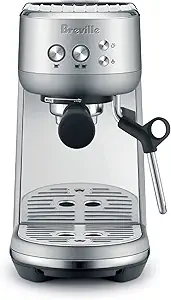 | Best Compact and Fast-Starting | Heating system: ThermoJet, specified 3-second heat-up | Portafilter: 54 mm | Power: 1560 W | VIEW ON AMAZON | See Our Full Breakdown |
| AMZCHEF Espresso Machine with Grinder, Temperature Control, 44 Grind Settings |  | Best for Feature Range | Grind settings: 44 | Temperature control: 190°F–201°F | Water tank: 60 oz | VIEW ON AMAZON | See Our Full Breakdown |
| prosumer espresso machine | Temperature control | Portafilter | Water tank | Power |
|---|---|---|---|---|
| Breville Barista Express Espre | Digital PID | 54 mm | 67 oz | 1600 W |
| Gaggia Classic Evo Pro Espress | — | 58 mm | — | — |
| Breville Bambino Espresso Mach | PID digital | 54 mm | — | 1560 W |
| AMZCHEF Espresso Machine with | 190°F–201°F | — | 60 oz | — |
More Details on Our Top Picks
Breville Barista Express Espresso Machine, Brushed Stainless Steel (BES870XL)
The Barista Express earns my top spot because it brings the central pieces of a home espresso workflow together without hiding the process. Its integrated conical burr grinder doses directly into the portafilter, while PID temperature control and low-pressure pre-infusion give the owner useful ways to pursue more consistent extraction. Compared with the Gaggia Classic Evo Pro, it asks for less separate equipment at the outset; compared with the Bambino, it offers a grinder and more explicit control over the shot.
That convenience comes with a compromise. A built-in grinder makes for a tidy setup, but buyers cannot choose a separate grinder to match their preferences or upgrade that component independently. The manual workflow also means grinding, dosing, tamping, and milk texturing take attention. The included accessories help establish a routine, but do not turn the machine into a one-touch appliance.
I’d choose this model for a buyer who wants to learn espresso with fewer separate purchases and expects to make milk drinks as well as straight shots. Its 67 oz water tank supports a run of drinks before refilling, and the broad accessory set is useful for a new setup. Buyers who already own a grinder or want the simplest possible morning routine may get a better fit from the Gaggia or Bambino, respectively.
Pros:- Integrated conical burr grinder delivers fresh grounds into the portafilter.
- PID control and low-pressure pre-infusion give the user meaningful extraction tools.
- Manual steam wand supports milk texturing and latte art practice.
- Includes a 54 mm portafilter, baskets, milk jug, tamper, and cleaning accessories.
Cons:- Manual preparation and steaming take time and practice.
- The integrated grinder limits independent grinder choice and upgrades.
- The stated limited warranty is one year.
Best for: Home espresso learners who want a grinder, extraction controls, and manual milk texturing in one setup.
Not ideal for: Buyers who already have a preferred grinder, want automatic drink preparation, or need a machine with a longer stated warranty.
- Model:BES870XL
- Grinder:Integrated precision conical burr grinder
- Temperature control:Digital PID
- Bean hopper:1/2 lb
- Water tank:67 oz
- Power:1600 W
- Portafilter:54 mm
- Warranty:1-year limited
Our verdict“I recommend the Barista Express as the most balanced prosumer starting point for buyers who want grinder, shot control, and milk texturing in one machine.”
Gaggia Classic Evo Pro Espresso Machine, Brushed Stainless Steel
The Gaggia Classic Evo Pro is the most traditional pick in this group. Its 58 mm portafilter and commercial-style components make it a fit for buyers who want a familiar semi-automatic workflow and already have a grinder in mind. Against the Barista Express, it gives up an integrated grinder and some built-in guidance, but the separate grinder choice can make more sense for owners who want to select and change that part of the setup on its own.
The machine’s 9-bar extraction and commercial-style steam wand suit buyers who want to manage the shot and milk themselves. It includes single and double baskets, along with a pressurized basket for pre-ground coffee or ESE pods, which can ease the transition into the workflow. That flexibility is useful, but its core appeal is still hands-on preparation. It does not offer the Bambino’s quick heat-up claim or the AMZCHEF’s touchscreen and extra brewing modes.
I’d place it ahead of those convenience-focused models for an enthusiast who values a classic machine and has room for a separate grinder. The 2.1-liter tank and stainless-steel housing support a substantial countertop setup, though its 20-pound weight and manual operation make it less appealing as a light, grab-and-go appliance. Buyers seeking an all-in-one solution should look to Breville’s Barista Express instead.
Pros:- 58 mm portafilter and commercial-style components suit a traditional workflow.
- 9-bar extraction and commercial-style steam wand support manual espresso and milk preparation.
- Includes baskets for ground coffee and ESE pods.
- 2.1-liter water capacity reduces the need for frequent refills.
Cons:- No grinder is included, so buyers need to source one separately.
- Semi-automatic preparation requires hands-on work.
- Less suited to buyers who prioritize a fast, simplified routine.
Best for: Espresso enthusiasts who own or plan to choose a separate grinder and prefer a conventional semi-automatic setup.
Not ideal for: Buyers who want an integrated grinder, a short warm-up routine, or minimal hands-on preparation.
- Operation:Semi-automatic
- Extraction pressure:9 bar
- Portafilter:58 mm
- Water capacity:2.1 liters
- Steam wand:Commercial-style
- Wattage:1200 W
- Dimensions:8 × 9.5 × 14.2 inches
- Weight:20 pounds
Our verdict“I’d choose the Gaggia Classic Evo Pro for its traditional 58 mm workflow when grinder choice matters more than all-in-one convenience.”
Breville Bambino Espresso Machine, Brushed Stainless Steel (BES450BSS)
The Breville Bambino is the easiest fit when counter space and time matter more than an integrated grinder or a full-sized traditional setup. Its ThermoJet system is specified to reach extraction temperature in three seconds, so the machine is ready quickly. The compact footprint also makes it easier to accommodate than the Barista Express, which combines a grinder with the espresso machine and needs space for that broader setup.
Its PID control provides a useful temperature-management feature, and the automatic steam wand can reduce the learning curve for milk texture compared with the manual wands on the Gaggia and Barista Express. That convenience comes with less room to shape the steaming process yourself. The 54 mm portafilter and included baskets give a buyer the basic tools to start, but there is no grinder; a capable separate grinder is still central to a prosumer arrangement.
I would choose the Bambino for a small kitchen, a buyer who values a short wait, or someone building a modular setup around a separate grinder. Its stated capacity tradeoff matters for households preparing several drinks back to back. Compared with AMZCHEF, it offers a more compact espresso-first approach, while AMZCHEF combines grinder adjustment and other brewing modes in its larger, touchscreen-led package.
Pros:- ThermoJet system is specified to heat for extraction in three seconds.
- Compact design fits smaller kitchens.
- PID control supports consistent extraction management.
- Automatic steam wand handles milk texturing with less manual technique.
Cons:- A separate grinder is required for fresh-ground espresso.
- Compact capacity is less convenient for several drinks in sequence.
- Automatic steaming offers less direct control than a manual wand.
Best for: Buyers with limited counter space who want a fast-starting espresso machine and plan to pair it with a separate grinder.
Not ideal for: Households regularly making several drinks at once, or buyers seeking an integrated grinder and broad manual controls.
- Heating system:ThermoJet, specified 3-second heat-up
- Portafilter:54 mm
- Power:1560 W
- Voltage:110–120 V
- Temperature control:PID digital
- Milk system:Automatic steam wand
- Settings:1 or 2 cups, hot water, and steam
- Warranty:1-year limited
Our verdict“I recommend the Bambino when quick startup and a small footprint matter more than integrated grinding or a larger-volume workflow.”
AMZCHEF Espresso Machine with Grinder, Temperature Control, 44 Grind Settings
The AMZCHEF takes the broadest feature-led approach in this roundup. Its 44 grind settings and adjustable brewing temperature from 190°F to 201°F give the owner several ways to tailor the setup, while its touchscreen puts controls and a one-touch cold brew mode in the same interface. That range makes it distinct from the espresso-focused Bambino and the traditional Gaggia, which keep the workflow narrower.
The built-in grinder and 60 oz water tank make it an appealing all-in-one choice for buyers who want fewer separate components and also plan to prepare drinks beyond espresso. Its stainless-steel steam wand can support milk texturing, so it covers familiar café-style drinks as well. Still, numerous settings do not automatically make a better fit: someone who mainly wants to refine espresso technique may prefer the clearer, more conventional controls of the Barista Express or the Gaggia’s separate-grinder approach.
I’d consider AMZCHEF for a household that values flexible grind adjustment, cold brew, and a touchscreen-led routine. It ranks below the Barista Express for my prosumer shortlist because its broad set of modes may matter less to an espresso-focused buyer than a familiar extraction workflow. The descaling function is useful, but regular descaling remains part of upkeep, and the advanced options may feel like extra complexity to a casual drinker.
Pros:- 44 grind settings allow adjustments across espresso and other coffee styles.
- Temperature control spans 190°F to 201°F.
- Built-in cold brew mode and 60 oz tank support varied drinks.
- Touchscreen and stainless-steel steam wand combine guided controls with milk preparation.
Cons:- Regular descaling is needed to maintain performance.
- The wide range of settings may be more than casual espresso drinkers need.
- Its feature range is less focused on a traditional prosumer espresso workflow.
Best for: Buyers who want an integrated grinder, many grind adjustments, a touchscreen, and cold brew in one machine.
Not ideal for: Espresso purists seeking a traditional 58 mm setup, or casual users who would rather have fewer settings to manage.
- Grind settings:44
- Temperature control:190°F–201°F
- Water tank:60 oz
- Heating power:1350 W
- Steam wand:8 mm stainless steel
- Display:IMD HD touchscreen
- Cold brew mode:Yes
- Descaling function:Yes
Our verdict“I’d pick AMZCHEF for its broad all-in-one feature set when cold brew and adjustable grinding matter alongside espresso.”

How We Picked
I compared the four machines against the needs of a prosumer home setup: control over extraction, a useful route to grinding fresh coffee, milk preparation, and a workflow that supports learning. The list includes different levels of integration, so I did not treat a built-in grinder as an automatic advantage. It can simplify a first setup, while a machine without one leaves the buyer free to choose a grinder separately.
I gave the most weight to features that change the cup or the daily routine. PID temperature control and pre-infusion give the Barista Express useful tools for managing extraction. The Gaggia’s 58 mm portafilter and commercial-style components appeal to buyers who prefer familiar café equipment. The Bambino’s fast heat-up and automatic milk texturing put speed and convenience first. AMZCHEF offers unusually broad adjustments and several brewing modes, though its prosumer fit depends on whether the buyer values that range over a more traditional espresso workflow.
My ranking reflects the balance of capability and practical fit, rather than a claim that one machine suits every counter or skill level. I considered stated specifications and included accessories, then weighed the stated drawbacks against each product’s role. Since no machine in this group removes the need to learn dosing, tamping, or milk preparation entirely, I call out where hands-on practice remains part of the purchase.
Factors to Consider When Choosing Prosumer Espresso Machines
I’d choose a prosumer espresso machine by looking at the whole routine around it: grinding, preparing shots, steaming milk, and cleaning up. The machine alone does not define the setup.Decide whether the grinder belongs in the machine
The Barista Express and AMZCHEF each include a grinder, which reduces the number of separate components to buy and arrange. That can make the first setup simpler, though a built-in grinder ties the grinding choice to the machine. The Gaggia Classic Evo Pro and Bambino leave that choice open. I’d favor a separate grinder if I already had one or expected to choose each component independently; I’d favor an integrated unit if counter space and a single coordinated setup mattered more.
Choose how much control you want over each shot
All four machines call for some attention to espresso preparation, but they place the controls differently. The Barista Express pairs PID control and low-pressure pre-infusion with a manual workflow. The Gaggia focuses on semi-automatic operation and a 58 mm portafilter. AMZCHEF adds temperature adjustment and many grind settings, while the Bambino emphasizes rapid startup and a more guided experience. I’d choose controls I expect to use regularly, rather than treating a longer feature list as a promise of better coffee.
Match the milk system to your routine
For cappuccinos and lattes, the steam wand can shape both the learning curve and the daily pace. The Gaggia and Barista Express offer manual steaming, which gives the user direct practice with milk texture. The Bambino’s automatic steam wand takes on more of that work. AMZCHEF includes a stainless-steel wand for microfoam preparation. If latte art is part of the goal, I’d look for a workflow that leaves room to practice; if consistency and fewer manual steps matter more, the Bambino’s automatic approach has a clearer advantage.
Plan for the full countertop setup
A machine with an integrated grinder may occupy less space than a separate machine and grinder, but it still needs room for its water tank, portafilter work, and milk pitcher. The Bambino is the compact choice in this group. The Gaggia measures 8 × 9.5 × 14.2 inches and weighs 20 pounds, while its separate grinder adds another footprint. Tank capacity also affects routine: the listed capacities range from 60 oz on AMZCHEF to 2.1 liters on the Gaggia. I’d check available clearance and refill access before choosing by headline dimensions alone.
Account for cleaning and practice
Espresso equipment needs routine cleaning, and maintenance is part of ownership rather than an occasional extra. AMZCHEF lists a descaling function and calls for regular descaling. The Barista Express includes cleaning tools and a water filter among its accessories. The Gaggia’s manual workflow and the Bambino’s milk system also require regular care after use. I’d set aside time for cleaning and practice, especially when moving from pre-ground coffee or a simpler drink maker to freshly ground espresso.
Frequently Asked Questions
Which machine in this roundup is the best starting point for a prosumer setup?
I’d start with the Breville Barista Express if I wanted one machine to cover grinding, espresso preparation, and manual milk texturing. Its built-in grinder lowers the number of separate decisions at the outset, while PID control and pre-infusion leave room to learn. A buyer who already owns a grinder may find the Gaggia Classic Evo Pro a better foundation.
Do I need to buy a separate grinder?
Not for the Barista Express or AMZCHEF, since both list an integrated grinder. The Gaggia Classic Evo Pro and Bambino do not include one, so buyers making espresso from whole beans should plan for a separate grinder. I’d treat the grinder as a central part of the setup because grind adjustment affects shot preparation and is one of the main differences between an integrated and modular arrangement.
Which option is easiest to fit in a small kitchen?
The Breville Bambino is the compact pick in this group and does not combine a grinder with the espresso machine. That smaller machine can suit a tight counter, though a separate grinder still takes space if fresh-ground coffee is part of the plan. AMZCHEF and the Barista Express combine more functions in one appliance, while a Gaggia setup needs room for the machine and a separate grinder.
Which model gives me the most traditional espresso workflow?
I’d choose the Gaggia Classic Evo Pro for its 58 mm portafilter, semi-automatic operation, and commercial-style components. It leaves grinding and shot preparation in the buyer’s hands, which suits someone who wants to shape the setup around a separate grinder. The Barista Express is also hands-on, but its integrated grinder makes it a more consolidated arrangement.
Is a fast heat-up more useful than adjustable grind settings?
That depends on what slows down the routine. The Bambino’s specified three-second heat-up addresses waiting before brewing, while AMZCHEF’s 44 grind settings offer a wider range of adjustment. Neither feature replaces good coffee preparation. I’d choose fast startup when convenience is the daily priority, and more grind options when experimenting with different beans and brewing styles is part of the appeal.
Conclusion
I’d choose the Breville Barista Express for the most balanced route into home espresso, especially when I want a grinder and manual controls in one purchase. The Gaggia Classic Evo Pro makes more sense for an enthusiast who values a traditional 58 mm setup and plans to pair it with a separate grinder. For a small kitchen or a faster start to the morning, I’d shortlist the Breville Bambino, provided I have room for a grinder of my own. If I wanted broad grind adjustments, touchscreen controls, and cold brew in the same appliance, I’d look at AMZCHEF. My choice would come down to the workflow I want to repeat every day, not the number of features on the spec sheet.
NFL season / tailgating Picks
team gear
As an affiliate, we earn on qualifying purchases.