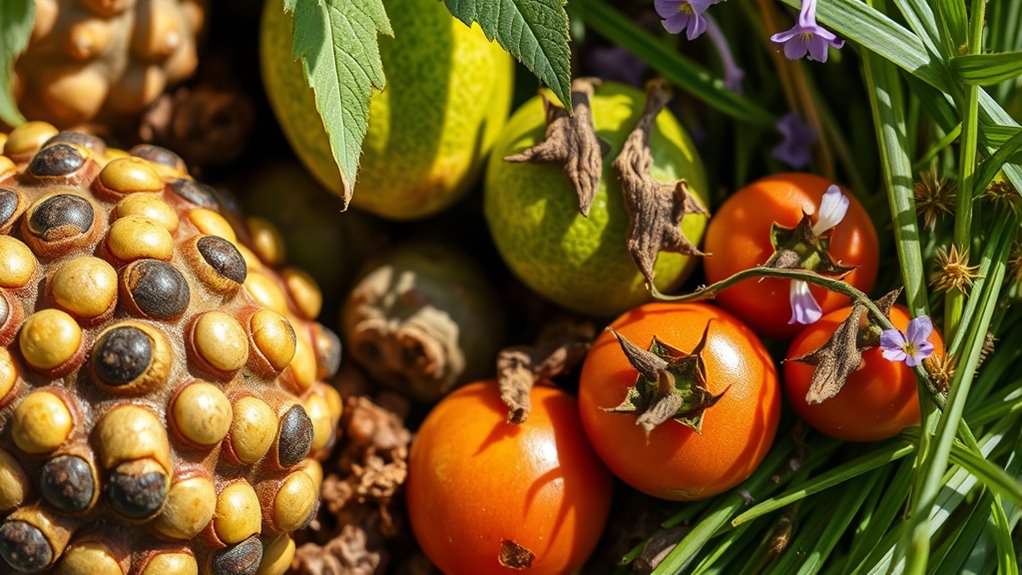

Australian bush tucker offers a rich variety of native ingredients like vibrant fruits such as quandongs and finger limes, aromatic herbs like lemon myrtle, and protein-rich meats like kangaroo and emu. You can also explore unique nuts, roots, and tubers, along with traditional preparation methods that honor Indigenous traditions. These ingredients not only provide bold flavors and nutritional benefits but also deepen your understanding of Australia’s cultural heritage. Keep exploring to discover more fascinating aspects of bush tucker.

Get kitchen staples and gadgets delivered free with Prime
- Fast, free delivery on millions of items
- Prime Video, Amazon Music and more included
- Member-only deals all year
Key Takeaways
- Australian bush tucker includes native fruits, berries, roots, tubers, herbs, spices, and bush meats, with unique flavors and nutritional benefits.
- Key ingredients like quandongs, finger limes, Kakadu plums, wattleseed, and bush tomatoes are culturally significant and sustainably harvested.
- Bush foods are prepared using traditional methods such as smoking, slow-cooking, pounding, and earth oven techniques.
- Indigenous ingredients support biodiversity, cultural heritage, and sustainable land practices through proper identification and harvesting.
- Bush tucker plays a vital role in Indigenous ceremonies, community bonding, and the preservation of cultural knowledge.
Australian bush tucker native ingredients
As an affiliate, we earn on qualifying purchases.
As an affiliate, we earn on qualifying purchases.
Indigenous Australian Fruits and Berries

Have you ever wondered what native Australian fruits and berries the Indigenous people have relied on for thousands of years? These native foods include unique options like quandongs, finger limes, and Kakadu plums. Quandongs, with their bright orange color, offer a tart flavor and are used in jams and sauces. Finger limes resemble tiny, elongated citrus and burst with citrus pearls, adding zest to dishes. Kakadu plums are rich in vitamin C and have a tangy taste, often used in beverages or as a preservative. You might also come across bush tomatoes and bush berries, which provide a sweet or tangy flavor profile. These fruits were essential for sustenance and hold cultural significance, showcasing the incredible diversity of native Australian bush foods. Their traditional harvesting methods reflect a deep connection to the land and its natural resources. Additionally, the harvesting techniques often involve sustainable practices, ensuring the preservation of these vital food sources for future generations. Furthermore, these practices help maintain the health of ecosystems and promote biodiversity, which is vital for the sustainability of native Australian plant species. Incorporating these native ingredients into modern cuisine can also support biodiversity conservation and promote awareness of Indigenous food practices.
Native Herbs and Spices

Native herbs and spices play a critical role in Indigenous Australian cuisine, adding bold flavors and unique aromas to traditional dishes. These ingredients are often foraged from the wild, offering a natural way to enhance your meals. You might use lemon myrtle for a citrusy zest, or wattleseed for a nutty depth. Each herb brings its own distinctive character, elevating your cooking with minimal effort. Here’s a quick overview:
| Herb/Spice | Flavor Profile | Common Uses |
|---|---|---|
| Lemon Myrtle | Citrusy, aromatic | Teas, seafood, desserts |
| Wattleseed | Nutty, earthy | Breads, stews, baking |
| Aniseed Myrtle | Anise-like, sweet | Sauces, drinks |
| Mountain Pepper | Pungent, spicy | Marinades, rubs |
| Dorrigo Pepper | Peppery, citrus notes | Seasoning, salads |
Explore these vibrant flavors to authentically connect with Australia’s bush heritage, and consider how the unique native ingredients can inspire your culinary creations. Additionally, understanding the native food sources and their harvesting methods can help preserve this rich cultural tradition.
Protein-Rich Bush Meats

Australian bush meats like kangaroo and emu are tasty, nutrient-dense options you should consider. They offer impressive protein benefits that support a healthy diet. You’ll find helpful tips on how to prepare and cook these meats for the best results.
Popular Bush Meats
Ever wondered which bush meats pack the biggest protein punch? Kangaroo tops the list, offering lean, high-protein meat perfect for hearty meals. Wallaby, similar to kangaroo but smaller, provides a tender, flavorful alternative rich in protein. Emu meat is another popular choice; it’s low in fat and high in protein, with a taste reminiscent of beef but with a gamey twist. Crocodile meat is gaining popularity for its firm texture and impressive protein content. Possum, although less common, supplies a tender, flavorful meat that’s high in protein and low in fat. These meats have been traditional staples for Indigenous Australians and are now appreciated worldwide for their nutritional benefits. Each offers a unique taste experience while delivering the protein your body needs.
Nutritional Benefits Explored
Many bush meats are prized for their exceptional protein content, making them a nutritious choice for those seeking energy and muscle support. Kangaroo, for example, provides high-quality, lean protein with minimal fat, helping you build and repair tissues efficiently. Emu meat also offers a rich source of protein, along with essential amino acids that support overall health. These meats are not only dense in protein but often contain *crucial* nutrients like iron, zinc, and B vitamins, which boost your immune system and energy levels. Consuming bush meats can help diversify your diet while providing natural, nutrient-rich options. Because they’re low in saturated fats, they’re a smart choice for maintaining a balanced, healthy lifestyle. Automation in business and technology advancements continue to influence how these meats are processed and distributed, ensuring fresher products reach consumers efficiently. Additionally, sustainable harvesting practices help preserve native species and ecosystems while providing high-quality protein sources. Modern processing techniques enhance safety and extend shelf life, making bush meats more accessible to a broader market. Implementing quality control standards further improves safety and consumer confidence in bush tucker products. Furthermore, nutrient preservation during processing ensures that the meats retain their vital health benefits from source to table.
Cooking & Preparation Tips
To preserve the lean quality and flavor of bush meats like kangaroo and emu, proper cooking and preparation are essential. Start by marinating the meat briefly to tenderize it and enhance flavor. Use high heat for quick cooking methods like grilling or pan-searing to lock in juices and prevent dryness. Avoid overcooking—kangaroo, for example, is best served medium-rare to maintain tenderness. Rest the meat for a few minutes after cooking to allow juices to redistribute. When preparing emu, consider slow roasting or braising if you prefer a softer texture. Always trim excess fat and remove silver skin beforehand. Using simple seasonings like salt, pepper, and native herbs helps highlight the natural flavors without overpowering them. Additionally, employing proper storage techniques can extend the shelf life and safety of bush meats. Incorporating vibrational energy awareness through positive mindset practices can also enhance your cooking experience and connection to native ingredients.
Edible Nuts and Seeds

Australian bush tucker includes a variety of edible nuts and seeds that have been valued by Indigenous Australians for thousands of years. You can gather seeds from native plants like Macadamia nuts, which offer rich, buttery flavors, or collect wild sunflower seeds for a crunchy snack. Seeds from bush tomatoes and wattles are also edible and nutritious, providing energy and essential nutrients. To prepare them, you might roast the nuts for added flavor or grind seeds into flour for baking traditional bread. These ingredients are versatile and can be incorporated into your cooking, offering a taste of the land’s ancient flavors. Stingless bees also play a crucial role in pollinating many native plants whose seeds are harvested for bush tucker, emphasizing the interconnectedness of these traditional foods with native pollinators. When foraging, always guarantee proper identification and sustainable harvesting to respect the environment and Indigenous traditions. Incorporating these native ingredients supports biodiversity conservation and helps preserve traditional knowledge and practices. Additionally, understanding the raw food aspects of some ingredients can enhance their nutritional benefits and culinary uses. Recognizing the importance of native plant harvesting ensures sustainable practices while enjoying these natural foods and supports climate control by promoting eco-friendly harvesting methods.
Unique Roots and Tubers
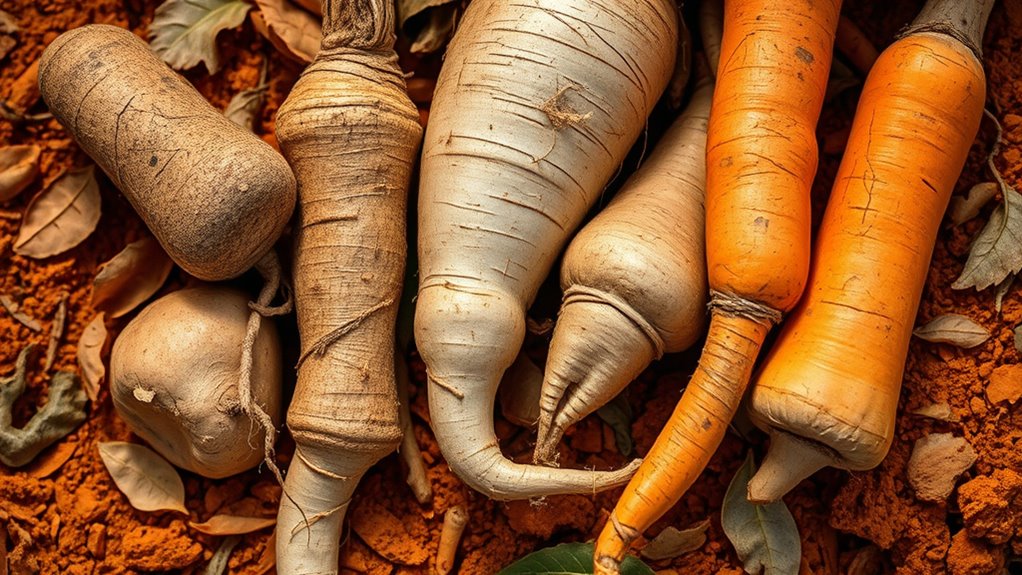
Australian bush tucker includes notable roots and tubers that pack a nutritional punch. You’ll learn about their health benefits and how traditional methods make harvesting sustainable. Exploring these underground foods reveals their importance to Indigenous diets and culture. Many of these plants are cultivated using organic farming methods, which help improve soil health and promote sustainable harvesting practices. These practices support biodiversity conservation by maintaining healthy ecosystems and ensuring the longevity of native plant populations. Additionally, the use of sustainable harvesting techniques ensures these vital resources remain available for future generations. Incorporating native plant cultivation into modern agriculture can further enhance the preservation of these species while benefiting local communities. Moreover, understanding these practices can contribute to environmental preservation efforts in the region.
Notable Roots and Tubers
Among the diverse bush foods, certain roots and tubers stand out for their nutritional value and unique flavors. You might encounter yams like the yam daisy, which offers a sweet, earthy taste and is rich in carbohydrates. The bush tomato, although technically a berry, grows underground and provides a tangy flavor to dishes. Another notable tuber is the wattle seed, often ground into flour and used for bread, delivering a nutty aroma. The native yam, or yam daisy, has a starchy texture perfect for roasting or boiling. These roots and tubers were traditional staples for Indigenous Australians, offering sustenance and distinctive flavors. Their adaptability in cooking makes them versatile ingredients, adding depth and authenticity to bush tucker dishes. Understanding traditional food sources can enhance appreciation for their cultural significance and nutritional benefits.
Nutritional Benefits Overview
The roots and tubers used as bush foods are not only flavorful but also packed with valuable nutrients. They provide essential vitamins, minerals, and dietary fiber that support your overall health. For example, they:
- Boost your immune system with high levels of vitamin C and antioxidants.
- Improve digestion thanks to their fiber content, helping regulate bowel movements.
- Offer sustained energy from complex carbohydrates, perfect for active lifestyles.
These native ingredients are a natural source of crucial nutrients, making them a smart choice for balanced nutrition. By including these roots and tubers in your diet, you benefit from their unique composition, which has been nourishing Indigenous communities for generations. Their nutritional profile highlights their importance beyond their taste, contributing to your well-being.
Traditional Harvesting Methods
Traditional harvesting of bush roots and tubers relies on careful, sustainable techniques passed down through generations. You learn to identify the right plants by observing seasonal changes, plant markings, and local knowledge. You gently dig around the base of the plant using traditional tools like sharpened sticks or digging sticks made from sturdy wood. You avoid damaging the plant’s surroundings or nearby roots, guaranteeing it can regrow. You take only what you need, respecting the environment and the plant’s role in the ecosystem. This method prevents overharvesting and preserves the delicate balance of the bush. By following these traditional practices, you honor the cultural heritage and ensure that these essential food sources remain available for future generations.
Traditional Bush Food Preparations
Have you ever wondered how Indigenous Australians prepare bush foods to bring out their full flavors? They use time-honored techniques that highlight the ingredients’ natural qualities. First, they often pound or crush ingredients like seeds and nuts to release oils and enhance taste. Second, they smoke foods over open fires, giving them a rich, smoky flavor that preserves the food and adds complexity. Third, they sometimes enclose ingredients in earth ovens called “cloches,” where they slow-cook foods using heated stones, tenderizing tough meats and intensifying flavors. These methods aren’t just about cooking—they’re a way of respecting and connecting with the land. By mastering these traditional preparations, Indigenous Australians preserve their culinary heritage while highlighting the unique flavors of bush foods.
Modern Uses and Culinary Innovations
How are modern chefs and food enthusiasts incorporating bush foods into contemporary cuisine? They’re experimenting with native ingredients to create innovative dishes that highlight Australia’s unique flavors. You’ll find bush herbs like lemon myrtle and wattleseed used to add aromatic, citrusy, nutty notes to everything from desserts to savory mains. Chefs also incorporate ingredients like finger lime and riberry for vibrant bursts of flavor in sauces, cocktails, and garnishes. Many restaurants focus on sustainable sourcing, emphasizing native ingredients’ freshness and cultural significance. You might see bush foods featured in fusion cuisines, blending traditional flavors with modern techniques. This culinary innovation not only celebrates Australia’s rich natural bounty but also introduces these ingredients to a broader audience, keeping the bush tucker tradition alive in contemporary dining.
Cultural Significance of Bush Tucker
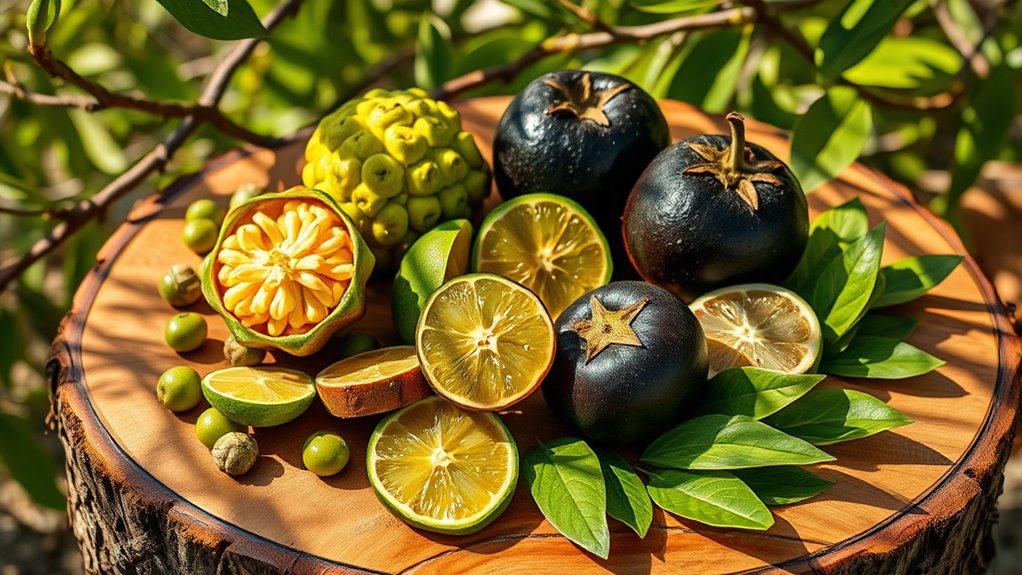
Bush tucker holds deep cultural significance for Aboriginal Australians, serving as more than just food—it embodies their connection to the land, spirituality, and identity. When you explore bush tucker, you’re engaging with a tradition that links generations and preserves their heritage. It’s central to ceremonies, storytelling, and teaching younger communities about their environment.
Here are three ways bush tucker impacts their culture:
- Spiritual Connection: It’s considered sacred, often used in rituals and ceremonies.
- Knowledge Preservation: Sharing hunting, gathering, and preparation techniques keeps cultural knowledge alive.
- Community Bonding: Food gathering and sharing strengthen social ties and collective identity.
Understanding bush tucker helps you appreciate its essential role in sustaining cultural continuity and respect for the land.
Frequently Asked Questions
How Are Bush Tucker Ingredients Sustainably Harvested?
You might wonder how bush tucker ingredients are harvested sustainably. Farmers and gatherers carefully collect only what’s needed, ensuring plants and animals aren’t overused or damaged. They follow traditional practices and modern regulations that protect native species and habitats. By respecting seasonal cycles and using eco-friendly methods, they help preserve Australia’s unique environment while providing delicious, native ingredients for everyone to enjoy without harming the land.
Are Bush Foods Safe for People With Allergies?
Like Pandora’s box, bush foods hold surprises, but safety depends on you. If you have allergies, you must check ingredients carefully, as some native plants and insects can trigger reactions. Always consult with an expert or allergist before trying new bush tucker. While many are safe and nutritious, understanding your allergies helps you enjoy these unique flavors without risk, turning an adventure into a safe culinary journey.
What Are the Seasonal Availability Periods for Native Ingredients?
You wonder about the seasonal availability periods for native ingredients. Typically, these ingredients are harvested at specific times of the year, depending on the plant. For example, bush tomatoes and finger limes are usually available in summer, while native herbs like wattleseed can be harvested year-round. Keep in mind, availability varies by region and climate, so it’s best to check local sources or guides to harvest times for each ingredient.
How Do Indigenous Communities Preserve Bush Tucker Knowledge?
Imagine you’re part of an indigenous community passing down bush tucker knowledge. You preserve it through storytelling, teaching younger generations about harvesting techniques and traditional recipes. You also record this knowledge in oral histories and community archives. Some communities organize cultural events to celebrate bush tucker, ensuring the knowledge stays alive. By actively sharing and safeguarding these traditions, you help keep indigenous bush tucker practices vibrant for future generations.
Can Bush Tucker Be Incorporated Into Everyday Australian Cuisine?
You can definitely incorporate bush tucker into everyday Australian cuisine. Start by experimenting with native ingredients like wattleseed, finger lime, or lemon myrtle in your cooking. Use them to add unique flavors to salads, meats, or desserts. Embracing these ingredients not only enriches your meals but also connects you to Indigenous culture. With a bit of creativity, bush tucker can become a delicious and authentic part of your daily diet.
Conclusion
Exploring bush tucker is like uncovering Australia’s hidden treasure chest of flavors. These native ingredients aren’t just food; they’re a living connection to ancient culture and land. By embracing traditional and modern uses, you get to taste the stories and spirit of the bush. So, venture into this culinary wilderness and let each bite be a bridge to the rich heritage that makes Australia truly unique. Your palate will thank you for this wild adventure.
NFL season / tailgating Picks
team gear
As an affiliate, we earn on qualifying purchases.