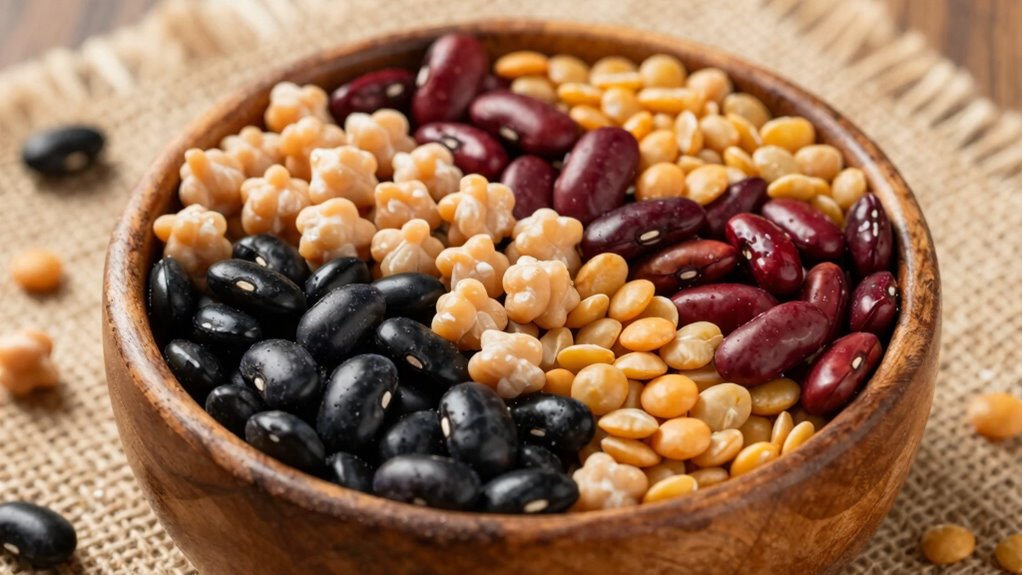

Beans and lentils are crucial global staples because they are packed with essential nutrients like protein, fiber, and vitamins, supporting your health and digestive system. They’re environmentally friendly, needing less water and land, and they help improve soil health. Their versatility makes them perfect for a wide range of cuisines, making your meals more diverse and sustainable. Keep exploring how these humble foods play a big role in global nutrition and sustainability.

Get kitchen staples and gadgets delivered free with Prime
- Fast, free delivery on millions of items
- Prime Video, Amazon Music and more included
- Member-only deals all year
Key Takeaways
- They are rich in plant-based protein, fiber, vitamins, and minerals, supporting overall health and balanced diets worldwide.
- Their versatile flavor profiles allow seamless integration into diverse cuisines, enhancing meal variety.
- Beans and lentils require less water, land, and energy, making them environmentally sustainable protein sources.
- They naturally enrich soil through nitrogen fixation, promoting sustainable farming practices.
- Their affordability and nutrient density make them accessible options for improving global nutrition and reducing resource use.

Beans and lentils have become global staples because they offer an affordable, nutritious, and versatile source of protein that fits into nearly any cuisine. When you include them in your meals, you tap into a food source packed with nutritional benefits. They are rich in plant-based protein, fiber, vitamins, and minerals like iron, folate, and potassium. This combination helps support your digestive health, keeps you feeling full longer, and contributes to overall wellness. Because they’re low in fat and contain no cholesterol, beans and lentils are excellent choices for maintaining a healthy heart and managing weight. Their nutrient density makes them a practical option for people seeking affordable ways to improve their diet without sacrificing quality. Additionally, choosing beans and lentils supports sustainable farming practices by reducing resource consumption and promoting soil health.
Beyond personal health, beans and lentils also have a positive environmental impact. Unlike many animal-based protein sources, they require considerably less water, land, and energy to produce. Growing these legumes naturally enriches the soil by fixing nitrogen, which reduces the need for synthetic fertilizers. This process not only benefits the environment but also promotes sustainable farming practices. When you choose beans and lentils, you’re supporting agricultural systems that help lower greenhouse gas emissions and conserve essential resources. Their ability to thrive on marginal land further reduces pressure on fragile ecosystems, making them a sustainable food choice for the planet. Supporting plant-based diets can also lead to a significant reduction in your carbon footprint. Incorporating legumes into your diet can also help diversify your meals and prevent dietary monotony, making it easier to maintain healthy eating habits.
Products Worth Considering

Vitamix 5200 Professional-Grade Blender, 64 oz. Container, Black

De'Longhi Stilosa Compact Manual Espresso Machine with Milk Frother

Instant Pot Pro 8 Qt 10-in-1 Electric Pressure Cooker, Black
As an affiliate, we earn on qualifying purchases.
Frequently Asked Questions
How Do Beans and Lentils Contribute to Sustainable Agriculture?
You can see that beans and lentils promote sustainable agriculture by enhancing soil health through crop rotation and soil enrichment. When you plant them, they fix nitrogen in the soil, reducing the need for synthetic fertilizers. This naturally improves soil fertility, supports diverse cropping systems, and minimizes environmental impact. By incorporating beans and lentils into your farming practices, you contribute to a more sustainable, resilient agricultural system.
Are Beans and Lentils Suitable for All Dietary Restrictions?
You’ll find that beans and lentils are suitable for many dietary restrictions, but not all. For instance, about 1 in 100 people have a legume allergy, which includes beans and lentils. They’re also vegan-compatible, making them a great protein source for plant-based diets. However, if you have specific dietary allergies or sensitivities, you should check ingredient labels or consult your healthcare provider before including them regularly.
What Are the Traditional Ways to Prepare Beans and Lentils Globally?
You’ll find that traditional cooking techniques for beans and lentils include boiling, soaking, and simmering, which enhance flavor and digestibility. In many cultures, these foods hold deep cultural significance—think Indian dal, Middle Eastern mujaddara, or Latin American frijoles. You might also see them seasoned with herbs, spices, or combined with rice or vegetables. These methods preserve history and tradition, making beans and lentils central to diverse cuisines worldwide.
How Do Beans and Lentils Impact Local Economies?
Beans and lentils serve as the heart of local economies, symbolizing sustenance and resilience. You see, their availability boosts market accessibility, empowering small farmers and reducing food insecurity. Their cultural significance fosters community trade and tradition, creating a ripple effect that stimulates local businesses. As a result, these humble crops help stabilize economies, preserve heritage, and support livelihoods, making them essential threads in the fabric of global and local prosperity.
Can Beans and Lentils Help Combat Global Food Insecurity?
Yes, beans and lentils can help combat global food insecurity by providing affordable, nutrient-dense options that meet nutritional needs. Their nutritional benefits include high protein, fiber, vitamins, and minerals, making them a crucial food source. Plus, their cultural significance in many regions encourages local consumption and farming, boosting food security. Incorporating beans and lentils into diets worldwide supports sustainable agriculture and helps alleviate hunger effectively.
Conclusion
So, next time you reach for beans or lentils, remember they’re more than just affordable protein—they’ve stood the test of time across cultures for a reason. Some believe their popularity is due to an ancient nutritional secret: they might have helped early civilizations thrive by providing lasting energy and supporting immunity. Whether or not that’s true, one thing’s clear—these humble legumes are truly a global staple for good reason, and that’s unlikely to change anytime soon.