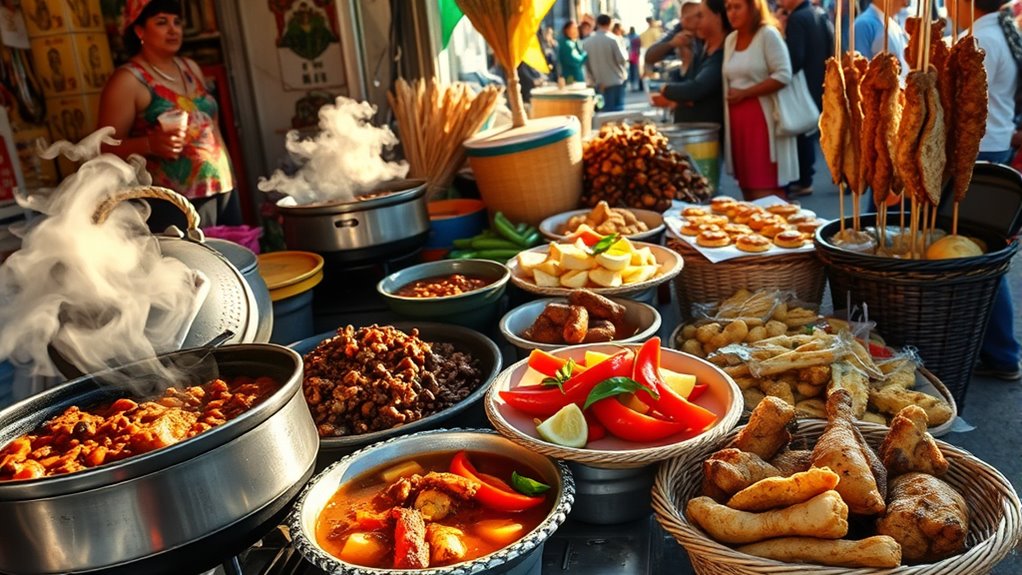
Brazilian cuisine is a vibrant mix of regional ingredients that shape iconic dishes like feijoada and moqueca. Feijoada features black beans and pork, with regional variations reflecting local traditions, while moqueca highlights fresh fish, coconut milk, and dendê oil from coastal areas. Street snacks like acarajé and pastel showcase Brazil’s cultural diversity and history. If you explore further, you’ll discover how these flavors tell stories of Brazil’s rich environment and cultural exchange.
Key Takeaways
- Feijoada, a black bean stew with pork, varies regionally, incorporating local ingredients like smoked sausages and salted meats.
- Moqueca is a coastal seafood stew flavored with regional ingredients such as fresh fish, coconut milk, and dendê oil.
- Street snacks like acarajé and pastel reflect Brazil’s diverse regional flavors and cultural traditions.
- Regional ingredients and preparation techniques highlight Brazil’s cultural diversity and local culinary identities.
- Modern practices emphasize sustainability and eco-friendly sourcing of regional ingredients in traditional dishes.
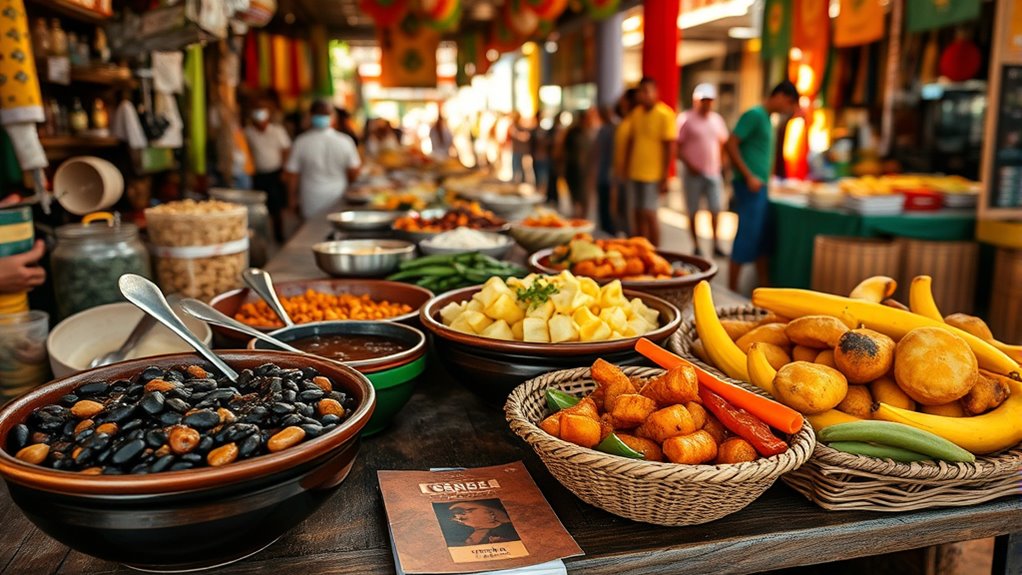
Have you ever wondered what makes Brazilian cuisine so lively and diverse? It all comes down to the rich tapestry of regional ingredients and culinary traditions that come together to create unique flavors across the country. From the lush Amazon rainforest to the sun-drenched beaches of Rio, each region has its own set of ingredients and cooking methods that shape the local dishes. You’ll find that these ingredients aren’t just fresh and flavorful—they’re deeply rooted in history and cultural identity. For example, in the Amazon, you might encounter exotic fruits and fish, while in the interior, hearty grains and meats take center stage. This regional variation makes Brazilian cuisine incredibly dynamic, offering a taste of local life with every bite.
As you explore Brazilian dishes like feijoada, you’ll notice how regional ingredients play a critical role. Feijoada, a hearty black bean stew with pork, is more than just a dish—it’s a reflection of its culinary traditions, blending African, Portuguese, and indigenous influences. The ingredients vary depending on where you’re eating it; in Rio, it might feature smoked sausages and salted meats, while in Northeastern Brazil, you might find it served with local rice and farofa. These regional ingredients aren’t just about flavor—they tell stories of trade, migration, and cultural exchange. They also influence how the dish is prepared, with each region adding its own twist, making every version unique.
Brazilian culinary traditions extend beyond feijoada. Take moqueca, a flavorful seafood stew from the coastal regions, which uses regional ingredients like fresh fish, coconut milk, dendê oil, and peppers. The preparation of moqueca highlights the importance of local produce and traditional techniques passed down through generations. You’ll notice how the use of regional ingredients enhances the depth of flavor, and how the dish embodies the coastal lifestyle—fresh, vibrant, and full of life. Street snacks, another essential aspect of Brazilian cuisine, also showcase this regional diversity. From acarajé in Bahia, made with black-eyed peas and shrimp, to pastel in São Paulo, filled with cheese or meat, these snacks are quick, delicious, and rooted in local culinary traditions. They serve as a window into everyday life and regional identities, often sold by vendors who’ve been passing down recipes for generations. Additionally, the emphasis on sustainability and eco-friendly decor choices in modern food presentation reflects an increasing awareness of environmental impacts in culinary culture.
In essence, what makes Brazilian cuisine so mesmerizing is this intricate connection between regional ingredients and culinary traditions. Each dish you try offers a story—a blend of history, culture, and local flavors that come together to create a truly vibrant culinary mosaic. Whether it’s a slow-cooked feijoada, a spicy moqueca, or a street snack with roots in centuries-old traditions, Brazilian food invites you to taste the soul of the country in every bite.
Frequently Asked Questions
What Are Traditional Brazilian Beverages to Accompany These Dishes?
You should try traditional Brazilian beverages like caipirinha, made with cachaça and fresh fruit, which pairs perfectly with hearty dishes. Opt for cold beers or invigorating coconut water for a lighter touch. For something stronger, enjoy cachaça cocktails or a shot of straight cachaça. These beverages complement the flavors of feijoada, moqueca, and street snacks, enhancing your experience with authentic Brazilian taste.
How Has Brazilian Cuisine Evolved With Modern Culinary Trends?
Like a vibrant samba dance, Brazilian cuisine now embraces fusion cuisine and culinary innovation, blending traditional flavors with global influences. You’ll notice chefs experimenting with ingredients and techniques, creating modern twists on classics. This evolution celebrates Brazil’s rich cultural tapestry while appealing to contemporary palates. As a result, your dining experience becomes more diverse and exciting, reflecting the country’s dynamic spirit and ongoing culinary creativity.
Are There Regional Variations of Feijoada Across Brazil?
Yes, you’ll find regional variations of feijoada across Brazil. In each region, local ingredients and culinary traditions influence the dish’s flavor. For example, in Rio, you might enjoy a lighter version with less pork, while in São Paulo, it’s heartier with diverse meats. In Bahia, you might notice the addition of regional spices and ingredients that reflect local culinary traditions, making each version uniquely Brazilian.
What Are Popular Street Snacks Beyond Those Mentioned?
You’ll find a vibrant Brazilian street food diversity beyond feijoada and moqueca. Popular snacks include pastel, deep-fried pastries filled with cheese or meat, and acarajé, influenced by indigenous ingredients like black-eyed peas and spices. Pamonha, a sweet or savory corn-based treat, also shines. These snacks reflect the rich influence of indigenous ingredients, showcasing Brazil’s culinary creativity and regional flavors that you can enjoy on street corners across the country.
How Do Brazilian Spices Influence the Flavor Profiles of These Dishes?
Brazilian spices are the secret sauce that really bring dishes to life, turning a good meal into a memorable one. You’ll find spice blends like paprika, cumin, and coriander that boost flavor enhancement and add depth. These spices paint a vivid picture of Brazil’s culinary landscape, making each bite more vibrant and aromatic. They influence not just the taste but also the aroma, inviting you to savor every mouthful with enthusiasm.
Conclusion
Brazilian cuisine offers a vibrant mix of flavors, from hearty feijoada to flavorful moqueca and lively street snacks. Did you know that Brazil’s food culture is so diverse that over 200 different types of street food are enjoyed across the country? As you explore these dishes, you’ll discover how history, culture, and tradition blend into every bite. So, immerse yourself and savor the rich, colorful tastes that make Brazilian food truly unforgettable.