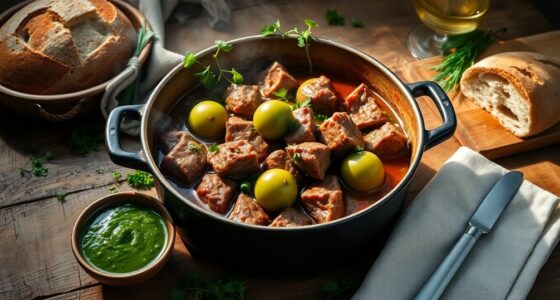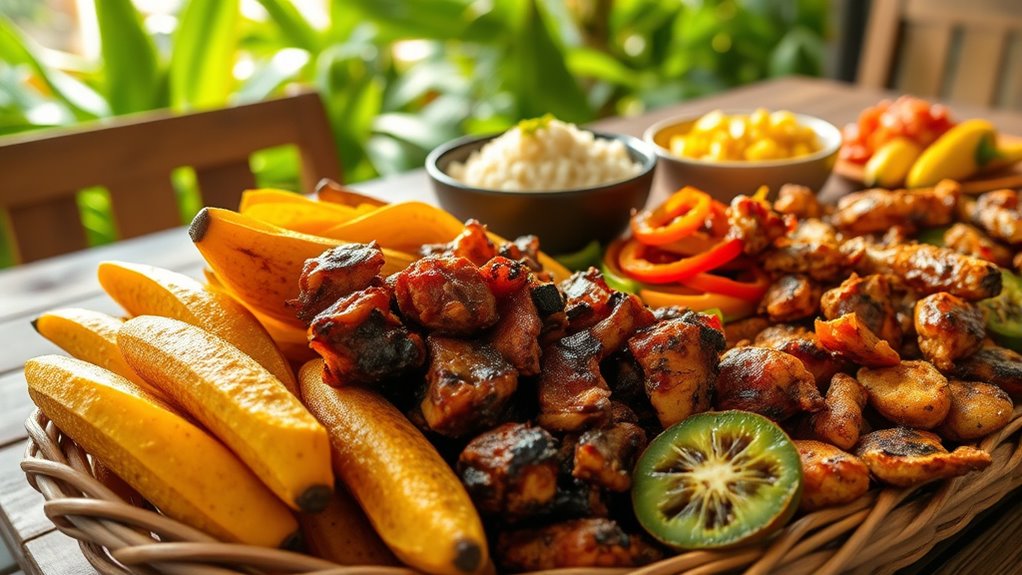
Caribbean cuisine is incredibly diverse because each island blends its unique history and influences. You’ll find Jamaica’s jerk seasoning with African and European roots, Trinidad and Tobago’s curries inspired by Indian traditions, and Haitian dishes shaped by French and African flavors. Fresh tropical fruits, seafood, and traditional cooking methods add depth and authenticity, while fusion dishes reflect a dynamic mix of past and present. Explore further to discover how these elements create a vibrant, evolving culinary mosaic across the region.
Key Takeaways
- Each Caribbean island features distinct culinary influences, blending indigenous, African, European, and Asian flavors.
- Jamaica’s jerk seasoning exemplifies a mix of indigenous, African, and European traditions.
- Trinidad and Tobago showcase Indian-influenced curries and roti, highlighting Asian culinary heritage.
- Haitian cuisine combines French sophistication with African spice and Caribbean ingredients.
- Island ingredients like tropical fruits, root vegetables, and seafood shape diverse regional dishes.
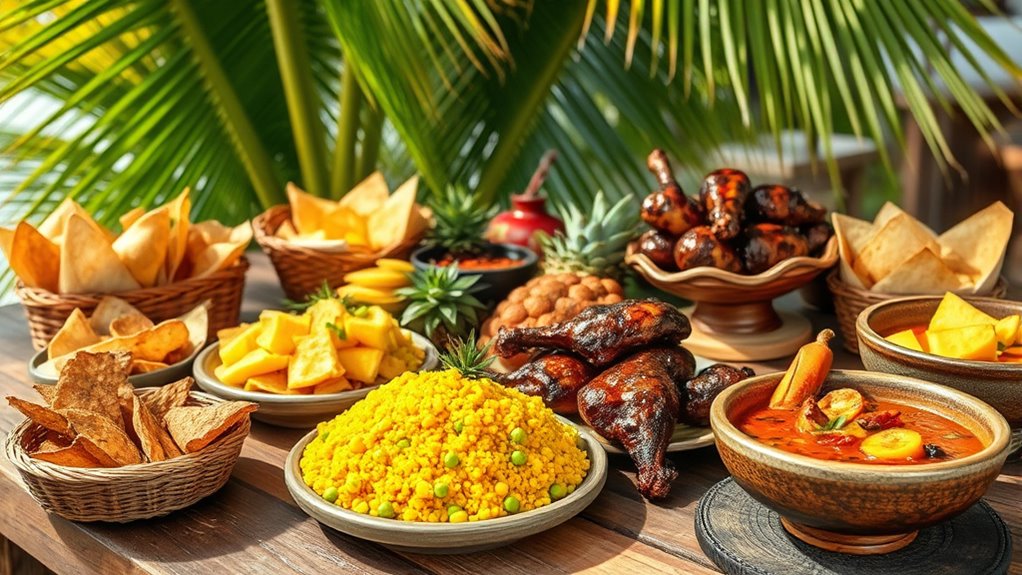
Have you ever wondered what makes Caribbean cuisine so vibrant and flavorful? It’s a lively blend of history, culture, and geography, creating a unique culinary tapestry across the islands. One of the most exciting aspects is how chefs and home cooks alike embrace fusion dishes, combining ingredients, techniques, and flavors from diverse traditions to craft something fresh and exciting. These fusion dishes aren’t just about mixing food; they’re about telling stories of migration, trade, and cultural exchange that have shaped the region’s identity. While modern influences bring innovation, traditional cooking methods remain the backbone of Caribbean kitchens, preserving authentic flavors that have been passed down through generations. You’ll find that many recipes still rely on age-old techniques like slow roasting, smoking, and seasoning with local herbs and spices. These methods add depth and authenticity to each dish, anchoring the cuisine in its roots even as it evolves.
Exploring Caribbean cuisine means appreciating how each island contributes its own twist to the shared culinary heritage. For example, Jamaica’s jerk seasoning combines indigenous, African, and European influences, creating a bold flavor profile that’s both spicy and aromatic. In Trinidad and Tobago, curries and roti reflect Indian heritage, while Haitian dishes often feature robust, hearty flavors influenced by French and African traditions. The diversity is staggering, and it’s reflected in the variety of ingredients used—from tropical fruits like mango and papaya to root vegetables such as yams and cassava. Seafood plays a prominent role in many islands’ diets, prepared with marinade or cooked over open flames, again echoing traditional cooking practices. Yet, amid these traditional techniques, you’ll also see chefs experimenting with fusion dishes, blending elements from different cultures to produce innovative creations that honor the past while embracing the future. Traditional cooking methods continue to be a cornerstone, preserving the authenticity and cultural significance of the cuisine amidst ongoing innovation.
Food in the Caribbean isn’t just sustenance; it’s a celebration of life and history. Whether you’re enjoying a simple plate of curried goat or a complex seafood stew infused with local spices, you’re tasting centuries of cultural exchange. Traditional cooking keeps the soul of the islands alive, but the constant innovation through fusion dishes keeps Caribbean cuisine fresh and exciting. This dynamic interplay between respecting tradition and embracing new influences makes the region’s culinary scene truly extraordinary. As you explore Caribbean food, you’ll discover how each island’s unique history contributes to a larger, vibrant mosaic of flavors that define the region’s culinary identity.

McCormick Culinary Caribbean Jerk Seasoning, 18 oz – One 18 Ounce Container Jamaican Jerk Seasoning, Perfect on Meats, Roasted Vegetables, Marinades and Caribbean Inspired Recipes
SPICY, VIBRANT FLAVOR: McCormick Caribbean Jerk Seasoning delivers an exceptional texture and a spicy, vibrant flavor that's authentic…
As an affiliate, we earn on qualifying purchases.
As an affiliate, we earn on qualifying purchases.
Frequently Asked Questions
What Are the Most Popular Caribbean Street Foods?
You’ll find that jerk chicken, patties, doubles, and fried plantains are among the most popular Caribbean street foods. At local snack stalls and popular food trucks, you can indulge in these flavorful treats. Whether you’re grabbing a quick patty or enjoying spicy doubles, these foods showcase the vibrant flavors of the islands. They’re perfect for a quick, delicious bite while exploring the lively street scenes across the Caribbean.
How Has Caribbean Cuisine Evolved Over Centuries?
Caribbean cuisine has evolved like a vibrant tapestry woven through centuries, blending indigenous flavors with colonial influences. You see this in the way traditional dishes embrace culinary fusion, creating new tastes while honoring cultural preservation. Over time, spices, cooking techniques, and ingredients have transformed, making Caribbean food a dynamic reflection of its diverse history. This evolution keeps the cuisine alive, resonating with both tradition and innovation on every island.
Which Islands Have Unique Traditional Dishes?
You’ll find that each Caribbean island has its own unique traditional dishes, reflecting island-specific ingredients and regional cooking techniques. For example, Jamaica is famous for jerk chicken, utilizing spicy seasonings and grilling methods, while Trinidad offers roti made with local spices and flatbreads. Puerto Rico features mofongo, mashed plantains with savory fillings, showcasing its use of island ingredients and cooking styles. Exploring these dishes reveals the rich culinary diversity across the islands.
What Influences Caribbean Flavors the Most?
You’re most influenced by spice blends and indigenous ingredients when it comes to Caribbean flavors. These elements come from a mix of African, European, and indigenous cultures, blending together to create vibrant, bold tastes. You’ll notice the use of local herbs, peppers, and unique seasoning mixes that define regional dishes. This combination of traditional ingredients and spice blends gives Caribbean cuisine its distinctive, unforgettable flavor profile.
Are There Vegetarian Options in Caribbean Cuisine?
Think of Caribbean cuisine as a vibrant garden bursting with colors—you’ll find plenty of vegetarian options. Yes, there are delicious plant-based dishes using fresh vegetarian ingredients like callaloo, plantains, and yams. Many islands embrace vegetarian dishes, offering flavorful meals that celebrate local produce. Whether you’re craving a hearty veggie stew or a spicy salad, Caribbean cuisine has something to satisfy your taste buds without meat, making your culinary journey truly colorful.

Chief Curry Powder 230g, 8oz Made in Trinidad & Tobago, 8.11 Ounce (Pack of 1)
Product of Trinidad & Tobago
As an affiliate, we earn on qualifying purchases.
As an affiliate, we earn on qualifying purchases.
Conclusion
So, next time you savor a Caribbean dish, remember you’re tasting centuries of cultural mishmash, seasoned with history and a dash of chaos. Whether it’s jerk chicken or callaloo, each bite is a culinary passport stamped with colonial intrigue and island ingenuity. After all, who knew that a melting pot of flavors could serve up such delightful chaos? Bon appétit—your palate just signed up for the most delicious cultural rollercoaster.

Haitian Spice/Epis
Ideal for marinating meats, enhancing stews, and adding depth to rice and bean dishes.
As an affiliate, we earn on qualifying purchases.
As an affiliate, we earn on qualifying purchases.

Spur Tree Beef Stew Seasoning – Authentic Jamaican Brown Stew Seasoning with All-Natural And Fresh Ingredients (13.7 oz, Brown Stew)
Authentic Jamaican Brown Stew… Our Jamaican brown stew seasoning adds a deep flavor and rich gravy to your…
As an affiliate, we earn on qualifying purchases.
As an affiliate, we earn on qualifying purchases.