
You might not realize just how much flatbreads connect different cuisines worldwide. They serve as a universal base, adapting to local ingredients and flavors—from pita holding falafel to Indian naan accompanying curries. Their simplicity allows them to be baked, grilled, or fried, blending into snacks or main dishes. Flatbreads reflect shared history and culture, forming edible bridges across regions. Want to explore more? You’ll discover even more surprising ways these versatile breads bring the world closer together.

Get kitchen staples and gadgets delivered free with Prime
- Fast, free delivery on millions of items
- Prime Video, Amazon Music and more included
- Member-only deals all year
Key Takeaways
- Flatbreads serve as foundational staples across diverse cultures, linking regions through shared culinary traditions.
- Their adaptability allows for regional ingredients and flavors, creating unique yet connected dishes worldwide.
- Used as edible vessels, flatbreads facilitate cross-cultural cuisine by holding various fillings and toppings.
- Variations like naan, pita, and tortillas exemplify how flatbreads bridge different culinary identities.
- Their historical and cultural significance fosters a sense of shared human heritage through diverse culinary practices.
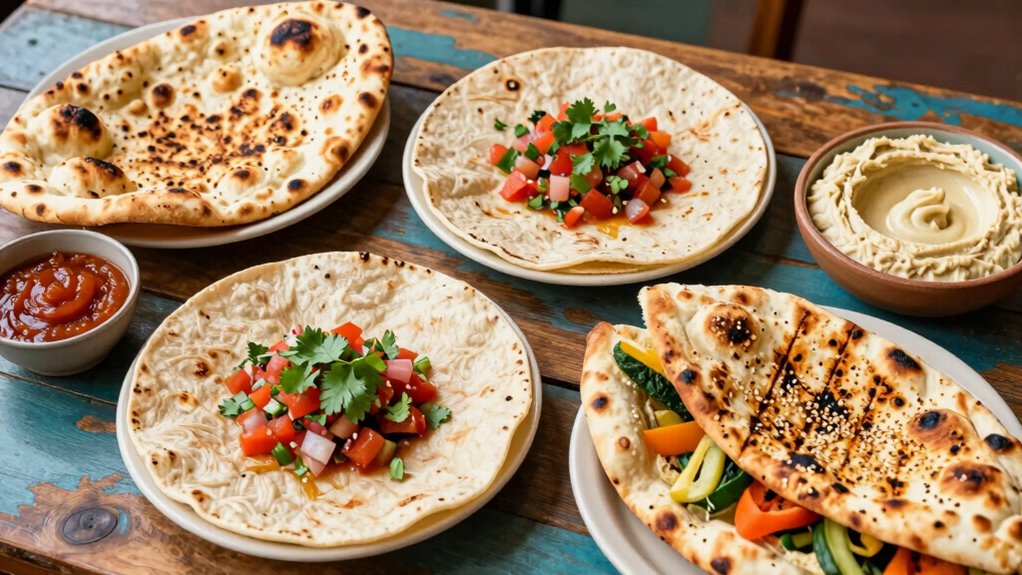
Have you ever noticed how flatbreads serve as a delicious bridge between diverse culinary traditions? These simple yet versatile breads have been around for thousands of years, making them a staple in many cultures worldwide. Their ancient origins trace back to early civilizations where flatbreads were among the first baked foods, crafted from basic ingredients like flour, water, and salt. This longevity highlights their importance—not just as nourishment but as a symbol of shared human history. Over time, different societies adapted flatbread recipes to suit local ingredients and flavors, creating a rich tapestry of regional variations. From the unleavened matzah of Jewish tradition to the leavened naan of South Asia, flatbreads have evolved while maintaining their core simplicity.
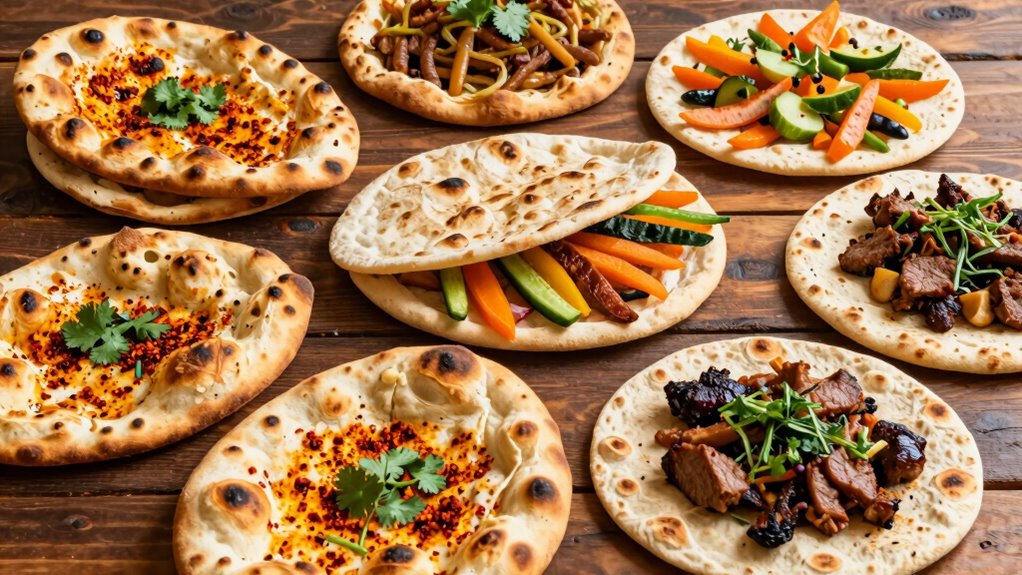
What makes flatbreads truly remarkable is their culinary versatility. You can use them as a base for toppings, wrap fillings, or serve them alongside a meal. Think about how a slice of pita can hold a hearty falafel, or how a thin, crisp tortilla complements a variety of fillings in Mexican cuisine. Their adaptability allows them to be both a snack and a main dish, depending on how you prepare and serve them. Flatbreads can be baked, grilled, or fried, each method bringing a different texture and flavor profile. Plus, they lend themselves well to a range of ingredients—from herbs and spices to cheeses and meats—making them suitable for breakfast, lunch, or dinner. Additionally, the history of flatbreads reveals how their simple ingredients and adaptable nature have contributed to their widespread popularity over millennia. Their versatility, in particular, has helped them persist and evolve amidst changing culinary trends and regional preferences. Moreover, their global presence underscores how they have become an integral part of cultural identities around the world. This adaptability is closely tied to their cultural significance, which varies from region to region but remains a key factor in their enduring appeal.
As you explore different cuisines, you’ll notice how flatbreads act as versatile carriers for flavors and ingredients. They connect cultures in a way that’s both practical and cultural. For example, the Turkish pide, the Indian roti, and the Middle Eastern pita all serve as edible vessels that bring people together around the table. Their ability to adapt to local tastes while maintaining their fundamental form helps explain why they are so universally loved. Whether you’re enjoying a warm flatbread stuffed with vegetables or tearing off a piece to scoop up a flavorful sauce, you’re participating in a culinary tradition that spans continents and centuries. Flatbreads are more than just bread—they’re a testament to the shared history and ongoing evolution of global cuisine.
As an affiliate, we earn on qualifying purchases.
Frequently Asked Questions
What Are the Traditional Ingredients Used in Various Flatbreads Worldwide?
You’ll find that traditional flatbreads worldwide use ingredients like ancient grains such as barley, millet, or spelt, offering rich flavors and nutrition. Fermentation processes are often key, creating tangy, airy textures—think sourdough or leavened flatbreads. Common ingredients include water, salt, and sometimes herbs or spices, depending on the region. These elements come together to produce diverse, flavorful flatbreads that connect cuisines across cultures.
How Do Flatbreads Influence Regional Flavor Profiles and Culinary Techniques?
Flatbreads influence regional flavor profiles and culinary techniques by embodying cultural symbolism and local ingredients. You notice how their baking techniques, like tandoor or skillet methods, reflect regional traditions. These breads often carry symbolic meanings, shaping dishes around them. Their unique textures and flavors, derived from regional spices or grains, help define local cuisine. As a result, flatbreads become a fundamental part of culinary identity across diverse cultures.
Are There Specific Health Benefits Associated With Different Types of Flatbreads?
Different flatbreads offer unique health benefits based on their gluten content and nutritional value. For instance, whole grain or multigrain flatbreads are rich in fiber, promoting digestion and heart health. Gluten-free options like rice or chickpea flatbreads suit those with gluten sensitivities, providing essential nutrients without discomfort. By choosing the right type, you can enhance your diet, support digestion, and enjoy diverse flavors with health benefits tailored to your needs.
How Have Flatbreads Evolved With Modern Culinary Trends?
Flatbreads have evolved with modern culinary trends like a chameleon changing colors. You see flatbread fermentation techniques now blending traditional methods with innovative ingredients, creating flavors that surprise the palate. Modern flatbread innovations include gluten-free options, cauliflower crusts, and stuffed varieties. These changes keep flatbreads fresh and relevant, bridging old-world charm with contemporary health preferences and culinary experimentation, making them a versatile canvas for global fusion and creative expression.
What Are Some Unique Flatbread Varieties That Are Lesser-Known Globally?
You’ll find unique flatbread varieties like the Ethiopian injera, which uses ancient baking techniques and holds cultural symbolism, representing community and tradition. Then there’s the Indian naan, rich in history and often baked in tandoors, embodying cultural significance. In Central Asia, somun offers a lesser-known taste, blending ancient baking with regional culture. Exploring these flatbreads reveals their deep roots, connecting you to diverse histories and traditions across the globe.
Conclusion
So next time you bite into a flatbread, remember it’s more than just bread. It’s a bridge connecting diverse cultures, a vessel carrying stories, flavors, and traditions. It’s a symbol of shared history and innovation, a proof to how simple ingredients can unite us all. Embrace the diversity behind each flatbread, and let it inspire you to explore, to taste, and to celebrate the endless connections that make our world deliciously rich.
NFL season / tailgating Picks
team gear
As an affiliate, we earn on qualifying purchases.