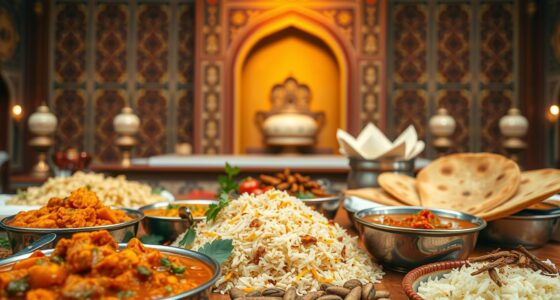
Fried foods are a common feature at festivals and celebrations around the world. You’ll find them in events like fairs, religious festivals, and communal gatherings. They symbolize prosperity, good luck, and joy, connecting cultures through shared flavors and traditions. From deep-fried doughnuts to fried plantains, these treats bring people together and reinforce cultural bonds. Keep exploring, and you’ll discover even more fascinating ways fried foods unite communities everywhere.

Get kitchen staples and gadgets delivered free — and shop member deals
- Fast, free delivery on millions of items
- Access to Prime Big Deal Days deals on October 6–7
- Prime Video, Amazon Music and more included
Key Takeaways
- Fried foods are central festival snacks worldwide, symbolizing prosperity, joy, and community bonding.
- They reflect cultural identities through regional ingredients and preparation styles.
- Fried foods are integral to traditional celebrations, connecting generations and cultural heritage.
- Modern adaptations emphasize sustainability, local ingredients, and evolving culinary practices.
- Their universal appeal lies in their crispy textures and symbolic role in festivities and shared traditions.
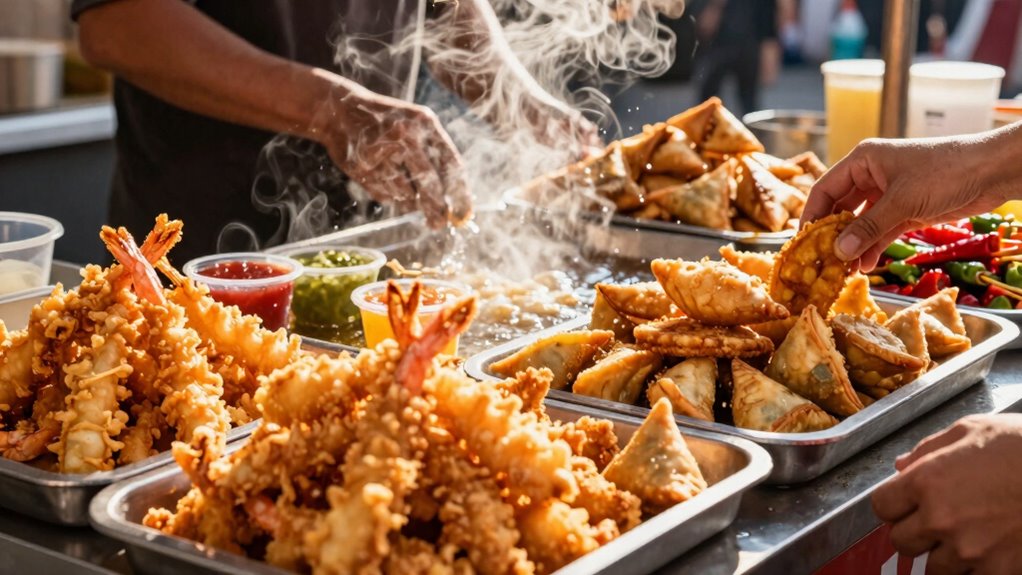
Across different cultures, fried food also takes center stage as festival snacks. Whether you’re at a fair, parade, or religious event, fried treats often steal the show. Think of deep-fried doughnuts in North America, or the vibrant fried plantains in Caribbean celebrations. These snacks are quick, easy to share, and evoke a sense of nostalgia. They’re often prepared in large batches, making them perfect for communal consumption. The act of frying transforms simple ingredients into indulgent bites that bring people together, creating a festive mood. You might find vendors spinning sticks of fried food, their aroma drifting through the air to entice festival-goers.
In many traditions, fried foods serve more than just a culinary purpose; they carry symbolic weight. For instance, in some cultures, frying foods during special occasions signifies prosperity, abundance, or good luck. The sizzling sound and fragrant smell become part of the celebration, heightening the senses and building anticipation. Fried seafood, especially, often appears during coastal festivities or seafood festivals, emphasizing regional specialties and local pride. Meanwhile, festival snacks like fried dough or sweet treats symbolize joy and togetherness, reinforcing community bonds. These foods become more than just sustenance—they’re a way to connect with heritage and celebrate life’s special moments. Interestingly, the symbolic significance of fried foods varies across cultures, but their role in fostering communal joy remains universal. Recognizing the cultural importance of fried foods helps us appreciate their enduring presence in celebrations worldwide. Fried foods often reflect deep-rooted cultural traditions that have been passed down through generations.
Frying as a cooking method also demonstrates how traditional practices can adapt to modern sustainable lifestyles by emphasizing local ingredients and reducing waste. You’re not just eating; you’re participating in a shared experience that spans generations. The universal appeal of fried foods, with their crispy textures and comforting flavors, makes them timeless symbols of celebration and tradition worldwide.
As an affiliate, we earn on qualifying purchases.
Frequently Asked Questions
How Did Fried Foods Originate Across Different Cultures?
You might find that fried foods originated from ancient culinary practices across various cultures, where quick cooking methods were essential for preservation and taste. The historical origins trace back to regions like China, the Middle East, and Europe, each developing their own techniques. Cultural variations emerge through different ingredients, spices, and frying styles, creating unique dishes like tempura, falafel, and schnitzel, reflecting local tastes and traditions over centuries.
What Is the Health Impact of Frequent Fried Food Consumption?
Eating fried foods frequently can have negative health impacts. You may face nutritional consequences, like increased intake of unhealthy fats and calories, which can lead to weight gain and nutrient deficiencies. Additionally, regularly consuming fried foods raises your cardiovascular risk, as it can elevate bad cholesterol levels and promote arterial plaque buildup. To protect your health, it’s best to enjoy fried foods in moderation and opt for healthier cooking methods when possible.
Are There Regional Variations in Frying Techniques?
Imagine a global tapestry where each region weaves its own vibrant pattern. You’ll find regional variations in frying techniques, shaped by local spices and traditional cooking equipment. In Asia, wok-frying with aromatic seasonings dominates, while in the South, cast-iron skillets create crispy classics. These unique methods reflect cultural flavors, demonstrating how regional ingredients and tools influence frying styles, giving each cuisine its distinctive, delicious signature.
How Do Different Oils Affect the Flavor of Fried Foods?
Different oils markedly impact the flavor of fried foods. When oil starts smoking, it can impart a bitter or burnt taste, affecting the overall flavor. For example, olive oil adds a fruity note, while coconut oil gives a subtle sweetness. The type of oil influences flavor infusion, so choose wisely based on the desired taste. Your frying experience becomes richer and more personalized with each oil choice, enhancing the dish’s character.
What Are Some Traditional Festival Uses of Fried Foods Worldwide?
You’ll find fried foods play a crucial role in festival symbolism and culinary ritual across the globe. In India, deep-fried sweets like jalebi symbolize prosperity during Diwali. In Spain, churros are essential at festivals, representing community and tradition. In Japan, tempura embodies culinary artistry during celebrations. These fried foods aren’t just treats; they’re integral to cultural expressions, marking important occasions and reinforcing traditions through their symbolic and ritual significance.
Conclusion
So, next time you bite into a crispy fry or savor a golden piece of fried chicken, remember you’re part of a timeless tradition that’s been around since the days of the medieval joust—though thankfully, without the armor and horses. Fried foods have a way of uniting us across cultures and eras, proving that some cravings are truly universal. Just don’t forget to enjoy responsibly, or you might find yourself in a medieval banquet, armor and all!
NFL season / tailgating Picks
team gear
As an affiliate, we earn on qualifying purchases.