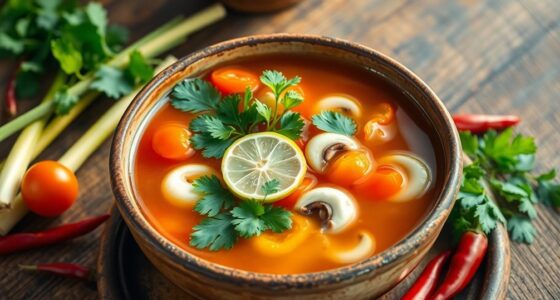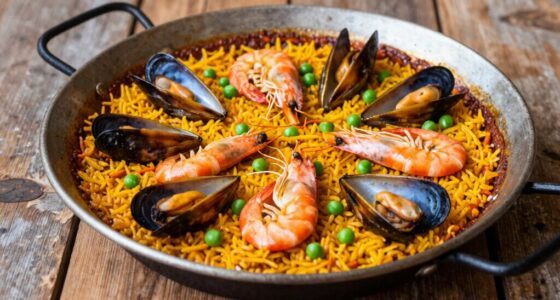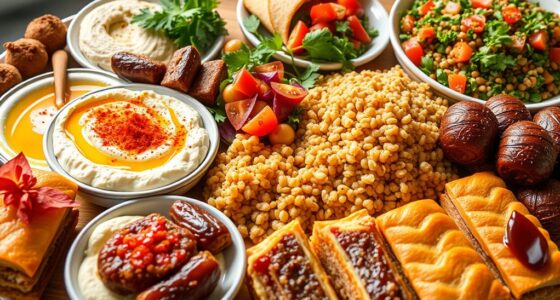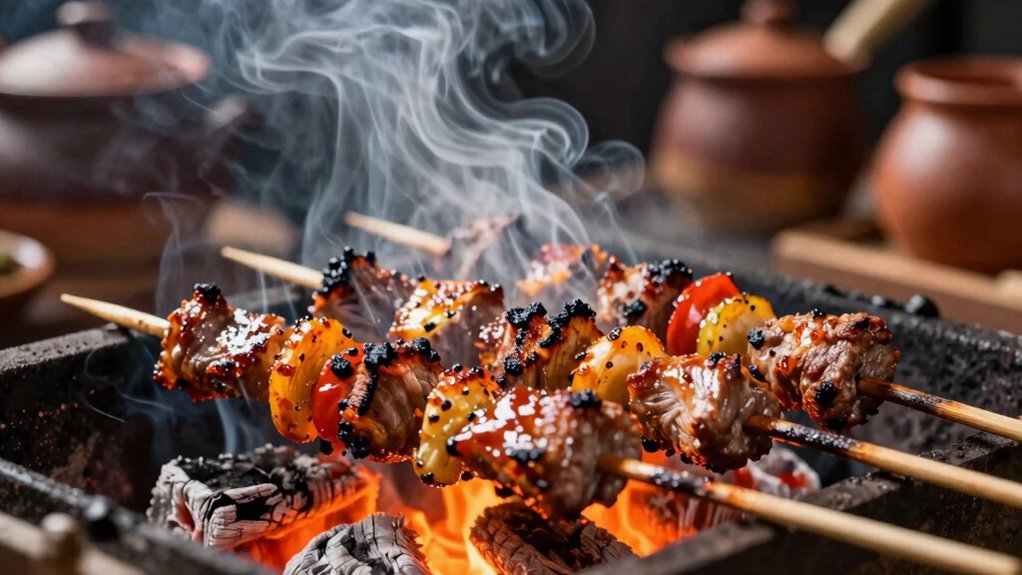

You can see how heat, smoke, and char shape cuisines differently by noticing their cultural significance. In Korean barbecue, high heat sears meat quickly, locking in flavor, while American smoking creates tender, smoky meats for gatherings. Mexican charring enhances the earthy flavors of peppers and corn, and Japanese techniques highlight craftsmanship. These methods reflect history, identity, and pride, turning simple ingredients into meaningful traditions. To explore how these techniques carry cultural stories, keep exploring further.

Get kitchen staples and gadgets delivered free — and shop member deals
- Fast, free delivery on millions of items
- Access to Prime Big Deal Days deals on October 6–7
- Prime Video, Amazon Music and more included
Key Takeaways
- Different regions use heat, smoke, and char to convey cultural identity and traditional storytelling through their unique culinary techniques.
- Techniques like high-heat searing, open-flame charring, or slow smoking create distinct flavors and textures in each cuisine.
- Cultural values influence the purpose of these methods, such as flavor enhancement, craftsmanship, or symbolic significance.
- Regional ingredients and climate conditions shape how heat, smoke, and char are applied in cooking practices.
- These methods evoke cultural pride and community, transforming ingredients into meaningful culinary expressions worldwide.
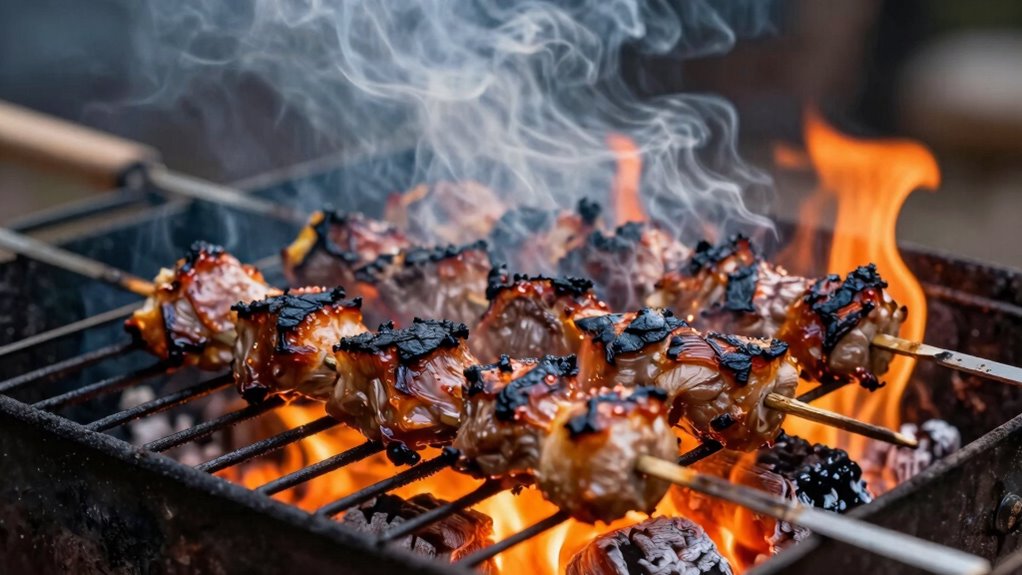
Cooking techniques that involve heat, smoke, and char are essential tools for revealing unique flavors and textures in your dishes. When you master these methods, you unlock layers of taste that go beyond simple ingredients. These techniques are more than just culinary tools; they carry cultural symbolism that connects food to history, tradition, and identity. Whether you’re grilling, smoking, or charring, you’re not only enhancing flavor but also paying homage to the culinary roots of various regions.
Mastering heat, smoke, and char unlocks deep flavors and honors culinary traditions across cultures and regions.
In many world cuisines, heat and smoke serve as crucial elements of cultural expression. For example, in Korean barbecue, the high heat sears meat quickly, locking in juices and imparting a smoky aroma that’s deeply rooted in Korean social gatherings. Similarly, in Mexican cuisine, the use of open-flame cooking and charring vegetables like peppers and corn creates a smoky, slightly bitter taste that’s fundamental to dishes like tacos and salsas. In these cases, the flavor enhancement from charring isn’t just about taste—it’s a symbol of tradition, often passed down through generations, embodying community and cultural pride.
Different cultures also interpret smoke and char in unique ways, shaping their culinary identities. In the American South, barbecue involves slow smoking meat over wood for hours, creating a tender interior with a smoky crust that’s celebrated as a hallmark of regional pride. In Japan, the artful charring of fish and vegetables on a hibachi grill brings out umami flavors while symbolizing craftsmanship and attention to detail. These techniques often serve as a form of storytelling, where each method and flavor profile reflects the history and values of a culture. When you apply heat, smoke, or create charred textures, you’re engaging with a culinary language that celebrates tradition and regional identity.
Moreover, these techniques influence how dishes are perceived and enjoyed across the globe. The smoky aroma of grilled meats or the charred notes in roasted vegetables evoke comfort and familiarity, often associated with communal meals and celebrations. Fundamentally, heat, smoke, and char do more than just enhance flavor—they serve as cultural symbols that connect people to their heritage. When you cook with these methods, you’re participating in a broader tradition that respects history, celebrates regional flavors, and transforms simple ingredients into meaningful culinary experiences. So, each time you grill or char, you’re not only creating delicious food but also honoring the cultural stories embedded in every smoky, charred bite.
As an affiliate, we earn on qualifying purchases.
Frequently Asked Questions
How Do Cultural Preferences Influence Heat and Smoke Levels in Cuisines?
You notice that cultural preferences greatly influence how much heat and smoke are used in cuisines. In some cultures, high heat and smoky flavors symbolize strength and resilience, rooted in cultural symbolism. Others prefer milder flavors for delicate dishes or food preservation, especially in hot climates. These choices reflect deep traditions, shaping dishes to honor heritage, practical needs, and the cultural significance of how food is prepared and enjoyed.
What Tools Are Essential for Controlling Heat, Smoke, and Char in Cooking?
Think of your tools as the maestros guiding your culinary symphony. A good thermometer helps you master heat distribution, ensuring your dish’s heart is just right. A smoker or smoke infuser allows you to craft smoky melodies, while a grill brush keeps char levels in check. Together, these tools give you control over smoke infusions and heat, turning simple ingredients into flavors that dance on your palate.
How Does Climate Impact Regional Differences in Cooking Techniques Involving Heat and Smoke?
Climate influences regional cooking techniques through adaptation, shaping how you use heat and smoke. In hotter, humid regions, you might rely on quicker, high-heat methods to prevent spoilage, while cooler climates favor slow smoking and charred flavors to preserve food. These climate adaptations create distinct regional flavors, as cooks tweak their methods to suit local conditions. Your cooking becomes a reflection of these environmental influences, giving each cuisine its unique character.
Are There Health Risks Associated With Excessive Smoke and Char in Foods?
Excessive smoke and char on foods can pose health concerns because they contain carcinogenic compounds, which may increase your risk of cancer. When you regularly eat heavily smoked or charred foods, you expose yourself to these harmful substances. To reduce health risks, it’s best to limit char and smoke, cook at moderate temperatures, and remove any burnt portions before eating. Being mindful of these practices helps protect your health while enjoying flavorful dishes.
How Have Modern Appliances Changed Traditional Methods of Using Heat and Smoke?
Think of traditional fire methods as the soul of authentic flavor, while modern grilling equipment acts as a sleek, efficient vessel. Modern appliances have transformed how you use heat and smoke, offering precise temperature controls and safety features. This shift allows you to achieve the same smoky richness and charred perfection with less effort and risk, making traditional techniques more accessible and consistent, yet still deeply rooted in culinary artistry.
Conclusion
You now see how heat, smoke, and char influence world cuisines, creating unique flavors and textures. Did you know that over 90% of traditional cooking methods across cultures involve some form of smoke or charring? Next time you enjoy a smoky barbecue or a perfectly grilled dish, appreciate the centuries of culinary evolution behind it. Embrace these techniques—they’re not just cooking styles but stories of culture, climate, and craftsmanship shaping every bite.
Fall Picks
fall essentials
As an affiliate, we earn on qualifying purchases.