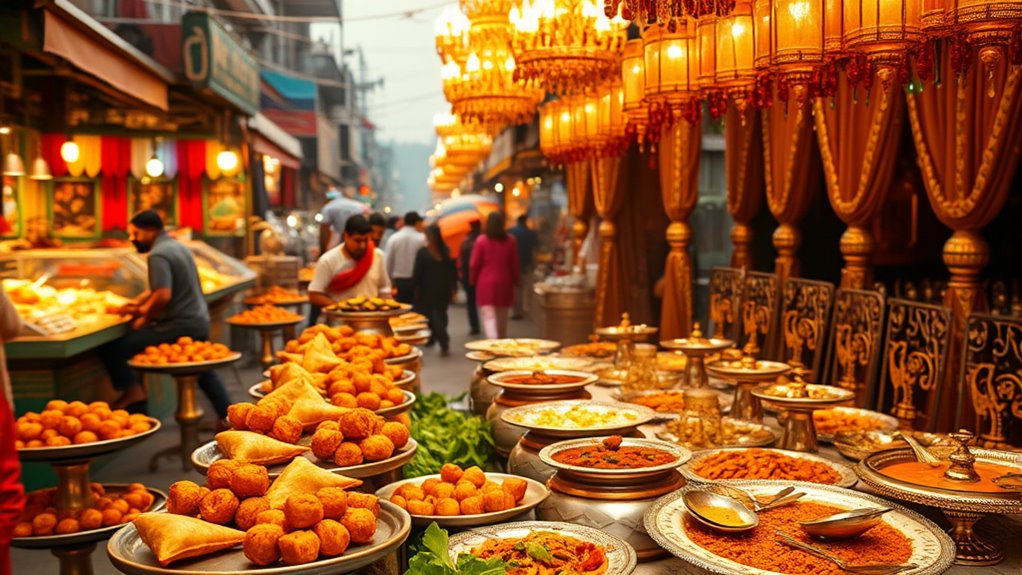

Discover the vibrant world of Indian cuisine, rich in regional flavors, bold spices, and diverse preparations. From bustling street snacks like pani puri and vada pav to luxurious royal dishes infused with saffron, each region offers unique tastes shaped by history and culture. Street foods reflect local ingenuity, while royal feasts showcase opulence and tradition. Explore how these culinary traditions intertwine, and you’ll uncover the fascinating stories behind each mouthwatering bite. Keep exploring to learn more.
Key Takeaways
- Indian cuisine showcases diverse regional flavors, from fiery street snacks to rich royal dishes.
- Street foods like pani puri and vada pav reflect local ingenuity and everyday culture.
- Mughal influences introduced luxurious ingredients and elaborate gravies for regal feasts.
- Spices and ingredients vary by region, shaping distinctive culinary traditions and techniques.
- Food in India is a cultural celebration connecting communities, history, and regional identities.

Are you curious about the vibrant flavors and rich traditions behind Indian cuisine? If so, you’ll find yourself captivated by the way each dish tells a story of history, culture, and regional artistry. Indian food is renowned for its bold use of regional spices, which are the backbone of its distinctive flavors. From the fiery heat of Kashmiri red chili to the warm aroma of turmeric from the south, each spice plays a crucial role in shaping a dish’s character. These spices aren’t just ingredients; they’re woven into the very fabric of India’s culinary traditions, passed down through generations with reverence and skill. When you explore Indian cuisine, you’re exploring a mosaic of regional influences, each offering unique tastes and techniques. Northern curries often feature creamy gravies flavored with garam masala, while southern dishes emphasize rice, coconuts, and mustard seeds. The West brings a blend of coastal seafood and spicy snacks, and the East showcases rice-based sweets and fish curries. This regional diversity means that no matter where you go in India, you’ll encounter a different set of flavors and ingredients that reflect local agriculture, climate, and history.
As you immerse yourself in Indian cuisine, you realize that its culinary traditions are deeply rooted in community and celebration. Food isn’t just sustenance; it’s a way to connect, share, and honor customs. Street food plays a huge role in this cultural tapestry. Quick bites like pani puri, vada pav, or kebabs are not just snacks—they’re cultural symbols that bring people together in bustling markets and street corners. These street foods showcase the ingenuity of Indian cooks, blending simple ingredients with complex spices to create unforgettable flavors in a matter of minutes. Moving from street stalls to royal kitchens, you’ll notice how culinary traditions evolve into elaborate feasts fit for kings and queens. Mughal influence introduced rich gravies, saffron-infused rice, and decadent sweets that elevated Indian cuisine to a regal level. These royal dishes often feature luxurious ingredients like nuts, dried fruits, and fragrant spices, reflecting the grandeur of India’s historical courts.
Learning about Indian cuisine means understanding these layers of tradition, regional diversity, and culinary artistry. Recognizing the culinary heritage behind each dish helps deepen appreciation for the country’s diverse food landscape. Whether you’re savoring a spicy chaat from a street vendor or indulging in a royal biryani at a fancy restaurant, you’re experiencing a cuisine that’s as diverse as the country itself. Each bite offers a glimpse into India’s history, its people’s creativity, and their unwavering love for flavor. So, when you next taste an Indian dish, remember it’s more than just food—it’s a celebration of centuries of culture, regional spices, and culinary traditions coming together in perfect harmony.
Frequently Asked Questions
What Are the Most Popular Vegetarian Dishes in India?
You’ll find that popular vegetarian dishes in India include dal, chana masala, and paneer tikka, which are rich in plant-based proteins. During vegetarian festivals, these dishes become even more prominent, celebrated for their flavors and nutritional value. You might also enjoy dishes like aloo gobi and saag, which showcase the diversity of Indian vegetarian cuisine. These meals highlight the vibrant, plant-based options that are central to Indian culinary traditions.
How Do Indian Spices Influence the Flavor Profile of Dishes?
Imagine you’re a chef in a spice bazaar, where Indian spices create a symphony of flavors. They influence your dishes by adding depth through spice combinations and flavor layering. You control the heat of chili, the earthiness of cumin, and the aroma of cardamom, which together craft complex, vibrant tastes. These spices don’t just flavor; they tell stories, making every dish uniquely Indian and unforgettable.
What Is the History Behind Traditional Indian Desserts?
You’ll find that traditional Indian desserts have rich origins rooted in ancient sweet symbolism and cultural history. They often trace back to ancient times, with origins in religious rituals and royal kitchens, showcasing the importance of sweetness in celebrations. From mithai to halwa, their dessert origins highlight a blend of regional ingredients and traditions, making them an integral part of India’s culinary heritage and festive spirit.
How Do Regional Variations Affect Indian Culinary Styles?
You’ll find that regional variations shape Indian culinary styles more than you can imagine, turning every dish into a vibrant masterpiece. Local ingredients like coconut in the South or mustard seeds in the North drastically influence flavors, making each region’s cuisine uniquely spectacular. This diversity fuels India’s culinary scene, creating a tapestry of tastes that reflect local climates, cultures, and history—making Indian food an endless adventure of flavor.
What Are Common Etiquette Tips When Eating Indian Food?
When eating Indian food, you should follow proper table manners and respect dining customs. Use your right hand for eating, as it’s considered polite and customary. Avoid wasting food and be mindful of communal dishes by using serving spoons. Keep your hands clean, and don’t point fingers at others. Showing gratitude and engaging politely with your hosts enhances the experience. Remember, good etiquette shows appreciation for the rich cultural traditions.
Conclusion
As you explore Indian cuisine, remember it’s like a vibrant tapestry woven with flavors, stories, and traditions. Just last year, I tried street-side pani puri, and it was like tasting a burst of happiness in every bite—proof that Indian food isn’t just about ingredients, but the culture and history behind them. So go ahead, embrace the journey from bustling markets to regal dining, and let each dish tell its own delicious story.