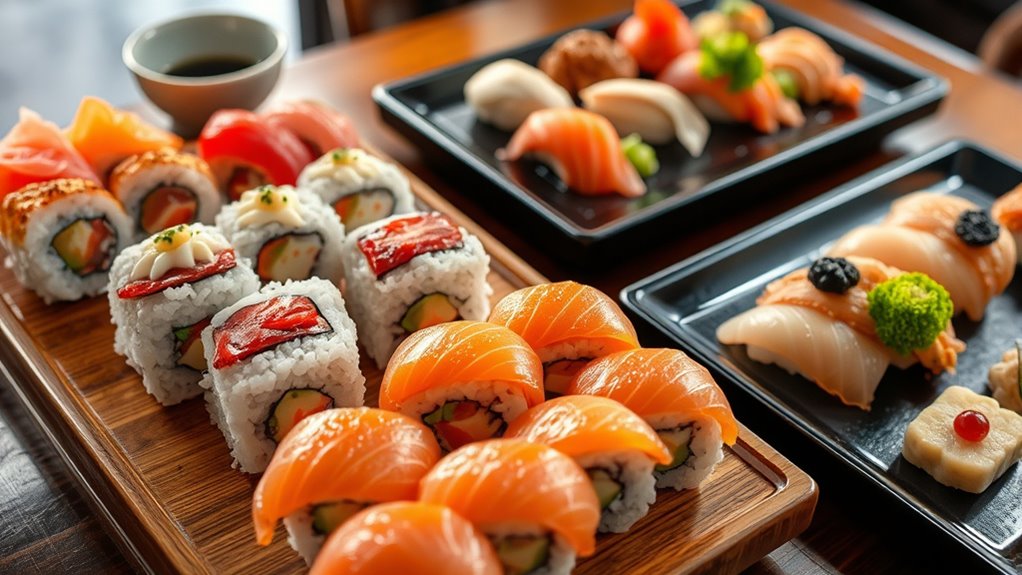

Japanese cuisine offers a diverse array of dishes, from fresh sushi that highlights minimal intervention and regional fish freshness, to intricate kaiseki meals that reflect seasonal ingredients and traditional techniques like steaming and grilling. These methods showcase centuries-old cultural values and regional flavors, emphasizing natural tastes and ingredient quality. Your journey into this cuisine reveals how locals preserve culinary identity through techniques and regional ingredients. If you explore further, you’ll uncover even more about Japan’s rich gastronomic heritage.
Key Takeaways
- Japanese cuisine emphasizes fresh ingredients, traditional techniques like steaming, grilling, and raw preparations, preserving authenticity and natural flavors.
- Regional ingredients such as seafood in coastal areas and preserved foods inland shape diverse dishes across Japan.
- Sushi highlights minimal intervention to maintain fish freshness, while Kaiseki showcases elaborate, multi-course dining rooted in seasonal ingredients.
- Techniques like tempura battering and delicate presentation reflect centuries-old culinary craftsmanship.
- Regional variations and preservation methods contribute to Japan’s rich and diverse gastronomic identity.

Have you ever wondered what makes Japanese cuisine so uniquely appealing? It’s a blend of centuries-old traditions, precise techniques, and a deep respect for regional ingredients. Traditional cooking methods play a crucial role in shaping the flavors and presentation that define Japanese food. Techniques like steaming, grilling, simmering, and raw preparations are passed down through generations, each method highlighting the natural taste of ingredients without overwhelming them. For example, the delicate art of sushi relies on minimal intervention, where fish is often served raw to preserve its freshness, while tempura involves light, airy battering that emphasizes crispness. These methods aren’t just about flavor; they’re about preserving the integrity of each component. Analysis of competitor strategies can also reveal how Japanese cuisine maintains its unique identity amid global influences.
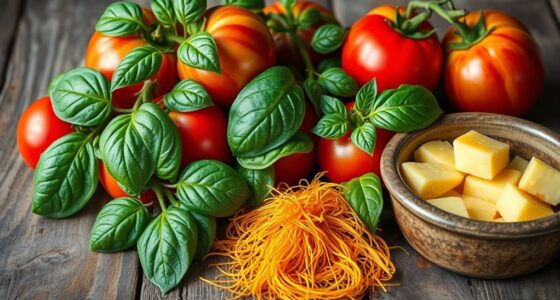
Japanese cuisine combines age-old techniques like steaming and grilling with a deep respect for fresh, regional ingredients.
What truly sets Japanese cuisine apart is its emphasis on regional ingredient variations. Across Japan’s diverse landscapes, local produce, seafood, and seasonings influence the dishes uniquely. In coastal areas, fresh fish and shellfish are staples, making sashimi and grilled fish common. Inland regions might favor hearty ingredients like rice, root vegetables, and preserved foods, which reflect their agricultural and climatic conditions. For instance, the delicate art of sushi relies on minimal intervention, where fish is often served raw to preserve its freshness, while tempura involves light, airy battering that emphasizes crispness. These methods aren’t just about flavor; they’re about preserving the integrity of each component. In the colder northern region of Hokkaido, you’ll find dishes crafted with hearty seafood like crab and salmon, while in the warmer southern Okinawa, tropical fruits and fresh vegetables take center stage. This regional ingredient variation ensures that each area offers a distinct culinary identity that resonates with local traditions and available resources.
Frequently Asked Questions
What Are the Most Popular Regional Japanese Dishes?
You’ll find that regional Japanese dishes showcase incredible culinary diversity and local flavors. In Osaka, you’ll love takoyaki, a savory octopus ball, while in Hiroshima, okonomiyaki offers a hearty, layered pancake experience. Hokkaido’s fresh seafood and miso ramen highlight the north’s coastal offerings, and Kyoto’s kaiseki reflects refined traditional flavors. Exploring these regional dishes lets you enjoy Japan’s rich culinary diversity and authentic local tastes firsthand.
How Has Japanese Cuisine Evolved Over Centuries?
Imagine Japanese cuisine as a flowing river, constantly reshaping itself. Over centuries, its history evolution reflects a blend of culinary influences—from ancient agricultural practices to Chinese and Western flavors. You see how tradition and innovation merge, creating dishes that honor heritage yet adapt to modern tastes. This ongoing journey shapes every sushi roll and kaiseki meal, showing how Japan’s food culture stays vibrant by embracing change while treasuring its roots.
What Are Traditional Japanese Dining Etiquette Rules?
When dining in Japan, you should follow proper dining manners, like placing utensils correctly—forks and knives go on the sides, chopsticks rest on the holder or across your bowl. Always say “Itadakimasu” before eating and “Gochisousama” afterward as gratitude. Avoid sticking chopsticks upright in rice, which is considered impolite, and don’t point with them. Respect the meal and maintain quiet, attentive behavior throughout.
How Do Seasonal Ingredients Influence Menu Choices?
Seasonal ingredient sourcing directly influences your menu choices by highlighting fresh, in-season produce, seafood, and vegetables. You adapt your menu strategies by incorporating these ingredients to showcase their peak flavors and authenticity. This approach not only enhances the dining experience but also emphasizes sustainability and respect for nature’s cycles. By focusing on seasonal ingredients, you create dynamic menus that reflect the time of year and celebrate Japan’s rich culinary traditions.
What Are the Health Benefits of Japanese Ingredients?
You benefit from Japanese ingredients like Japanese superfoods and fermented staples, which boost your health. These ingredients are rich in antioxidants, probiotics, and essential nutrients. For example, seaweed provides iodine and minerals, while fermented staples like miso and natto promote gut health. Incorporating these into your diet can improve digestion, strengthen your immune system, and support overall well-being, making Japanese cuisine both delicious and healthful.
Conclusion
Japanese cuisine offers a rich tapestry of flavors, from the simple elegance of sushi to the intricate artistry of kaiseki. Did you know that Japan consumes over 10 million tons of rice annually, highlighting its importance in the diet? As you explore these dishes, remember that each bite reflects centuries of tradition and craftsmanship. Embrace the experience, and let Japan’s culinary artistry inspire your own adventures in the kitchen.