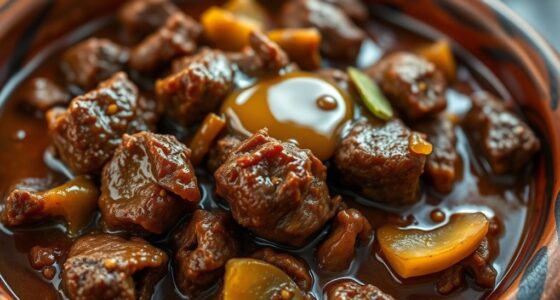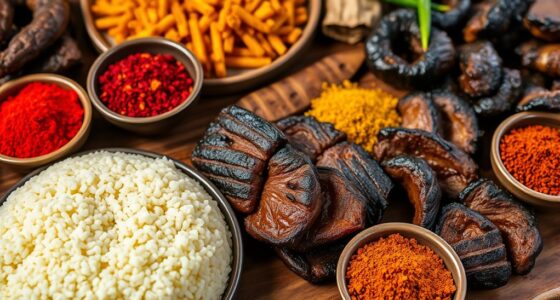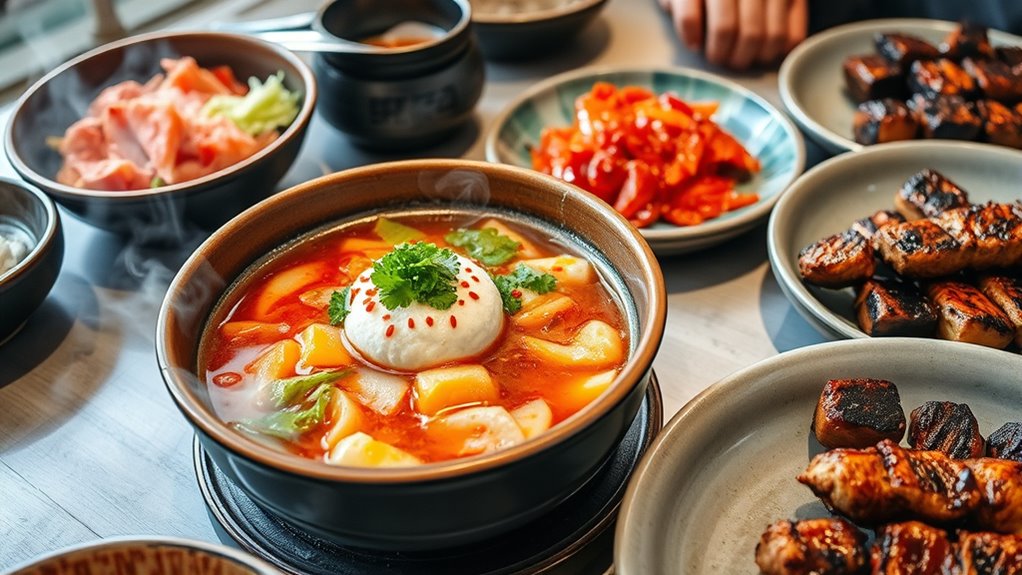

Korean cuisine is a vibrant blend of flavors, traditions, and social dining. You’ll find iconic dishes like kimchi, a fermented vegetable side that adds tang and health benefits, and bibimbap, a colorful mixed rice bowl balancing spicy, savory, and sweet tastes. Korean barbecue is an interactive experience where you grill marinated meats at your table. Exploring these dishes reveals a culture rich in history and innovation—if you keep exploring, you’ll discover even more fascinating flavors.
Key Takeaways
- Kimchi is a traditional fermented vegetable dish, highlighting Korea’s mastery of fermentation for flavor and health benefits.
- Bibimbap is a colorful mixed rice dish emphasizing balance and harmony through diverse ingredients and vibrant presentation.
- Korean barbecue features communal grilling of marinated meats, blending traditional flavors with modern fusion influences.
- Fermentation techniques in Korean cuisine create signature tangy, pungent flavors, evolving with innovative ingredients and methods.
- Korea’s culinary tradition seamlessly combines old techniques with new trends, fostering a dynamic and culturally rich food scene.
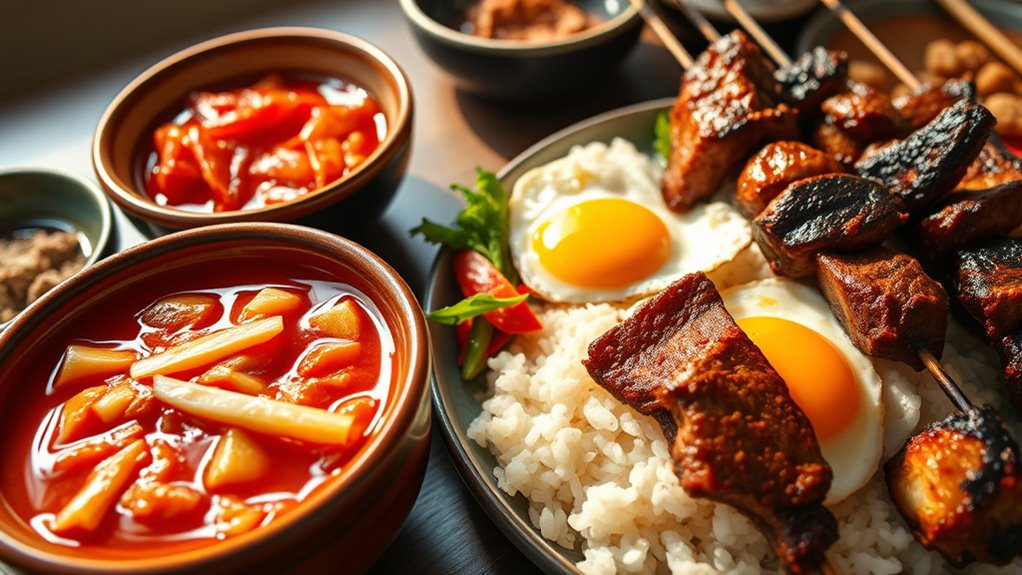
Have you ever wondered what makes Korean cuisine so unique and flavorful? The answer lies in its rich history of traditional fermentation paired with a daring embrace of modern fusion. Traditional fermentation has been a cornerstone of Korean food for centuries, transforming simple ingredients into complex, tangy flavors that define dishes like kimchi. This age-old method involves fermenting vegetables, especially cabbage and radishes, in salt and spices, which not only enhances taste but also boosts health benefits by promoting gut health and preserving nutrients. The process is meticulous, requiring patience and skill, but it results in a signature flavor profile that’s both pungent and deeply satisfying. Over time, Korean chefs and home cooks have refined their techniques, maintaining the essence of traditional fermentation while also experimenting with new ingredients and flavors. This blending of old and new has led to a vibrant culinary scene where classic dishes are continually reimagined, appealing to both purists and adventurous eaters alike. Today, you’ll find restaurants serving innovative kimchi varieties, incorporating ingredients like apples, garlic, or even seafood, showcasing how modern fusion complements traditional fermentation.
Korean cuisine is also renowned for its balance of flavors, textures, and presentation, which can be seen clearly in dishes like bibimbap and barbecue. Bibimbap, a colorful mixed rice dish, combines seasoned vegetables, marinated meats, and a fried egg, all stirred together with spicy gochujang sauce. It exemplifies how Korean food celebrates harmony—balancing spicy, savory, sweet, and sour elements in a single bowl. The dish’s versatility allows for endless variations, from vegetarian options to more elaborate meaty versions, reflecting contemporary influences while respecting traditional roots. Similarly, Korean barbecue showcases how grilling meats like beef, pork, or chicken is a social event, emphasizing communal dining. Marinades often incorporate ingredients like soy sauce, sesame oil, and garlic, which have been staples for generations, but modern chefs also experiment with fusion flavors, adding elements like citrus or hot peppers from other cuisines. The artful presentation, combined with the interactive experience of cooking at the table, makes Korean barbecue a dynamic culinary activity that highlights Korea’s culinary adaptability.
In essence, Korean cuisine’s appeal stems from its ability to honor age-old techniques like traditional fermentation while boldly exploring modern fusion. This dynamic approach keeps the cuisine fresh and exciting, inviting you to enjoy familiar flavors alongside innovative twists. Whether savoring the tang of well-aged kimchi, the vibrant mix of bibimbap, or the sizzling experience of barbecue, you’re engaging with a culinary tradition that seamlessly blends history with innovation. It’s this delicate balance that makes Korean food both comforting and exhilarating, offering a taste of Korea’s rich cultural tapestry in every bite.
Frequently Asked Questions
What Are the Regional Variations of Korean Cuisine?
You’ll notice regional variations of Korean cuisine in spice levels and seafood dishes. In the south, dishes tend to be spicier, while northern regions favor milder flavors. Coastal areas feature regional seafood dishes like grilled clams and raw fish, highlighting freshness. You’ll see these differences in ingredients and preparation styles, giving each region a unique culinary identity that reflects local tastes, ingredients, and traditions.
How Has Korean Cuisine Evolved Over Centuries?
You see, Korean cuisine has evolved over centuries through Korean fermentation methods, like making kimchi, which preserved food and enhanced flavor. The influence of neighboring cuisines, such as Chinese and Japanese, introduced new ingredients and cooking techniques, enriching traditional dishes. Over time, these elements blended, creating a diverse culinary landscape. Today, you enjoy a vibrant mix of flavors that reflect Korea’s history, regional diversity, and cultural exchanges.
What Are Traditional Korean Dining Etiquette Practices?
Did you know Koreans place great importance on respecting elders during meals? You should always wait for the eldest to start eating and avoid sticking chopsticks upright in rice. Table manners emphasize modesty and harmony, so keep your voice low and handle shared dishes carefully. Understanding these dining customs shows respect and helps you fully appreciate Korea’s rich food culture while enjoying your meal with proper etiquette.
Are There Any Health Benefits Associated With Korean Dishes?
You’ll find that Korean dishes offer notable health benefits, especially due to fermented foods like kimchi, which boost your gut health and strengthen your immune system. Spicy flavors in dishes like kimchi and gochujang can boost metabolism and improve digestion. Regularly enjoying these traditional foods can help you maintain a balanced diet, rich in probiotics and antioxidants, contributing to overall well-being and long-term health benefits.
How Can I Make Authentic Korean Dishes at Home?
To make authentic Korean dishes at home, start by sourcing authentic ingredients like gochujang, sesame oil, and Korean chili flakes. Use homemade fermentation for dishes like kimchi by fermenting cabbage and radishes with traditional methods. Follow trusted recipes and pay attention to details like seasoning and cooking techniques. With patience and authentic ingredient sourcing, you’ll create flavorful, genuine Korean dishes that taste just like those from a Korean restaurant.
Conclusion
As you explore Korean cuisine, you’ll discover how dishes like kimchi, bibimbap, and barbecue reflect rich traditions and bold flavors. Embrace the journey, knowing that food is more than just nourishment—it’s a window into culture and history. Remember the saying, “You are what you eat,” and let each meal deepen your appreciation for Korea’s culinary soul. By savoring these flavors, you’ll gain a true taste of Korea’s vibrant spirit.