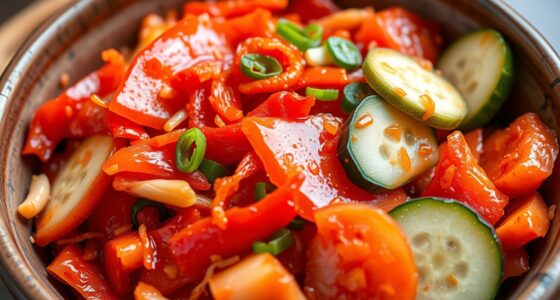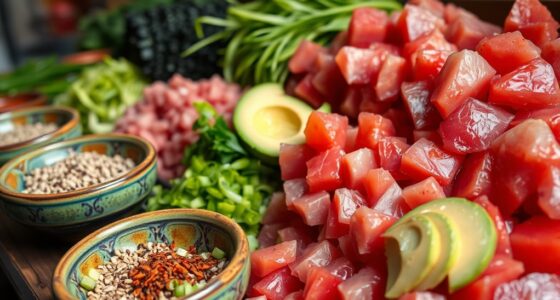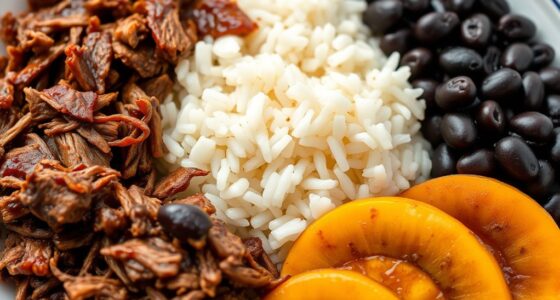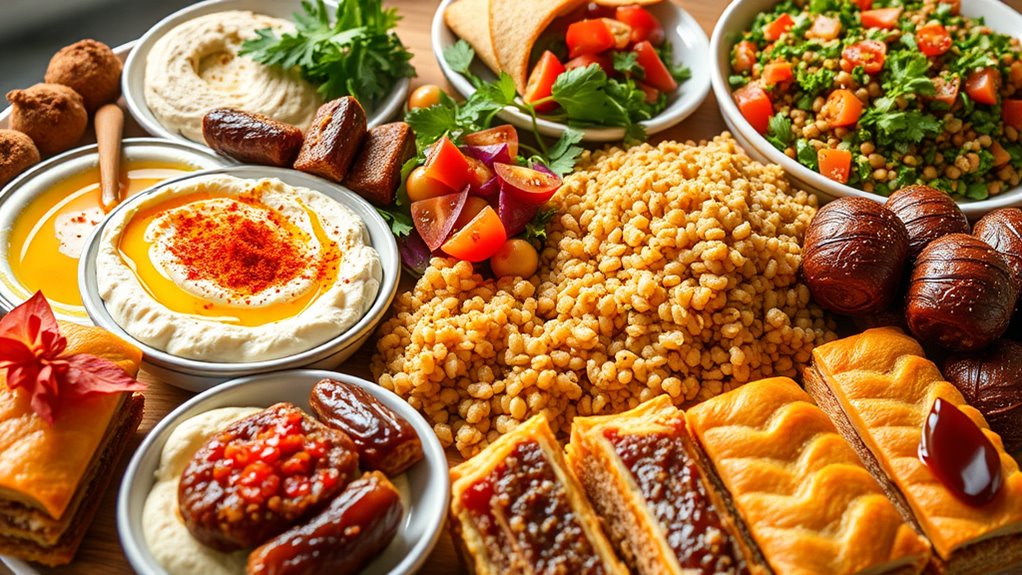

Lebanese cuisine invites you to enjoy vibrant flavors through mezze, a variety of small shared plates like hummus, baba ghanoush, and tabbouleh that are perfect for social dining. You’ll also find kibbeh, a delicious dish made from bulgur and meat, showcasing Lebanese ingenuity. Finish your meal with rich desserts like baklava and ma’amoul, featuring honey, nuts, and milk-based sweets. Discover how this culinary journey blends tradition with modern twists if you continue exploring further.
Key Takeaways
- Lebanese cuisine features a variety of mezze, small sharing plates like hummus, tabbouleh, and baba ganoush, emphasizing fresh ingredients.
- Kibbeh is a versatile Lebanese dish made from bulgur, meat, and spices, showcasing culinary ingenuity and traditional preparation methods.
- Rich Lebanese desserts include honey-drizzled pastries, nuts, and milk-based sweets like baklava and ma’amoul, often enjoyed during celebrations.
- Mezze promotes social dining, fostering communal sharing and highlighting the use of simple, vibrant ingredients.
- Modern fusion influences integrate traditional dishes with contemporary techniques, enhancing flavors and presentation while maintaining authenticity.
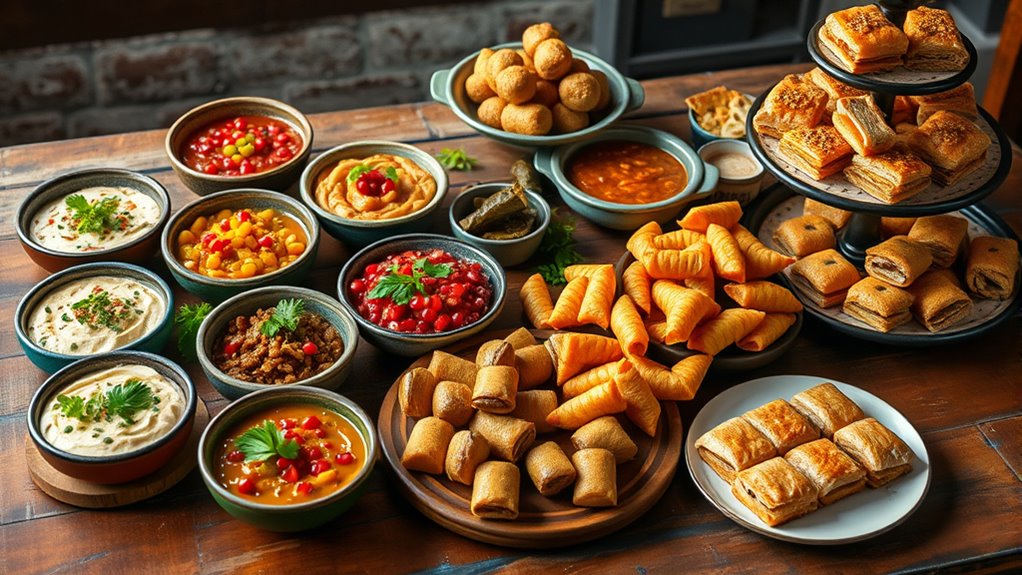
Lebanese cuisine is a vibrant and flavorful reflection of the country’s rich history and diverse cultural influences. It’s a culinary tapestry woven from centuries of tradition, yet constantly evolving to include modern fusion elements. When you experience Lebanese food, you’re not just tasting ingredients—you’re engaging with a story that spans generations. Traditional cooking remains at the heart of this cuisine, emphasizing fresh, local produce, aromatic herbs, and time-honored techniques. Dishes like hummus, tabbouleh, and falafel showcase how simple ingredients can create extraordinary flavors. These recipes have been passed down through families, preserving the authenticity that defines Lebanese cooking. The use of natural ingredients is fundamental to achieving the vibrant flavors characteristic of Lebanese dishes. However, contemporary chefs and food enthusiasts are also blending tradition with innovation. Modern fusion techniques bring new twists to classic dishes, creating exciting flavor combinations that appeal to a global palate. For instance, you might find a Lebanese-inspired sushi roll or a fusion mezze platter that combines traditional dips with unexpected ingredients like avocado or spicy sauces. This blending of old and new keeps Lebanese cuisine relevant and dynamic, attracting a broader audience without losing its roots. You can appreciate how traditional cooking techniques, such as slow-cooking kibbeh or preparing fresh flatbreads, coexist seamlessly with inventive presentations and global influences. It’s a dance between maintaining authenticity and embracing creativity.
Lebanese cuisine blends tradition with modern flair, preserving authentic flavors while embracing creative fusion techniques.
When you explore Lebanese cuisine, mezze is an essential experience. These small, shared plates showcase a variety of flavors—from creamy baba ganoush to tangy labneh—highlighting the importance of social dining. Each dish invites you to taste a different aspect of Lebanon’s culinary heritage. Alongside mezze, kibbeh stands out as a symbol of Lebanese ingenuity. Made from bulgur, minced meat, and spices, it can be fried, baked, or served raw. Its versatility reflects the adaptability of Lebanese cooking, which honors tradition while accommodating modern tastes. Whether you prefer the classic, hearty versions or contemporary reinterpretations, kibbeh exemplifies the cuisine’s balance of history and innovation. Lebanese desserts are equally rich and diverse, featuring honey-drizzled pastries, nut-filled sweets, and creamy milk-based treats. These desserts often carry stories of festive celebrations and family gatherings, serving as a mark of Lebanese ingenuity. As you indulge, you’ll notice how these confections blend age-old recipes with modern presentation styles, making them as beautiful as they are delicious. In essence, Lebanese cuisine captures a harmonious mix of traditional cooking and modern fusion, inviting you to savor a culinary journey that’s rooted in history yet open to the future.

Jeanne Fitz Chip and Dip Serving Set – 14"x10.5" Porcelain Serving Tray for Olive Oil, Balsamic Vinegar, Veggie Tray, Fruit Platter, Caviar Serving Set, Hosting Essentials, Party Trays and Platters
Mediterranean Style Serving Tray – If you love Mediterranean appetizers, this serving platter is for you. The olive…
As an affiliate, we earn on qualifying purchases.
As an affiliate, we earn on qualifying purchases.
Frequently Asked Questions
What Are the Origins of Lebanese Mezze Dishes?
You’ll find that Lebanese mezze dishes have rich history origins shaped by diverse cultural influences. Their development dates back centuries, blending influences from Phoenician, Arab, Ottoman, and Mediterranean cuisines. This mix reflects Lebanon’s position as a crossroads of civilizations, which is why mezze offers a variety of flavors and ingredients. You can enjoy these dishes today as a celebration of Lebanon’s vibrant history and its ongoing culinary traditions.
How Is Kibbeh Traditionally Prepared Across Lebanon?
You prepare kibbeh traditionally by mixing bulgur, minced onions, and spices for the shell, then filling it with seasoned ground meat, nuts, and herbs. You can shape it into torpedoes, balls, or bake it as a casserole. Following traditional recipes, you might fry, bake, or serve it raw as kibbeh nayyeh. Each method highlights the rich flavors and cultural heritage of Lebanese cuisine.
Which Lebanese Desserts Are Gluten-Free?
When it comes to Lebanese dessert options, you’re in luck—many are gluten-free treats. You can enjoy favorites like fresh fruit salads, nuts and dates stuffed with almonds, and certain types of baklava made with gluten-free phyllo dough. It’s a case of hitting the jackpot here, as many traditional sweets naturally avoid wheat or gluten. Just double-check ingredients to verify they fit your dietary needs and indulge in these delicious Lebanese desserts.
What Are the Regional Variations in Lebanese Cuisine?
You’ll notice regional variations in Lebanese cuisine through differences in regional olive varieties and traditional cooking methods. In coastal areas, olive oil from specific varieties influences flavor, while inland regions use different techniques like open-flame grilling or baking. These regional nuances give each area a unique culinary identity, blending local ingredients and traditional methods to create authentic dishes that reflect Lebanon’s diverse cultural landscape.
How Do Lebanese Spices Influence Flavor Profiles?
Spices in Lebanese cuisine act as a symphony, where each blend symbolizes tradition and history. You’ll notice how spice blends like za’atar and sumac enhance flavor profiles, adding depth and brightness to dishes. They don’t just season; they elevate, creating layers of complexity that invite you to explore each bite. These spices influence flavor enhancement, transforming simple ingredients into vibrant, memorable culinary experiences.

Kibbeh Rolls Maker & Meatball Mold – DIY Plastic Manual Meatloaf Maker Press Tool for Making Fried Kibbeh (9 Grids)
Make Kibbeh Faster and Larger: Make 9 large size kibbeh balls at one time, Save your food preparation…
As an affiliate, we earn on qualifying purchases.
As an affiliate, we earn on qualifying purchases.
Conclusion
So, next time you indulge in Lebanese mezze, kibbeh, or those decadently sweet desserts, remember—you’re not just feasting; you’re participating in a culinary symphony that’s been perfected over centuries. Who knew that a humble plate could carry so much history, culture, and, let’s be honest, butter? So go ahead, savor every bite—after all, you’re officially part of Lebanon’s deliciously complicated story, one forkful at a time. Bon appétit!

Cerez Pazari Baklava Pastry 8.5oz, Baklava Gift Box with Rich Pistachios, Walnuts, Hazelnuts and Cashews, Halal Shatila Baklava, Traditional Turkish Arabic Dessert Gift Box, Sweet Food Gifts for Women
EXPERIENCE THE DELICIOUS TASTE OF GOURMET BAKLAVA SWEETS ASSORTMENT : Witness The Original, Mouth Watering And Pure Baklava…
As an affiliate, we earn on qualifying purchases.
As an affiliate, we earn on qualifying purchases.

Mezete Gourmet Dips | No Added Oils or Sugar | Roasted Eggplant Spread and Dip | Authentic Middle Eastern | Baba Ganoush | Ready to Serve | Smoky Flavor | Non-GMO | Gluten Free | 180g (Pack of 6)
ALL-NATURAL – Mezete Eggplant Dip is crafted from premium, natural ingredients, including smoky roasted eggplant, velvety tahini (sesame…
As an affiliate, we earn on qualifying purchases.
As an affiliate, we earn on qualifying purchases.