Middle Eastern cuisine is full of vibrant flavors found in dishes like hummus and falafel, which vary by region. You’ll notice spice blends like cumin, sumac, and za’atar that add warmth and tanginess, while traditional techniques like slow-cooking and frying enhance texture and aroma. Each area puts its unique spin on these classics, reflecting local ingredients and cultures. Exploring these variations reveals the rich history behind the flavors — and there’s much more to uncover next.

Get kitchen staples and gadgets delivered free with Prime
- Fast, free delivery on millions of items
- Prime Video, Amazon Music and more included
- Member-only deals all year
Key Takeaways
- Hummus and falafel are staple Middle Eastern dishes with regional variations influenced by local ingredients and flavors.
- Traditional recipes use Mediterranean spices like cumin, sumac, and za’atar to enhance depth and authenticity.
- Cooking techniques such as slow soaking, blending, and frying preserve cultural heritage and improve flavor.
- Regional differences are reflected in toppings, presentation, and ingredient choices, e.g., olive oil in Lebanon or pickles in Egypt.
- Spices and methods carry cultural significance, showcasing regional identity and culinary history within Middle Eastern cuisine.

Have you ever wondered what makes Middle Eastern cuisine so rich and flavorful? The answer lies in the masterful use of Mediterranean spices and traditional cooking techniques that have been passed down through generations. These elements work together to create dishes bursting with aroma, depth, and authenticity that captivate your senses with every bite. When you explore dishes like hummus and falafel, you’ll quickly notice how essential these spices and techniques are to achieving the distinctive taste that defines the region.
Middle Eastern flavors come alive through spices and traditional cooking techniques, creating rich, authentic dishes that delight the senses.
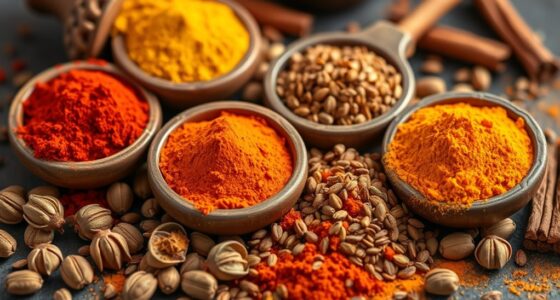
Mediterranean spices such as cumin, coriander, sumac, and za’atar are fundamental to Middle Eastern cooking. They are used generously to season everything from dips to grilled meats, imparting a warm, earthy, and slightly tangy flavor profile. These spices aren’t just added for flavor; they carry cultural significance, often used in specific combinations that reflect regional identities. For example, a sprinkle of sumac adds a lemony brightness to salads and grilled vegetables, while cumin lends a smoky aroma to legume-based dishes. When you prepare traditional recipes, you’ll notice how these spices elevate the ingredients, creating a complex, layered taste that’s both comforting and exciting.
In addition to the spices, traditional cooking techniques play a crucial role in shaping Middle Eastern cuisine. These methods, honed over centuries, emphasize slow cooking, grilling, and preserving ingredients to maximize flavor. For hummus, you might soak and cook chickpeas from scratch, blending them with tahini, garlic, lemon juice, and spices, all while maintaining a gentle hand to preserve the silky smooth texture. When making falafel, you’ll combine soaked chickpeas or fava beans with herbs and spices, then shape and fry them to golden perfection. The frying process, often done in hot oil, creates a crispy exterior while keeping the interior tender—an essential feature of authentic falafel. These traditional techniques not only enhance taste but also honor the culinary history of the region. Additionally, understanding the cultural significance behind these methods enriches your appreciation of the cuisine.
Regional variations add even more depth to Middle Eastern cuisine. In Lebanon, you might find hummus topped with olive oil and pine nuts, whereas in Egypt, it’s often served with a hard-boiled egg or pickles. Similarly, falafel recipes differ from country to country, with some adding herbs like parsley or dill, and others incorporating spices such as cumin or coriander more prominently. These differences originate from local ingredients, climate, and cultural influences, making every dish a unique expression of its place of origin.
As an affiliate, we earn on qualifying purchases.
Frequently Asked Questions
What Are the Origins of Traditional Middle Eastern Spices?
You should know that traditional Middle Eastern spices trace their origins to historic spice trade routes connecting Asia, Africa, and Europe. These routes introduced unique flavor profiles, blending aromatic ingredients like cumin, coriander, and sumac into regional cuisines. As a result, the spices became essential for creating rich, complex dishes. The region’s climate and culture also influenced spice cultivation, making these flavors an integral part of Middle Eastern culinary identity.
How Do Regional Climates Influence Ingredient Choices?
You’ll notice that regional climates greatly influence ingredient choices through climate-driven agriculture and seasonal ingredient availability. In hot, dry areas, you’ll find ingredients like olives, citrus, and herbs thriving, shaping local dishes. Cooler regions might offer more grains and root vegetables. This climate-driven agriculture guarantees you enjoy fresh, seasonal ingredients that reflect your region’s unique environment, influencing the flavors and diversity of Middle Eastern cuisine.
Are There Specific Etiquette Practices for Eating Middle Eastern Dishes?
When eating Middle Eastern dishes, you should follow local dining customs and serving etiquette. Typically, you use your right hand for eating, especially with bread and shared dishes. Avoid sticking your hand into communal plates or using utensils unless specified. Respect traditional practices like passing dishes politely and sharing generously. Observing these customs shows appreciation and helps you enjoy the authentic experience with proper etiquette.
What Are the Variations of Hummus Across Different Countries?
You’ll notice that hummus varies across countries, reflecting regional flavor profiles and cultural presentation styles. In Lebanon, it’s often smooth with a lemony tang, while in Egypt, it can include tahini and be thicker. In Palestine, you might find a chunkier texture served with fresh vegetables. These differences showcase local tastes and traditions, so try each version to truly appreciate the diversity within Middle Eastern cuisine.
How Do Dietary Restrictions Shape Regional Cuisine Adaptations?
While dietary restrictions can seem limiting, they actually inspire creativity in regional cuisine. You’ll find gluten-free adaptations like chickpea-based dishes replacing wheat, and vegan substitutions such as using tahini instead of dairy. These modifications challenge traditional recipes, pushing chefs to innovate. As a result, regional cuisines become more inclusive, blending authenticity with contemporary dietary needs, and offering diverse, flavorful options that respect various health and ethical choices.
Conclusion
As you savor the rich flavors of hummus, falafel, and regional dishes, you experience the vibrant tapestry of Middle Eastern cuisine. You taste the bold spices, feel the creamy textures, and embrace the warmth of shared traditions. You explore the diverse variations, appreciate the cultural stories, and carry the flavors with you. With every bite, you connect to a land of history, hospitality, and harmony—where food tells a story, and each dish invites you to discover, to enjoy, and to remember.
Evergreen bestsellers Picks
bestsellers
As an affiliate, we earn on qualifying purchases.