Peruvian cuisine offers vibrant dishes like ceviche, lomo saltado, and Nikkei fusion, each showcasing regional ingredients and cultural influences. Ceviche’s fresh seafood is artfully arranged to highlight colors and textures, emphasizing the coastal lifestyle. Lomo saltado’s lively mix of stir-fried beef and vegetables reflects Chinese and Peruvian fusion. Nikkei blends Japanese techniques with local ingredients, creating visually appealing dishes that capture Peru’s diverse culinary history. Continuing further reveals how presentation elevates these flavorful traditions even more.

Get kitchen staples and gadgets delivered free with Prime
- Fast, free delivery on millions of items
- Prime Video, Amazon Music and more included
- Member-only deals all year
Key Takeaways
- Ceviche highlights Peru’s coastal freshness with vibrant presentation of seafood, onions, and regional ingredients like aji peppers.
- Lomo Saltado showcases colorful stir-fried beef and vegetables, blending Chinese influence with Peruvian flavors through lively presentation.
- Nikkei fusion combines Japanese techniques with Peruvian ingredients, emphasizing artistic arrangement of sashimi, rice, and regional herbs.
- Food presentation in Peruvian cuisine celebrates cultural diversity, showcasing local produce and emphasizing aesthetic appeal.
- Visual display enhances appreciation of each dish’s cultural roots, making Peruvian dishes like ceviche, lomo saltado, and Nikkei fusion both flavorful and visually striking.
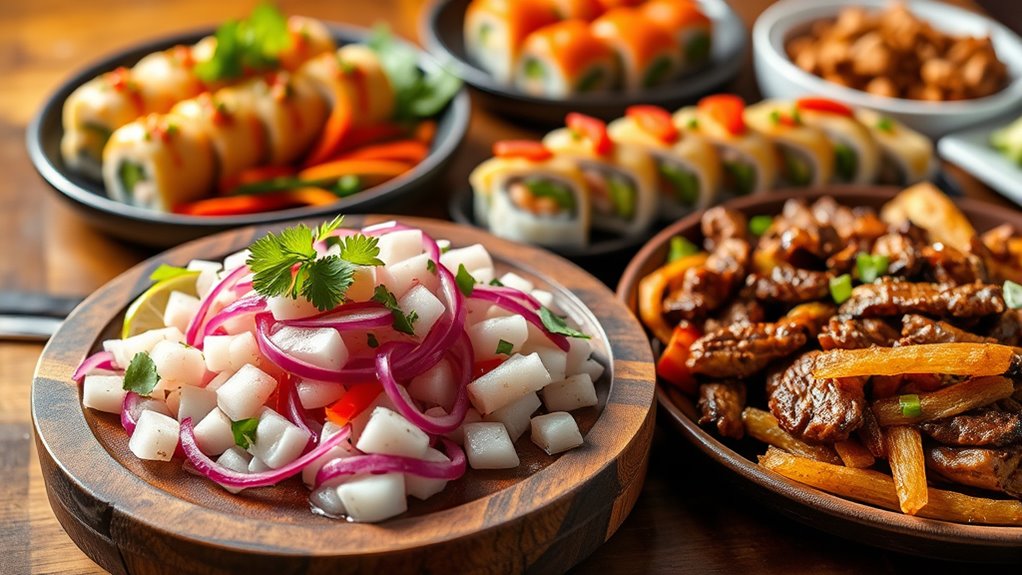
Peruvian cuisine is a vibrant blend of indigenous traditions and influences from Spanish, African, Asian, and European cultures. When you explore its flavors, you’ll notice that food presentation plays a vital role in how dishes are served and appreciated. In Peru, presentation isn’t just about aesthetics; it’s about honoring the ingredients and history behind each dish. For example, ceviche is often served in a simple yet elegant manner, with fresh fish or seafood arranged artfully in a glass or on a plate, topped with vibrant slices of onion, chili, and cilantro. The way the ingredients are displayed emphasizes freshness and regional ingredients, which are the backbone of Peruvian cooking. You’ll find that regional ingredients like aji peppers, sweet potatoes, and native corn are not only staples but are showcased prominently in the presentation, highlighting their importance.
As you indulge in ceviche, notice how the colors and textures reflect the diversity of Peru’s geography. Coastal regions contribute the freshest seafood, while the highlands bring potatoes and corn into the mix. The careful food presentation enhances your appreciation, making each dish a visual and culinary experience. The use of regional ingredients isn’t accidental; it’s a deliberate effort to celebrate local produce and traditions. Whether it’s the bright yellow of aji amarillo or the deep purple of Peruvian purple potatoes, these ingredients are integral to the dish’s identity and are often displayed prominently to showcase their natural beauty.
Moving beyond ceviche, dishes like Lomo Saltado reveal the fusion of Chinese influence with traditional Peruvian flavors. Here, the food presentation emphasizes the vibrant mix of stir-fried beef, onions, tomatoes, and fries. The colorful ingredients are tossed together in a way that makes the dish look lively and inviting. The regional ingredients used, such as Peruvian chili or native potatoes, are key to authentic flavor and are often visually highlighted to emphasize their cultural significance. Similarly, Nikkei fusion combines Japanese techniques with local ingredients, creating dishes where presentation is a fusion itself—carefully arranged sashimi-style fish atop rice, garnished with regional herbs and vegetables.
In every case, food presentation in Peruvian cuisine isn’t just about making dishes look appealing; it’s a tribute to regional ingredients and culinary history. As you enjoy these dishes, you’ll come to understand that their visual appeal complements the rich flavors, creating an immersive experience that celebrates Peru’s diverse cultural tapestry.
As an affiliate, we earn on qualifying purchases.
Frequently Asked Questions
What Are the Regional Variations of Ceviche Across Peru?
You’ll notice regional variations of ceviche across Peru, primarily influenced by local ingredients and coastal flavors. In the north, they use more lime and fresh seafood, while in the south, you might find ceviche with a touch of spicy Aji peppers. Coastal variations often feature octopus or shellfish, and some regions add sweet potatoes or corn to complement the tangy citrus. These differences showcase Peru’s diverse coastal culinary traditions.
How Has Japanese Cuisine Influenced Peruvian Culinary Traditions?
Imagine you’re time-traveling to a sushi bar in Tokyo—Japanese cuisine has deeply influenced Peruvian culinary traditions, especially through Nikkei fusion. You notice how sushi techniques, like precision cutting and marinating, blend seamlessly with local ingredients. Soy sauce’s rich umami flavor influences dishes, adding depth and complexity. This cultural exchange has transformed Peruvian dishes, creating a unique culinary hybrid that celebrates both Peruvian vibrancy and Japanese refinement.
What Are Traditional Accompaniments Served With Lomo Saltado?
You usually serve traditional side dishes like white rice or French fries with lomo saltado to soak up the flavorful stir-fry. Sometimes, you might add a simple salad or pickled vegetables for freshness. These accompaniments create perfect flavor pairings, balancing the savory beef, onions, and tomatoes. They enhance the dish’s richness and add variety, making your meal more satisfying and authentic to Peruvian culinary traditions.
How Do Peruvian Ingredients Differ From Those Used in Japanese Dishes?
You’ll notice that Peruvian ingredients differ from Japanese ones in their spice profiles and staples. Peru uses aji peppers for heat and flavor, while Japan favors soy, miso, and rice vinegar. Peruvian ingredients often include potatoes and corn, which are less common in Japanese cuisine. These differences create distinct flavor profiles, with Peruvian dishes leaning toward bold, spicy tastes, contrasting with the umami and subtle sweetness typical of Japanese dishes.
What Is the History Behind the Peruvian Nikkei Fusion Cuisine?
You should know that the fusion history of Peruvian Nikkei cuisine began when Japanese immigrants arrived in Peru in the late 19th and early 20th centuries. Their culinary evolution merged traditional Japanese techniques with local Peruvian ingredients, creating a unique blend. This exchange shaped Nikkei fusion, making it a vibrant culinary tradition that reflects both cultures’ influences, and continues to evolve today, offering innovative dishes that honor both heritages.
Conclusion
So, immerse yourself in Peruvian cuisine and experience flavors that burst like fireworks in your mouth. From the tangy ceviche to the savory lomo saltado and the bold Nikkei fusion, every dish tells a story of rich tradition and innovation. Once you taste these vibrant flavors, you’ll understand why Peruvian food is considered a culinary masterpiece—it’s truly a feast for your senses that you won’t forget anytime soon. Prepare for an unforgettable journey!
Halloween Picks
halloween
As an affiliate, we earn on qualifying purchases.