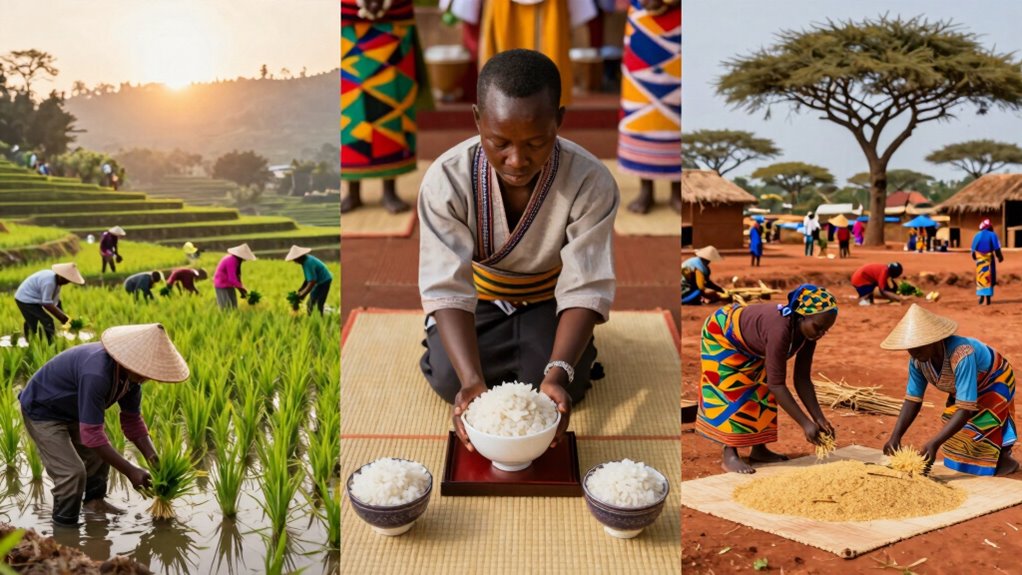

Around the world, rice traditions vary widely, reflecting each culture’s beliefs and history. In Japan, rice planting honors spirits through Shinto rituals, while in India, festivals like Pongal feature offering the first cooked rice to gods. Cooking techniques differ from steaming in Southeast Asia to spicy pilafs in Africa. These practices go beyond eating, symbolizing unity, spirituality, and community bonds. Keep exploring to discover more about these fascinating rice customs and their cultural significance.

Get kitchen staples and gadgets delivered free with Prime
- Fast, free delivery on millions of items
- Prime Video, Amazon Music and more included
- Member-only deals all year
Key Takeaways
- Rice is central to diverse cultural rituals, symbolizing prosperity, unity, and spiritual connection across regions.
- Cooking techniques vary globally, reflecting local ingredients, climates, and culinary traditions.
- Rituals beyond eating, such as offerings and ceremonies, showcase rice’s spiritual and social significance.
- Different rice varieties influence regional dishes and cultural practices, emphasizing local identity.
- Rice functions as a unifying element, connecting communities through shared traditions, stories, and celebrations.
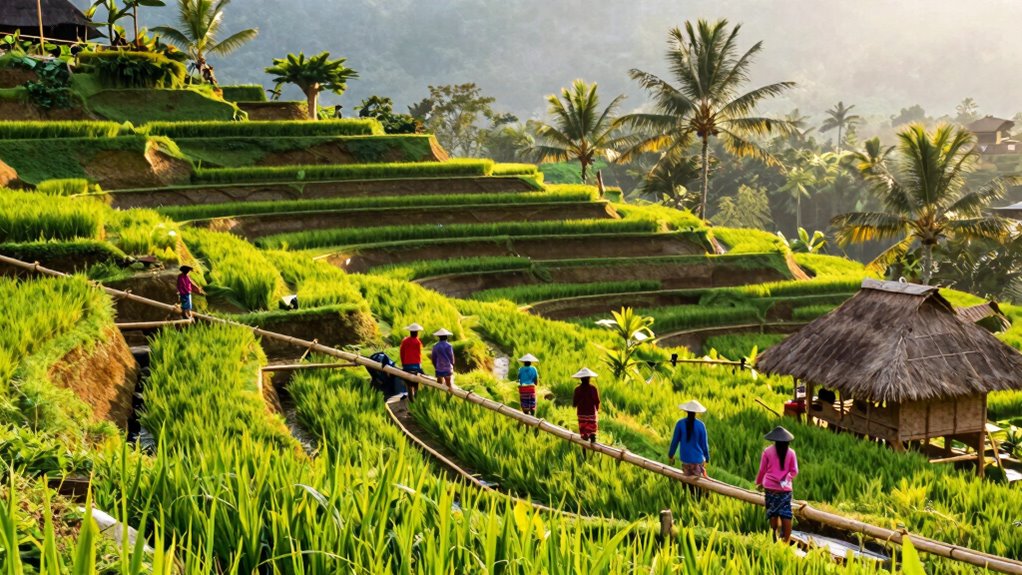
Have you ever wondered how rice, a staple food for more than half the world’s population, shapes cultural practices across the globe? It’s not just about nourishment; rice plays a central role in rituals, celebrations, and daily routines that define communities. Across different regions, you’ll find unique cultural ceremonies where rice is more than food—it’s a symbol of prosperity, unity, and tradition. In Japan, for example, rice planting and harvesting are intertwined with Shinto rituals that honor the land and spirits, emphasizing respect and gratitude. These ceremonies often involve offerings of rice to deities, reinforcing the connection between nature and spirituality. In India, rice holds a sacred place in many religious festivals, such as Pongal, where the first rice cooked in the new harvest is offered to the gods, symbolizing abundance and good fortune. Such rituals highlight the spiritual significance of rice within cultural ceremonies, making it a cornerstone of faith and community bonding.
When it comes to cooking techniques, you discover how diverse and region-specific they can be. In Southeast Asia, rice is often cooked using methods like steaming or boiling, which bring out its fluffy texture, perfect for dishes like Thai sticky rice or Indonesian nasi uduk. Conversely, in parts of Africa, rice might be cooked with spices and broth, resulting in flavorful pilafs or jollof rice that become the centerpiece of meals. In Japan, mastering the art of preparing sushi rice involves precise rinsing and seasoning to achieve the perfect balance of texture and flavor, reflecting a meticulous approach to culinary tradition. Meanwhile, in Italy, risotto demands a slow, gradual addition of broth, requiring patience and technique to achieve its creamy consistency. These cooking methods are deeply rooted in local ingredients, climate, and culinary history, showcasing how rice preparation is an expression of cultural identity. Additionally, some cultures incorporate traditional rice rituals into their cooking practices, further emphasizing the importance of rice beyond the plate. Recognizing the cultural significance of rice helps deepen appreciation for these diverse culinary expressions, especially considering the variety of rice varieties cultivated around the world that influence cooking styles and flavors.
Throughout the world, you see how rice traditions extend beyond mere eating—embodying stories, beliefs, and techniques passed down through generations. Whether it’s through sacred ceremonies or specific cooking styles, rice becomes a unifying thread weaving together the social and spiritual fabric of countless cultures. Recognizing these differences enriches your understanding of how a simple grain can carry such profound meaning, connecting people across continents through shared rituals and culinary artistry. So, the next time you cook or celebrate with rice, remember that you’re part of a global tradition that’s been shaping human history for centuries.
As an affiliate, we earn on qualifying purchases.
Frequently Asked Questions
How Did Rice Cultivation Originate Globally?
You might find that rice cultivation began with ancient farming practices in Asia around 10,000 years ago. Early farmers domesticated wild rice, selecting for traits that made it easier to harvest and cultivate. This rice domestication spread through trade routes and migration, eventually reaching Africa and the Middle East. Over time, different cultures adapted rice farming methods to suit their environments, creating diverse rice traditions worldwide.
What Are Unique Rice Harvesting Methods Worldwide?
You’re about to uncover the secrets behind unique rice harvesting methods worldwide. In some regions, farmers use traditional harvesting techniques that involve hand-reaping and threshing, creating a rhythmic dance with nature. Others harness innovative methods like rice fermentation, which not only preserves grains but also deepens cultural traditions. These techniques reveal how communities adapt, blending age-old practices with local environments, revealing a profound connection between people and their land.
Are There Specific Rice Varieties Tied to Cultural Identities?
Yes, certain rice varieties hold deep cultural significance and symbolize identity. You’ll find that in Japan, Koshihikari rice embodies tradition and culinary excellence, while in India, Basmati is linked to spiritual rituals and celebrations. Rice symbolism plays a crucial role in festivals, rituals, and daily life, reflecting cultural values and history. These varieties aren’t just food but symbols that connect communities to their heritage and identity.
How Do Rice Festivals Differ Across Countries?
They say “Variety is the spice of life,” and rice festivals truly embody this. Across countries, you’ll see vibrant festivals with colorful costumes, lively dances, and culinary ceremonies celebrating rice’s significance. In Thailand, it’s Songkran with water fights; in Japan, the rice planting rituals during harvest; and in Italy, rice-based dishes at local fairs. Each festival reflects unique cultural values, making rice celebrations diverse yet universally meaningful.
What Are Modern Innovations Impacting Traditional Rice Practices?
Modern innovations like technological advancements and sustainable farming are transforming traditional rice practices. You might see new machinery that boosts efficiency, reducing labor and increasing yields. Sustainable farming methods, such as water conservation and eco-friendly fertilizers, help protect resources and guarantee long-term productivity. These innovations allow you to enjoy rice traditions while promoting environmental responsibility, blending age-old customs with modern solutions for better sustainability and efficiency in rice cultivation worldwide.
Conclusion
As you’ve seen, rice isn’t just a staple—it’s a symbol woven into the fabric of countless cultures. From sacred ceremonies to daily meals, these traditions reveal the rich tapestry of human connection. Just as rice transforms in countless forms, so do our customs and stories. Isn’t it fascinating how something so simple can hold such profound meaning? Embrace these diverse traditions, and let them remind you that, like rice, our shared humanity is both fragile and resilient.
Fall Picks
fall essentials
As an affiliate, we earn on qualifying purchases.