For perfect cook times in shabu-shabu, slice your ingredients between 1-2 mm thick for quick, even cooking and flavor absorption. Thinner slices cook faster and become tender more quickly, while thicker slices need longer. Use a sharp knife and slightly freeze meat to get consistent slices. Paying attention to the thickness affects texture and flavor, so mastering this is key. Keep exploring to discover more tips for ideal hot pot results.
Key Takeaways
- Slice ingredients into 1-2 mm thin pieces for quick, even cooking and optimal flavor absorption.
- Thinner slices cook faster and develop flavor more rapidly, ideal for delicate ingredients.
- For thicker slices, increase cooking time to ensure thorough tenderness and flavor infusion.
- Maintain consistent slice thickness to achieve uniform cooking and balanced taste in hot pot.
- Practice precise slicing techniques to enhance overall meal quality and ensure perfect cook times.
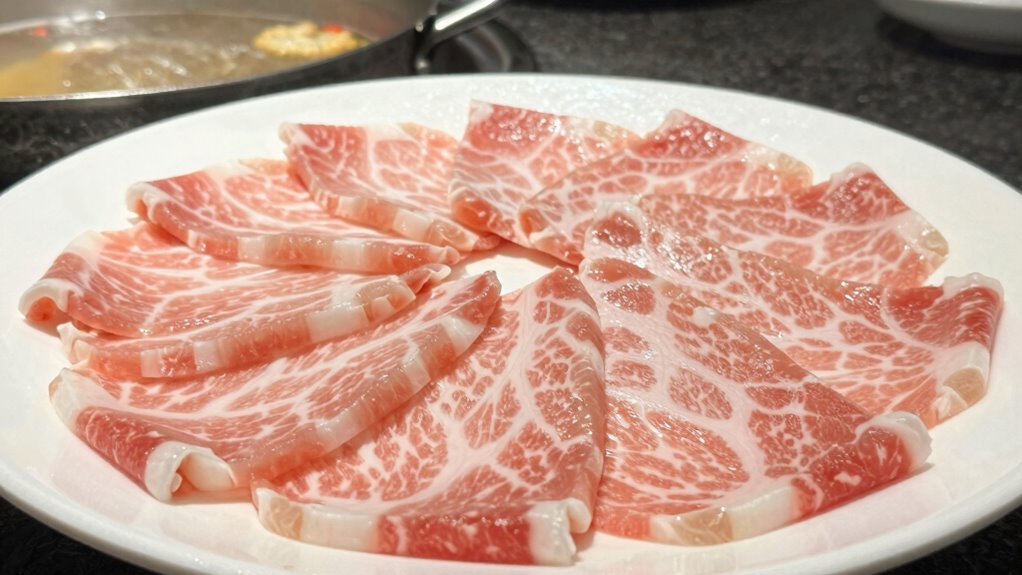
Ever wondered how to recreate the cozy, interactive experience of shabu-shabu right in your own kitchen? The secret lies in mastering the art of slicing techniques and understanding how they influence broth flavoring and cook times. When you prepare your ingredients, the thickness of your sliced meat and vegetables plays a vital role in achieving the perfect bite and flavor infusion. Thinner slices cook quickly and evenly, allowing you to enjoy tender meat with minimal waiting, while thicker cuts offer a heartier, more substantial texture but require longer cooking times. Striking the right balance is key to recreating that authentic shabu-shabu experience.
To start, focus on slicing techniques that produce consistent, thin slices—ideally about 1 to 2 millimeters thick. Use a sharp knife and, if possible, freeze the meat slightly before slicing; this firmens it, making it easier to cut thin, uniform pieces. When slicing vegetables like Napa cabbage, daikon, or mushrooms, aim for similar thinness so each piece cooks at the same rate. This consistency ensures that every bite is tender and infused with broth flavoring, which is essential for a balanced, flavorful meal. Remember, uneven slices can lead to uneven cooking, with some parts overdone and others undercooked, disrupting the harmony of your hot pot experience.
Broth flavoring is another essential element that complements your slicing precision. As you add ingredients to the simmering broth, the thickness of your slices determines how quickly they release their flavors. Thinner slices absorb broth flavors faster, enriching the taste of the broth and making each bite more delicious. Conversely, thicker slices require longer cooking times to develop the same depth of flavor. Adjust your slicing thickness based on your desired cook time and the ingredients’ nature to ensure everything cooks evenly and absorbs the perfect amount of broth. Don’t forget to season your broth beforehand—using ingredients like kombu, sake, soy sauce, or miso—to create a rich, savory base that enhances the flavoring process.
As you become more familiar with slicing techniques and their impact on broth flavoring, you’ll find it easier to control cook times and achieve the tender, flavorful results that make shabu-shabu so special. Practice makes perfect, so don’t be discouraged if your first few attempts aren’t flawless. With patience and attention to detail, you’ll soon be slicing like a pro, creating a hot pot meal that rivals what you’d find in a restaurant. The key is consistency: uniform slices, a well-flavored broth, and precise timing. That way, every bite is perfectly cooked, infused with flavor, and just the right texture for an unforgettable shabu-shabu experience at home.
Frequently Asked Questions
What Types of Meat Are Best for Shabu-Shabu at Home?
For shabu-shabu at home, opt for high-quality meats like USDA prime beef, tender pork, or fresh lamb. Use proper slicing techniques to cut the meat thinly, about 1/16 inch, ensuring quick, even cooking. Thin slices allow the meat to cook uniformly in the hot broth, enhancing flavor and tenderness. Good meat quality combined with precise slicing makes your shabu-shabu experience delicious and authentic.
How Do I Store Leftover Sliced Meat Safely?
To store leftover sliced meat safely, you should refrigerate it promptly, keep it in airtight containers, and consume within 1-2 days. Proper meat storage guarantees food safety, prevents bacterial growth, and preserves flavor. Always label containers with the date, and avoid cross-contamination by separating cooked meat from other foods. By following these steps, you protect your health and enjoy your leftovers at their best.
Can I Use Vegetable Broth Instead of Water?
Yes, you can use vegetable broth instead of water. Vegetable broth benefits include adding depth of flavor and nutrients to your dish. When doing broth substitution tips, keep in mind that broth enhances taste, so consider adjusting seasonings accordingly. Use it in the same amount as water, but taste as you go to guarantee your shabu-shabu or hot pot remains flavorful. It’s a simple way to make your meal more savory.
What Are Some Vegetarian Shabu-Shabu Alternatives?
You can enjoy vegetarian shabu-shabu by using tofu varieties like silken, firm, or extra-firm, sliced thin for quick cooking. Mushroom options such as shiitake, enoki, and maitake also work well, adding flavor and texture. Combine these with vegetable broth for a rich, savory experience. You’ll find that these alternatives create a delicious, satisfying meal, perfect for vegetarians or anyone looking to try a plant-based twist on traditional shabu-shabu.
How Do I Prevent Overcooking the Meat Slices?
Think of your meat slices as delicate whispers that need careful listening. To prevent overcooking, keep the meat thickness consistent—about 2-3mm—and watch the cooking time like a hawk. Immerse the slices just long enough for a pink center, usually 10-15 seconds. Remove promptly once cooked, so your meat stays tender and juicy, like a perfectly tuned instrument. This way, your shabu-shabu remains a symphony of flavors.
Conclusion
Think of slicing your shabu-shabu like composing a symphony—each thin slice a delicate note. When you master the thickness rule, your hot pot becomes a stage for perfect harmony, where every piece cooks just right, releasing subtle flavors. Just as a conductor guides musicians to create beauty, your precision guides each slice to achieve culinary perfection. With practice, you’ll orchestrate a shabu-shabu experience that’s truly a masterpiece in your own kitchen.