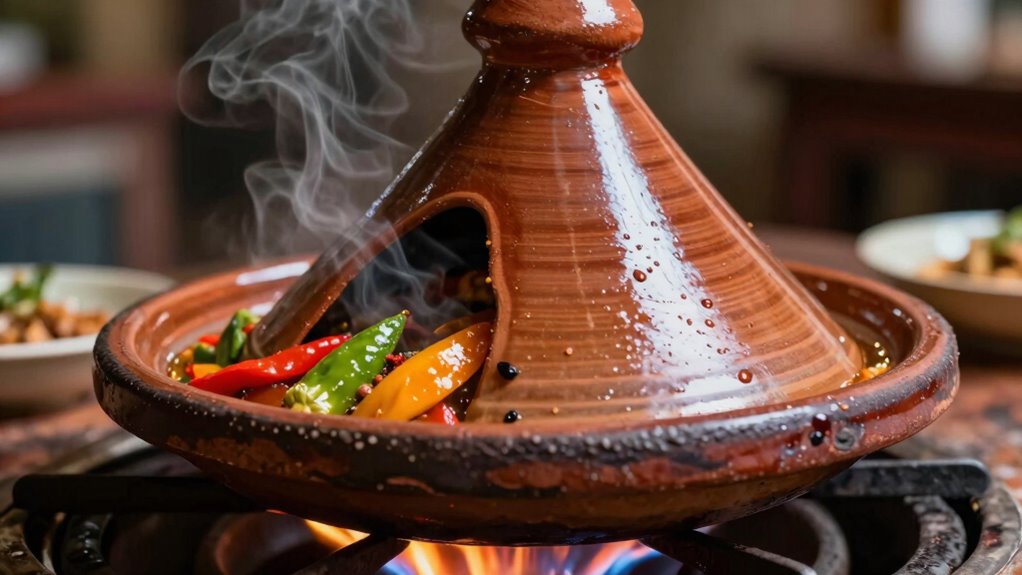

The conical lid on a tagine is a game-changer because it traps moisture and redirects steam back onto your ingredients. This creates a self-basting environment that keeps food tender and full of flavor. As steam rises, it condenses on the lid and falls back, enhancing slow, even cooking. If you want to master the secrets behind this traditional technique, there’s more to discover below.
Key Takeaways
- The cone lid traps moisture and redistributes it evenly, ensuring tender, flavorful dishes.
- It creates a self-basting environment by recycling steam back onto ingredients.
- The lid’s design enhances flavor development by allowing condensation to drip back into the dish.
- Proper material and maintenance of the lid ensure optimal heat distribution and longevity.
- Using the cone lid elevates simple ingredients into rich, complex flavors characteristic of authentic Moroccan cuisine.

Tagine cooking is a flavorful and traditional method rooted in North African cuisine, especially Morocco. When you prepare a tagine, you’re not just making a meal; you’re creating an experience filled with rich, authentic Moroccan flavors. The secret to achieving those complex tastes lies in the unique cooking vessel itself— the tagine. Its conical lid traps moisture and redistributes it evenly, allowing ingredients to simmer gently and develop deep, layered flavors. This method guarantees your dishes stay tender and infused with the spices and herbs you add, making every bite taste authentic and full of character.
Understanding the importance of the cone lid is key. It’s not just a design choice but a vital element that transforms your cooking process. The lid’s shape allows condensation to form at the top and then drip back down onto the ingredients. This continuous cycle keeps everything moist and tender, reducing the need for added liquids. As you cook, you’ll notice that your ingredients meld together beautifully, creating a rich sauce that clings to the meat, vegetables, or legumes. This is why the cone lid makes a difference—it promotes even cooking and intensifies flavors, elevating simple ingredients into a culinary masterpiece. Additionally, the material of the tagine impacts heat distribution and durability, making it an essential factor in your selection process.
The cone lid recycles steam, locks in moisture, and enhances flavor for perfectly tender, flavorful dishes.
To get the most out of your tagine and preserve its quality over time, proper storage is essential. After cooking, let your tagine cool completely before cleaning it. Store it in a dry, well-ventilated space to prevent moisture buildup and avoid cracking. If it’s made of clay or ceramic, consider wrapping it in a soft cloth or placing it in a breathable bag to protect it from dust and accidental chips. When not in use, keep the lid slightly ajar to allow air circulation, which helps prevent mustiness or mold. For long-term storage, avoid stacking heavy objects on top of it, as this can cause damage. Following these tagine storage tips ensures your vessel remains in excellent condition, ready to deliver authentic Moroccan flavors each time you cook.
Mastering the use of a tagine with its cone lid opens the full potential of North African cuisine in your kitchen. With proper care and understanding of its unique design, you’ll enhance your dishes with flavors that are rich, complex, and deeply satisfying. Whether you’re slow-cooking lamb, chicken, or vegetables, this method guarantees a tender result bathed in aromatic, authentic flavors. The combination of the traditional cooking technique and thoughtful storage tips will help you enjoy the magic of Moroccan cuisine for years to come, turning simple ingredients into extraordinary meals.
Frequently Asked Questions
How Do I Choose the Right Size Tagine for My Needs?
To choose the right size tagine, consider your typical cooking needs and the number of servings you want. Size considerations are key—smaller ones suit singles or couples, while larger ones are perfect for family meals. Look at material options like clay or ceramic for durability and heat retention. Pick a size that matches your cooking style and space, ensuring you can comfortably prepare and serve delicious meals.
Can I Use a Tagine on an Induction Cooktop?
Think of your cooktop as a stage and the cookware as the star performer. You can’t use a traditional clay tagine directly on an induction cooktop unless it’s induction-compatible, which many are not. If yours isn’t, consider alternative cookware like a cast iron or stainless steel pot with a similar shape. Always check if your tagine is induction-compatible first, or you’ll need an alternative cookware to bring your flavorful dishes to life.
How Do I Clean and Maintain a Clay Tagine?
To clean your clay tagine, gently wash it with warm water and a soft brush or sponge—avoid soap to preserve its seasoning. After cleaning, let it air dry completely before storing it in a dry, well-ventilated area. Use seasoning techniques periodically to maintain its non-stick surface and prevent cracking. Store it with the lid slightly ajar to ensure proper airflow and avoid moisture buildup.
What Are Common Mistakes to Avoid When Cooking With a Tagine?
Think of cooking with a tagine like walking a tightrope—you must be precise. Avoid common mistakes like neglecting to season your clay properly, which can cause cracking, or placing the lid incorrectly, letting steam escape. Always guarantee the lid fits snugly to trap moisture, and never start with high heat—this risks damaging your tagine. Mind these pitfalls, and you’ll master the art of flavorful, tender dishes.
Can I Substitute a Tagine Lid With Other Cookware?
You can substitute a tagine lid with alternative lid materials, but it’s important to prioritize tagine compatibility. Use a heavy, heatproof lid like cast iron or a Dutch oven with a tight-fitting cover. Avoid thin or flimsy lids that won’t trap moisture properly. Keep in mind, a cone-shaped lid is ideal because it recirculates steam, so find a lid that mimics this function to guarantee authentic results.
Conclusion
Once you master the magic of the cone lid, cooking with a tagine becomes like opening a secret garden—where flavors bloom and aromas weave together. I remember my first try, accidentally sealing in too much steam; the dish turned out richer and more tender than I ever expected. Just like that surprise discovery, embracing the cone lid transforms your cooking experience, turning simple ingredients into a symphony of taste. So, get your tagine ready and let the magic unfold!