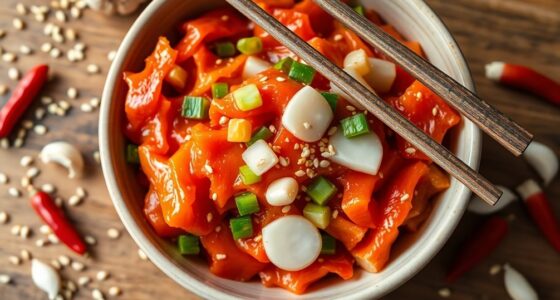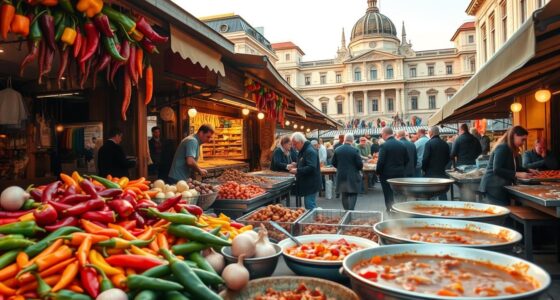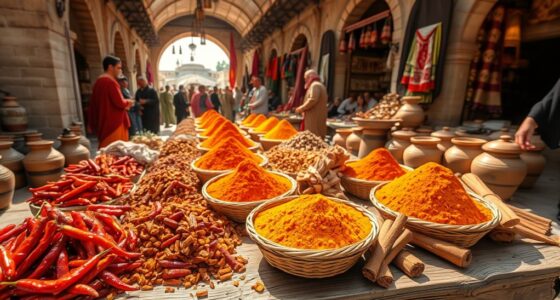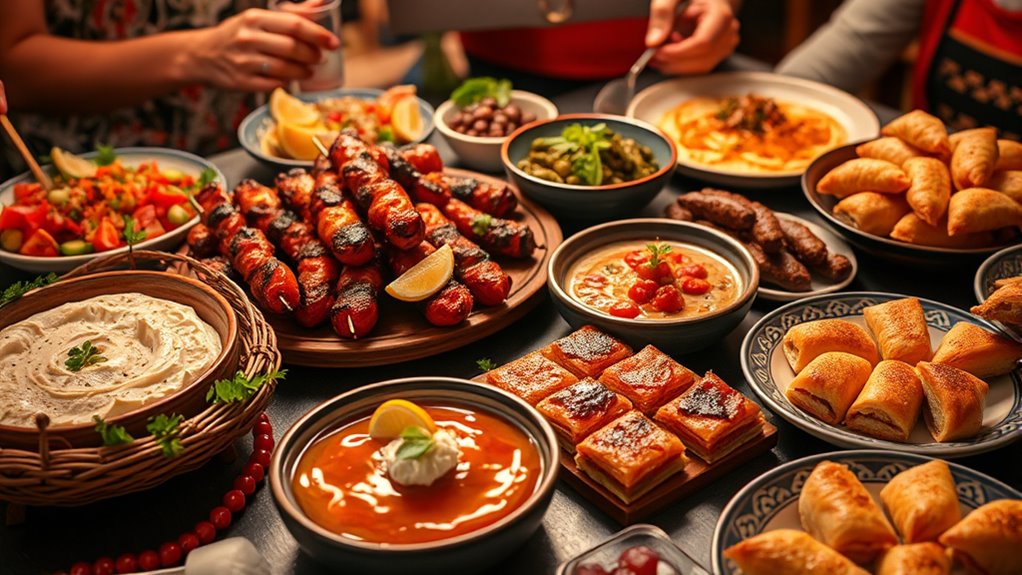

Turkish culinary traditions highlight regional ingredients, flavors, and techniques. You’ll find kebabs marinated with herbs like thyme or oregano, grilled over open flames for tenderness and char. Meze offers a variety of small, flavorful dishes made from fresh vegetables, herbs, and cheeses, emphasizing natural flavors. Sweets like baklava and Turkish delight showcase nuts, honey, and craftsmanship. Exploring these dishes reveals the country’s vibrant culinary heritage—if you continue, you’ll discover even more about Turkey’s delicious and diverse cuisine.
Key Takeaways
- Turkish kebabs vary regionally, using local herbs, meats, and cooking techniques like open-flame grilling for authentic flavors.
- Meze showcases diverse small dishes made with fresh, regional ingredients, emphasizing preparation methods like chopping and blending.
- Sweets such as baklava and Turkish delight highlight regional nuts, honey, and fruit, crafted with traditional layering and molding techniques.
- Regional influences, climate, and geography shape Turkish culinary traditions, reflecting local ingredients and unique flavor profiles.
- Cooking techniques like slow roasting, marination, and precise handling preserve natural flavors and ensure tenderness in dishes.
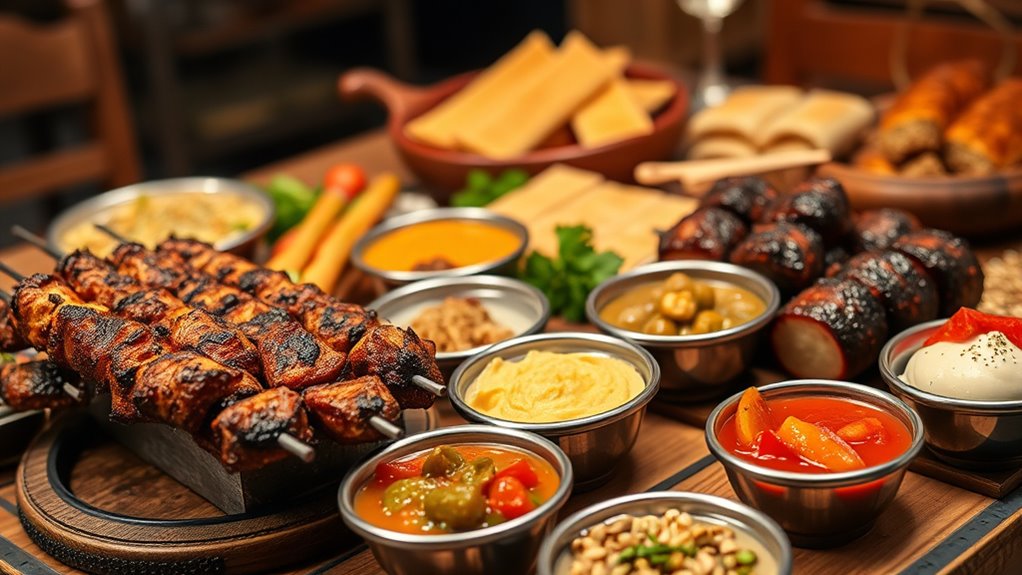
Have you ever wondered what makes Turkish cuisine so rich and diverse? The secret lies in the careful use of regional ingredients and the mastery of various cooking techniques passed down through generations. Each region in Turkey offers a unique palette of flavors, shaped by its climate, geography, and cultural influences. From the herbs in the Aegean to the spices in Southeastern Anatolia, these ingredients form the foundation of authentic dishes. You’ll notice that Turkish cooks often emphasize freshness, using locally sourced produce, meats, and grains, which elevates the taste and authenticity of every meal. The cooking techniques are equally important—whether it’s slow roasting kebabs over open flames, simmering hearty stews, or preparing delicate pastries, each method highlights the ingredients’ natural flavors. Traditional methods like marination and open-flame grilling have been refined over centuries to enhance the natural qualities of the ingredients. In Turkish cuisine, kebabs are a perfect example of how regional ingredients and techniques come together. In the southeast, you might find lamb kebabs marinated with regional herbs like thyme or oregano, then grilled over charcoal to develop that smoky aroma. In the Aegean, chicken or fish kebabs are seasoned with fresh lemon and herbs, then cooked quickly on high heat to preserve moisture and flavor. The preparation of kebabs requires skillful handling, ensuring the meat remains tender while achieving that characteristic char. Many recipes involve marination—sometimes overnight—to deepen the flavors, showcasing how techniques influence the final dish. The use of skewers and open flames highlights traditional methods that have been refined over centuries, making each kebab a *testament* to regional tastes and culinary expertise. Meze, another *vital* aspect of Turkish culinary tradition, also reflects the regional diversity and techniques. These small dishes serve as appetizers or accompaniments, often made with fresh vegetables, herbs, and cheeses from local markets. You might enjoy a tangy ezme, a spicy tomato and pepper dip, or a creamy haydari made with thick yogurt and herbs. The preparation of meze involves simple but precise techniques—chopping, blending, fermenting—that highlight natural flavors. Turkish cooks often emphasize presentation and balance, combining textures and tastes to create a harmonious start to any meal. The regional ingredients used in meze exemplify the local bounty and culinary ingenuity, making each dish a *testament* to its place of origin. Turkish sweets, like baklava and Turkish delight, also showcase regional ingredients and techniques. They often incorporate nuts, honey, and fruit, sourced locally, and prepared with meticulous craftsmanship. For example, making baklava involves layering thin sheets of phyllo dough brushed with butter, then filling with chopped nuts before baking. The technique requires patience and precision, ensuring the pastry is crisp and the filling flavorful. Similarly, Turkish delight involves boiling sugar and starch until thickened, then pouring the mixture into molds and dusting with powdered sugar or coconut. These sweets highlight how traditional methods and regional ingredients combine to create irresistible treats that have stood the *testament* of time. In addition, regional variations in spices and ingredients add distinctive flavors that make Turkish cuisine uniquely diverse. In essence, Turkish culinary traditions are a vibrant tapestry woven from regional ingredients and time-honored techniques. Whether grilling kebabs, preparing meze, or creating sweets, each dish embodies the rich history and diverse landscapes of Turkey. Your appreciation of these elements enhances your understanding of why Turkish food is so *captivating* and beloved worldwide.
Frequently Asked Questions
What Are the Regional Variations in Turkish Kebabs?
You’ll notice regional variations in Turkish kebabs through different spice blends and grilling techniques. In southeastern regions, they use bold, spicy blends with lamb, grilled over open flames for smoky flavor. In the Aegean, lighter spices and olive oil are common, with vegetables included. Central Turkey favors marinated meats with traditional skewers. Each area adapts grilling methods and seasonings, creating unique, flavorful kebabs that reflect local tastes and traditions.
How Are Meze Dishes Typically Served and Shared?
You typically serve meze dishes in a communal setting, where they’re presented on a large platter or individual small plates. The sharing customs encourage everyone to dip in and taste a variety of flavors. The meze presentation emphasizes variety, with dips, salads, and small bites arranged invitingly. You pass plates around, fostering a social, convivial atmosphere that’s central to Turkish dining traditions.
Which Turkish Sweets Are Best for Special Occasions?
Oh, because nothing says “special occasion” like drowning in a sea of Turkish delight and the rich layers of baklava varieties, right? You’ll want to indulge in these decadent sweets, carefully chosen for their elegance and tradition. Turkish delight’s delicate, chewy texture and the flaky, honey-soaked baklava varieties make them perfect for celebrations. Impress guests with these iconic treats, and let the sweetness elevate your special moments to legendary status.
What Are Traditional Drinks Paired With Turkish Meals?
You’ll find that traditional beverage pairings perfectly complement Turkish meals. Typically, you’ll enjoy raki, an anise-flavored spirit, or ayran, a revitalizing yogurt-based drink, with your meal. Turkish drink customs emphasize moderation and harmony, so you might also sip some Turkish tea or coffee afterward. These drinks enhance flavors, cleanse your palate, and reflect the rich cultural heritage that makes Turkish dining so unique.
How Has Turkish Cuisine Evolved Over Centuries?
Imagine Turkish cuisine as a vibrant tapestry, woven through centuries. You see ancient threads of Ottoman, Persian, and Arab influences blending seamlessly with modern flavors. Over time, these historical influences have been reshaped by modern adaptations, creating a dynamic culinary landscape. You now enjoy dishes that honor tradition while embracing innovation, reflecting Turkey’s rich history and evolving tastes—making every bite a journey through time and culture.
Conclusion
As you explore Turkish culinary traditions, you’ll find a vibrant tapestry of flavors that feels timeless, like discovering a secret recipe in an ancient cookbook. From sizzling kebabs to colorful meze and sweet delights, each dish tells a story of culture and history. So, next time you enjoy these delights, imagine you’re dining with Ottoman sultans or even sharing a meal with a time-traveling chef from the future. Bon appétit!