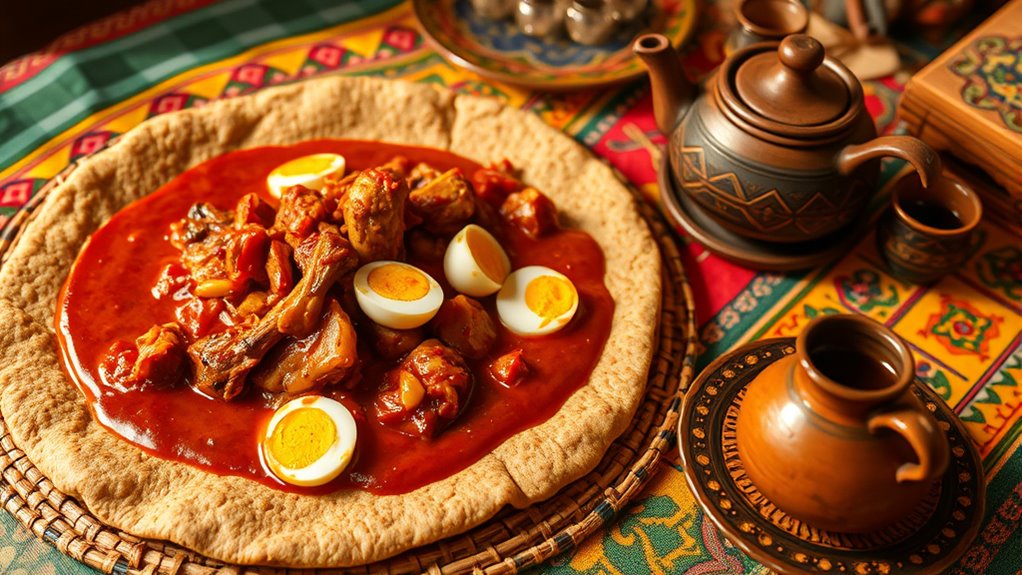

Ethiopian cuisine features iconic dishes like injera, a sourdough flatbread made from teff flour, and spicy stews like Doro Wat, simmered with berbere spice for rich flavor. You’ll also experience the cultural Coffee Ceremony, where freshly roasted beans are ground and brewed in a traditional jebena, emphasizing community and tradition. If you keep exploring, you’ll discover the vibrant techniques and history behind these unforgettable flavors and rituals.

Get kitchen staples and gadgets delivered free with Prime
- Fast, free delivery on millions of items
- Prime Video, Amazon Music and more included
- Member-only deals all year
Key Takeaways
- Injera is a sourdough flatbread made from fermented teff flour, serving as both platter and utensil in Ethiopian meals.
- Doro Wat is a spicy chicken stew flavored with berbere spice, traditionally served with injera.
- The fermentation process enhances injera’s flavor, texture, and nutritional value through days-long fermentation.
- Ethiopian coffee ceremony involves roasting, grinding, and brewing coffee in a jebena, reflecting cultural hospitality.
- Ethiopian cuisine features slow-cooked, layered dishes that emphasize traditional spices, fermentation, and communal dining customs.
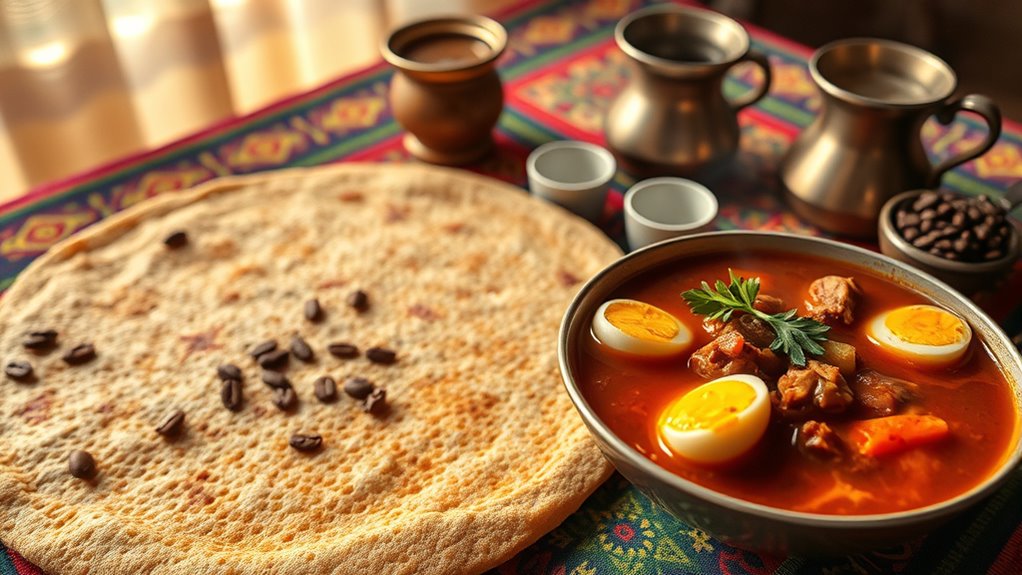
Have you ever wondered what makes Ethiopian cuisine so unique? It’s a vibrant tapestry woven from centuries of tradition, rich flavors, and distinctive culinary practices. At its core, Ethiopian food relies heavily on traditional spices that create bold, complex tastes. These spices, such as berbere and mitmita, are ground into vibrant blends that add heat, depth, and aroma to every dish. What sets Ethiopian cuisine apart is how these spices are used in traditional cooking techniques passed down through generations. You’ll find that many dishes are prepared using methods like slow simmering, fermenting, and layering flavors to achieve their signature taste. These culinary techniques bring out the best in each ingredient, making every bite a sensory experience. The unique fermentation process used for injera is a prime example of traditional techniques that contribute to its distinctive flavor and texture. One of the most iconic elements of Ethiopian cuisine is injera, a sourdough flatbread with a spongy texture. It’s made from teff flour and requires a unique fermentation process that can take several days. This process not only develops its distinctive tang but also enhances its nutritional value. When you serve injera, you don’t just see it as bread; it’s the foundation for a communal meal, used as both plate and utensil. You tear off a piece and scoop up stews, vegetables, or spicy meats. The preparation of injera exemplifies traditional culinary techniques—fermentation, batter mixing, and careful cooking on a hot griddle—that have been perfected over generations.
Another cornerstone of Ethiopian food is Doro Wat, a spicy chicken stew often prepared with a generous amount of berbere spice. To cook Doro Wat, you start by sautéing onions and garlic until caramelized, then add spices and butter, allowing the flavors to deepen through slow cooking. This method ensures that each ingredient melds into a flavorful, hearty dish. The preparation showcases how traditional spices and slow-cooking techniques create a rich, aromatic stew that’s both comforting and fiery. It’s customary to serve Doro Wat with injera, creating a harmonious pairing that’s central to Ethiopian dining.
No discussion of Ethiopian cuisine would be complete without mentioning the coffee ceremony. Coffee, believed to have originated in Ethiopia, is prepared with a meticulous ritual that involves roasting green beans, grinding them fresh, and brewing in a special pot called a jebena. This process highlights the importance of tradition and the skill involved in Ethiopian coffee preparation. The ceremony is a social event, emphasizing community and hospitality, and the aroma of freshly brewed coffee fills the air. It’s more than just a drink; it’s an act of cultural reverence that reflects Ethiopia’s long-standing love affair with coffee. Together, these elements—spices, culinary techniques, and cultural rituals—make Ethiopian cuisine truly one-of-a-kind.
As an affiliate, we earn on qualifying purchases.
Frequently Asked Questions
What Are the Traditional Spices Used in Ethiopian Dishes?
You’ll find that Ethiopian dishes use vibrant spices like berbere and mitmita, which are key to their bold flavors. Ethiopian spice blends typically include chili peppers, garlic, ginger, and other aromatic spices. Berbere adds warmth and depth, while mitmita provides a spicy kick. These spices are essential for authentic dishes, creating the distinctive taste that makes Ethiopian cuisine so unique and flavorful.
How Is Injera Made Traditionally?
You start by making traditional fermentation of teff flour, which is key to preparing injera. You mix the teff flour with water to create a smooth injera batter, then leave it to ferment for 2-3 days. This fermentation develops the batter’s tangy flavor and leavening properties. Once ready, you pour the batter onto a hot, greased skillet, cooking until bubbles form and the edges lift.
What Is the Significance of the Coffee Ceremony?
The coffee ceremony is a mesmerizing ritual that symbolizes Ethiopian hospitality and friendship, and it’s as essential as the air you breathe. You participate in coffee etiquette by savoring each step, from roasting beans to pouring the brew. This tradition embodies cultural symbolism, showing respect and community. Embrace it fully, because sharing coffee isn’t just about drinking—it’s about connecting deeply with Ethiopia’s rich heritage.
Are Vegetarian Options Common in Ethiopian Cuisine?
Yes, vegetarian dishes are quite common in Ethiopian cuisine. You’ll find plenty of plant-based options like lentil stews, vegetable mixes, and spicy salads that are flavorful and satisfying. These vegetarian dishes often feature injera as a base, making them perfect for those seeking healthy, meat-free meals. So, if you’re looking for variety, Ethiopian cuisine offers numerous delicious plant-based options that showcase rich flavors and traditional ingredients.
How Do Regional Differences Affect Ethiopian Food?
You’ll notice that regional differences greatly influence Ethiopian food, adding unique regional flavor and showcasing culinary diversity across the country. In some areas, you might find spicier dishes or ingredients like berbere, while others focus on milder, vegetable-based options. These local variations reflect Ethiopia’s rich cultural tapestry, allowing you to experience a wide spectrum of flavors and cooking styles, making Ethiopian cuisine vibrant and diverse everywhere you go.
Conclusion
As you savor injera, doro wat, and the rich aroma of Ethiopian coffee, it’s no surprise how these flavors connect you to Ethiopia’s vibrant culture. Just as the coffee ceremony often brings people together, trying these dishes might spark your own memorable moments. Sometimes, it’s funny how a simple meal can unexpectedly remind you of distant places and warm gatherings—proving that good food truly has a way of bringing the world a little closer.
Fall Picks
fall essentials
As an affiliate, we earn on qualifying purchases.