
Transforming leftovers into gourmet meals lets you reduce food waste while saving money and impressing taste buds. Start by repurposing roasted vegetables into frittatas or stir-fries, and use leftover rice for fried rice or stuffed peppers. Get creative with vegetable scraps to make flavorful broths or turn stale bread into croutons. If you’re enthusiastic to discover more ideas and tips, there’s plenty to explore to elevate your zero-waste cooking game.
Key Takeaways
- Repurpose leftover vegetables into flavorful broths, frittatas, or stir-fries to maximize ingredient use.
- Transform stale bread into croutons, bread pudding, or toppings to reduce waste and create gourmet additions.
- Use cooked meats in salads, wraps, or soups for quick, sustainable dinner options.
- Incorporate leftover rice into fried rice or stuffed peppers for a delicious, zero-waste meal.
- Plan meals to utilize all parts of ingredients, supporting sustainable eating and minimizing food waste.
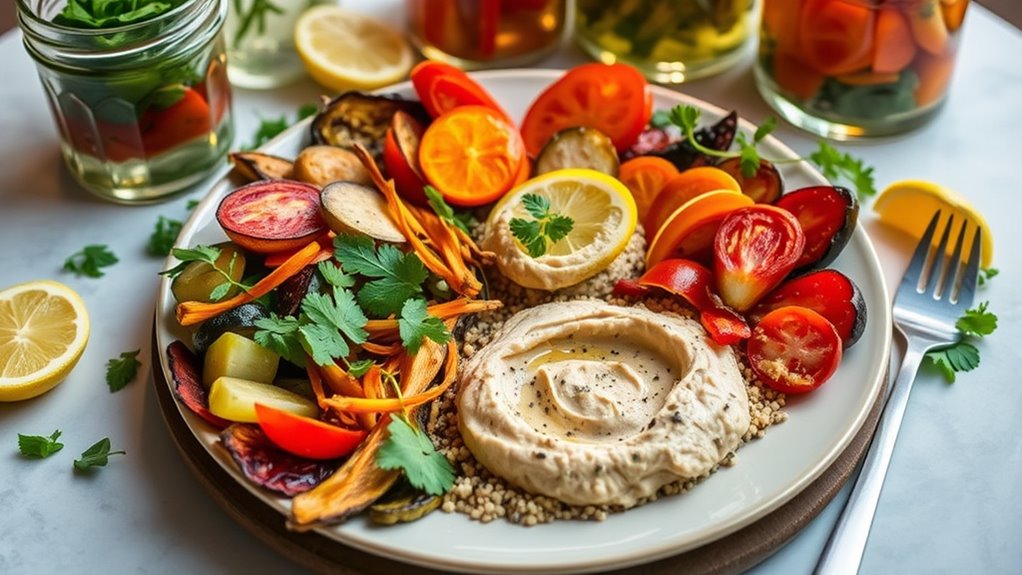
Reducing food waste at dinner time is easier than you might think, especially when you embrace zero-waste recipes. These recipes focus on using every part of your ingredients, transforming leftovers into delicious, gourmet meals. By adopting this approach, you not only cut down on waste but also support sustainable eating habits that benefit the environment. The key to success lies in smart food storage tips that keep your ingredients fresh longer, giving you more flexibility to experiment with leftovers and reduce unnecessary trips to the grocery store.
Start by properly storing your produce, meats, and dairy. Use airtight containers or reusable bags to prevent spoilage and keep items fresh. For example, keep herbs in a glass of water in the fridge or wrapped in a damp cloth to extend their lifespan. When storing cooked leftovers, label them with dates so you use them while still fresh. Freezing leftovers in portioned containers helps prevent waste and makes meal prep easier. These food storage tips allow you to plan your meals around what you already have, making it more likely you’ll create zero-waste dinners. Additionally, understanding food storage techniques can significantly extend the shelf life of your ingredients and reduce waste.
Sustainable eating is about more than just the ingredients you choose; it’s also about how you treat and repurpose those ingredients. For example, vegetable scraps like carrot tops or onion peels can be simmered into flavorful broths. Stale bread becomes croutons or bread pudding, while overripe fruits can be blended into smoothies or used as toppings. By thinking creatively, you can turn ingredients that might otherwise go to waste into gourmet additions for your meals.
Using leftovers doesn’t mean sacrificing flavor. Instead, it’s an opportunity to layer flavors and textures. Repurpose roasted vegetables into a hearty frittata or stir-fry. Leftover rice can become a base for fried rice or a filling for stuffed peppers. Cooked meats can be shredded and added to salads, wraps, or soups. These zero-waste dinner ideas help you maximize what you already have, reducing your grocery shopping and minimizing waste.
Adopting a zero-waste mindset requires some planning and creativity, but it’s well worth the effort. With a focus on sustainable eating and good food storage tips, you’ll find that transforming leftovers into gourmet meals is not only simple but also satisfying. It allows you to enjoy delicious dinners while making a positive impact on the planet. You’ll become more mindful of your consumption, waste less, and savor the process of turning humble ingredients into culinary delights.

Vtopmart Airtight Food Storage Containers with Lids, 24 pcs, Black
- Kitchen and Pantry Organization: Neatly organize and quickly access items
- Four Size Options: Includes 4 sizes for versatile storage
- Space-Saving Stackable Design: Maximize pantry space efficiently
As an affiliate, we earn on qualifying purchases.
As an affiliate, we earn on qualifying purchases.
Frequently Asked Questions
How Can I Start Reducing Food Waste at Home Effectively?
You can start reducing food waste at home by practicing meal planning, which helps you buy only what you need and prevents excess leftovers. Incorporate composting techniques for scraps like vegetable peels and coffee grounds, turning waste into nutrient-rich soil. Store leftovers properly in airtight containers, and get creative with recipes to transform leftovers into new meals, minimizing waste and saving money while making a positive environmental impact.
What Are Some Common Mistakes to Avoid With Zero-Waste Cooking?
Like Icarus flying too close to the sun, you should avoid ingredient mismanagement and improper storage. These mistakes lead to spoilage and waste. Always plan your meals, store ingredients correctly, and use leftovers promptly. Don’t underestimate the importance of understanding expiry dates or misusing ingredients—these slip-ups can undo your zero-waste efforts. Stay vigilant, and you’ll transform your kitchen into a sustainable, waste-free haven.
How Long Can I Store Leftovers Safely for Reuse?
You can typically store leftovers safely for 3 to 4 days if you follow proper food safety and storage techniques. Keep leftovers in airtight containers and refrigerate promptly at or below 40°F. Always reheat leftovers thoroughly before eating, and check for any signs of spoilage like off smells or mold. When in doubt, discard to prevent foodborne illnesses and guarantee safe, delicious reuse of your meals.
Are There Specific Tools That Make Zero-Waste Cooking Easier?
Sure, you can’t turn your kitchen into a zero-waste paradise without some tools, right? Reusable storage containers make saving leftovers a breeze, and composting tools turn scraps into treasure. These gadgets cut waste, save money, and make eco-friendly living easier. Invest in quality reusable bags and compost bins, and suddenly, your kitchen becomes less landfill and more green haven. Who knew sustainability could be so simple?
Can Zero-Waste Meals Be Suitable for All Dietary Restrictions?
Yes, zero-waste meals can suit all dietary restrictions. You can incorporate plant-based options and make gluten-free adaptations easily by choosing suitable ingredients. Focus on whole foods and creative substitutions to meet your needs. By planning ahead and experimenting with different recipes, you guarantee everyone benefits from delicious, sustainable, and inclusive meals that minimize waste and cater to diverse dietary requirements.
Conclusion
By embracing these zero-waste dinner recipes, you turn what’s left into culinary treasures, proving that sustainability and flavor go hand in hand. Each leftover becomes a chance to create something new and delicious, like a phoenix rising from the ashes. So, why not let your kitchen be the stage for this eco-friendly transformation? After all, in the art of zero waste, every scrap tells a story—and your next gourmet masterpiece is just a leftovers away.