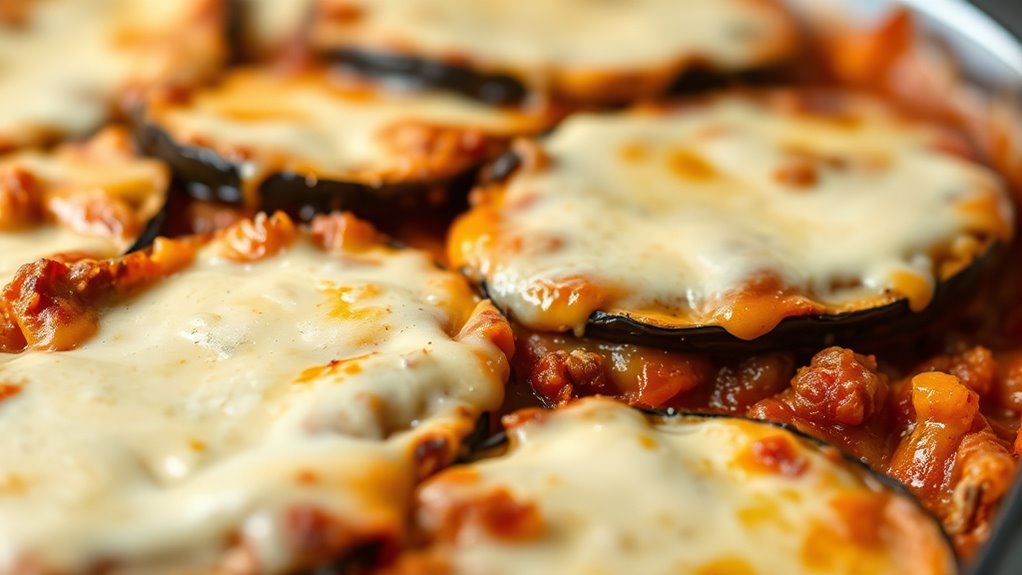

Greek moussaka features tender layers of eggplant, seasoned ground meat, and a creamy béchamel sauce, creating a hearty and flavorful dish. You start by frying or baking eggplant until soft, then layer it with savory cooked meat simmered with tomatoes and spices. The dish is topped with smooth béchamel cheese sauce, baked until golden. Exploring more will reveal how traditional ingredients and techniques come together to craft this beloved classic.
Key Takeaways
- Greek Moussaka features layered ingredients, including fried or baked eggplant, seasoned ground meat, and a creamy béchamel sauce.
- The dish typically starts with a base of eggplant slices, topped with spiced meat and finished with béchamel.
- Béchamel, infused with nutmeg and cheese, creates a smooth, cheesy topping that crisps during baking.
- Variations include vegetarian versions with vegetables or lentils, maintaining the layered structure.
- The dish’s rich flavors and textures highlight traditional Greek culinary roots and rustic cooking style.
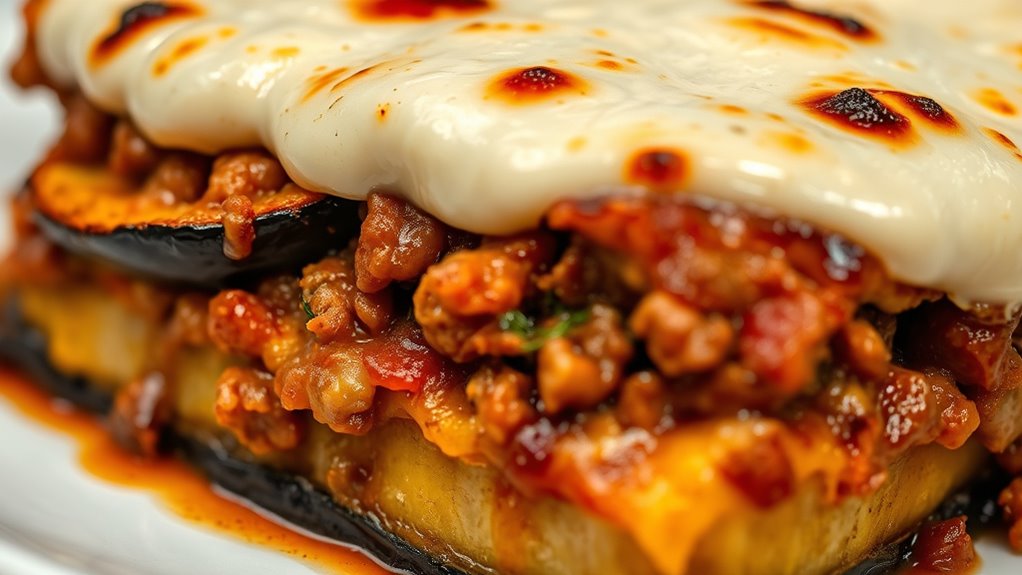
Have you ever wondered what makes Greek Moussaka a beloved classic? It’s a dish that combines rich flavors, comforting textures, and a touch of history, making it a staple in Greek cuisine. Whether you’re new to Greek cooking or a seasoned fan, understanding its roots and variations helps deepen your appreciation for this layered masterpiece. Traditional recipes emphasize authentic ingredients and methods passed down through generations, creating a dish that’s both hearty and nostalgic. You can incorporate vegetables like zucchini, mushrooms, or lentils, making a vegetarian moussaka that’s just as flavorful and satisfying as the original. This flexibility allows more people to enjoy the dish, whether they choose to omit meat or simply want a lighter version.
In its traditional form, Greek Moussaka features layers of sliced eggplant, seasoned ground meat—usually beef or lamb—and a creamy béchamel sauce. The eggplant is sliced, salted to remove bitterness, then fried or baked until tender. The meat mixture, simmered with tomatoes, onions, garlic, and spices, provides a savory base that’s rich and aromatic. Once assembled, the layers are topped with a thick, luscious béchamel sauce infused with nutmeg and cheese, then baked until golden and bubbly. This process results in a dish with a complex blend of textures—crisp on top, tender inside—and flavors that balance earthiness, acidity, and creaminess. The beauty of traditional recipes lies in their simplicity and reliance on quality ingredients, which truly shine through in each bite. Additionally, the use of natural ingredients aligns with the rustic charm typical of farmhouse-style cooking, highlighting the dish’s wholesome character.
If you’re exploring vegetarian options, you might substitute the meat layer with hearty vegetables or legumes, seasoning them similarly to maintain that savory depth. Some recipes also incorporate potatoes or zucchini slices, layered just like the meat, ensuring the dish remains filling. These adaptations adhere to the spirit of traditional recipes while catering to different dietary choices. Whether you stick to the classic or venture into vegetarian territory, the core concept remains the same: layers of deliciousness built around a medley of flavors and textures. The béchamel topping, with its smooth, cheesy surface, crowns the dish perfectly, inviting you to plunge into its warm, comforting layers. No matter which version you choose, Greek Moussaka continues to be a dish that connects you to Greek culinary heritage while offering room for creative twists.
As an affiliate, we earn on qualifying purchases.
Frequently Asked Questions
What Are the Origins of Greek Moussaka?
You might find that Greek moussaka has its origins in the Ottoman Empire, reflecting its historical influences. Over time, it evolved through culinary evolution, blending local ingredients and Mediterranean flavors. As you prepare or enjoy moussaka, you’re experiencing a dish shaped by centuries of cultural exchange and adaptation, making it a rich symbol of Greece’s culinary history. Its layers tell stories of history, tradition, and regional influences coming together beautifully.
Can Moussaka Be Made Vegetarian?
Think of moussaka as a layered symphony—you can make it vegetarian by swapping meat for hearty vegetarian substitutes like lentils, mushrooms, or eggplant. These replacements absorb flavors beautifully, creating a rich, satisfying dish. To boost flavor, add herbs, spices, and a touch of tomato sauce. With these adjustments, you get a delicious, meat-free version that captures the essence of traditional moussaka.
How Do You Store Leftover Moussaka?
To store leftover moussaka, you should let it cool to room temperature, then store it in an airtight container in your refrigerator. When you’re ready to enjoy it again, reheat leftovers thoroughly in the oven or microwave. Proper storage and reheating guarantee your moussaka remains fresh and delicious. Always consume leftovers within 2-3 days to maintain quality and safety.
What Wine Pairs Well With Greek Moussaka?
You’ll want a wine that can conquer the rich, savory layers of moussaka and elevate its flavors. A robust red like a Greek Agiorgitiko or a deep-bodied Cabernet Sauvignon works wonders for wine pairing, enhancing the dish’s hearty taste. These wines intensify the meat and béchamel flavors, creating a harmonious balance. For a lighter touch, try a crisp white such as Assyrtiko to refresh your palate and add a delightful contrast.
Are There Regional Variations of Moussaka in Greece?
You’ll find regional variations of moussaka across Greece that showcase local flavors and ingredient differences. In some areas, they use potatoes instead of eggplant or add unique spices for regional flair. Coastal regions might incorporate seafood, while inland recipes focus on hearty meats. These variations reflect local tastes and available ingredients, giving each version a distinct regional flavor that makes Greek moussaka a versatile and beloved dish nationwide.
Conclusion
As you serve your moussaka, imagine each layer as a chapter in a story—rich eggplant, savory meat, and creamy béchamel coming together in perfect harmony. Just like a well-told tale, it’s the culmination of time and care, rewarding you with every bite. When I first made this dish, the aroma alone felt like a warm embrace, reminding me that good food, like good stories, leaves a lasting impression on the heart.